
Germany's Charming Retirement Town Is A Historic Gem With Natural Beauty, Leisure Cycling, And Affordable Living
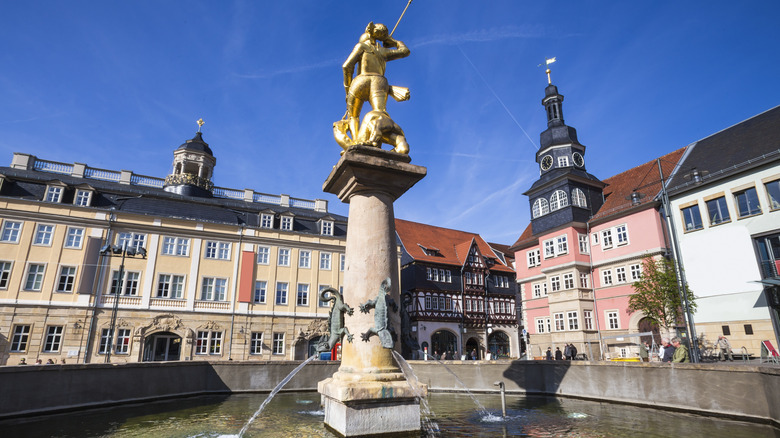
Some people want to retire by the beach, and others want to devote their golden years to country club golf. But what if you spent your last decades following in the footsteps of some of history's great minds? It's an option in Germany's pleasant community of Eisenach — which was once home to legendary composer Johann Sebastian Bach and religious icon Martin Luther — in the relaxing state of Thuringia.
Neighboring the Thuringian Forest, Eisenach evokes classic charm with its cobblestone streets, half-timbered homes, and castle perched high in the hills. If you are a retiree looking to travel to or settle down in Eisenach, you can also expect pockets of nature, opportunities for cycling, and a comparatively affordable lifestyle. Its central location first made it a merchant hub and a busy character in world history. Among its roles: During the Middle Ages, Eisenach was a prime character in the Reformation; French troops overwhelmed it during the Napoleonic wars; its growing industrial sector introduced the country's first automobile plant in the late 1800s; and then it took a bow when Russia's Iron Curtain closed it off from the world following World War II. Upon Germany's reunification, the city's tourist trade rebounded.
For those planning a vacation-filled retirement, Eisenach is a great base, just two hours north of the airport in Frankfurt — the city Rick Steves calls the "Manhattan of Europe." The beauty of this airport is that it also doubles as a train station, offering regional and high-speed connections. Rail passes can save you money and cover international routes, whether you would like to attend a Mozart concert in Salzburg, Austria, or swim in Lake Geneva in Lausanne, Switzerland.
Soak up Eisenach culture
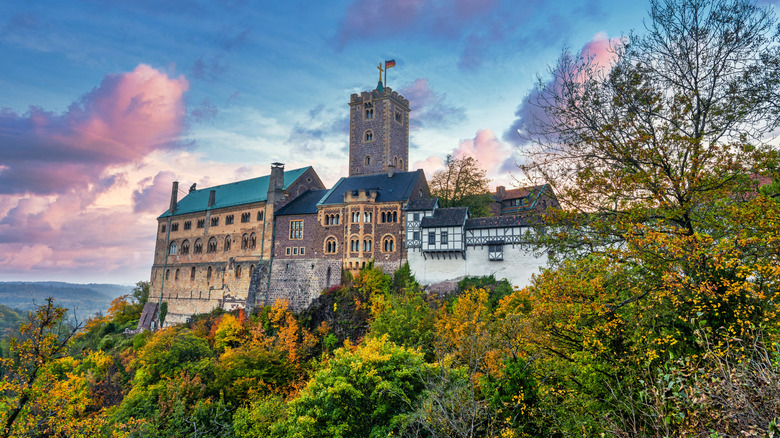
History enthusiasts have a millennium of material here, starting with the Wartburg Castle built in the 11th century. It may not be Rick Steves' favorite European castle, but it is a UNESCO World Heritage site. This is where Martin Luther hid in 1521 when the Pope excommunicated him for his condemnation of the Catholic Church's practices and used his time to translate the New Testament from Greek into German. It's also the site of minstrels' contests, inspiring Richard Wagner's opera, Tannhäuser. The Romanesque palace is worth its approximate $15 admission to learn about its impact on civilization, and it's a beloved venue for concerts held at its opulent ceremonial hall bedecked in coffered ceilings and wagon wheel chandeliers.
For more on Luther, visit the Lutherhaus Eisenach, one of the theologian's childhood homes. He grew up in Mansfeld but spent some of his formative years in Eisenach, where he was a choirboy at St. George's Church and attended its parochial school. Explore his world at the permanent "Luther and the Bible" exhibit, including the history of his hymn, "A Mighty Fortress is Our God," and view Chinese artist Ai Weiwei's "Man in a Cube" concrete sculpture of Luther.
Classical music connoisseurs will want to visit Bach Haus, a museum dedicated to the composer's works which offers discounted combination tickets to the Lutherhaus. Learn about the history of Bach's sonatas, concertos, suites, and compositions, and listen to them via headphones in vintage hanging egg chairs. Google reviewers tout the hourly, 20-minute concerts played with Baroque instruments, such as the harpsichord, the spinet, and a two-person organ (the non-player pumps the foot pedal).
Forest-bathe in Eisenach, Germany
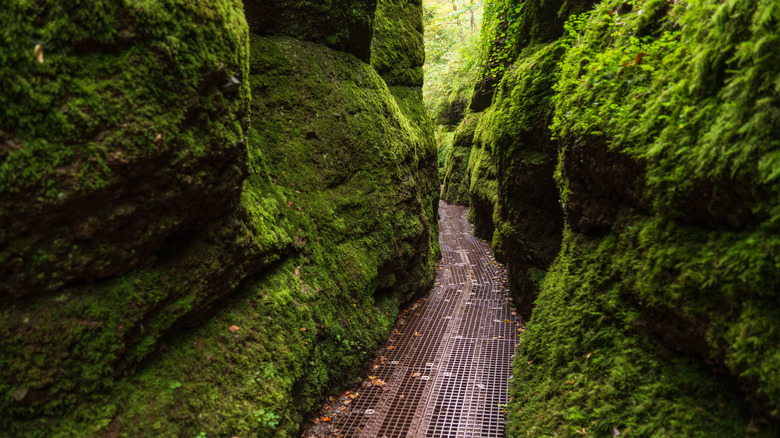
Eisenach's retirees can enjoy forest-bathing thanks to the dreamy Thuringian Forest, known for its high-altitude Rennsteig Trail, a one-time trade route. Covering 105 miles from Hörschel (close to Eisenach) to Blankenstein on the Saale river, the route can be broken up into six to eight chunks. One stage may pass by slate-roofed houses and a natural swimming lake, and on another you will see panoramic vistas and rock formations. One of the more magical walks is through the Drachenschlucht, or "Dragon Gorge," with many loop variations leading through a mossy cavern of massive rock and wooden pathways, ending in a steep hill of stairs for vistas of Wartburg Castle, per AllTrails.
Eisenach is a hub of cycling trails. Leisure riders can take in the green meadows and scenic landscapes of the Werra Valley Cycle Path along the Werra River. A large portion of the Rennsteig Trail serves as a popular cycling route through dense forests, offering challenging inclines for more ambitious riders. The town is also a starting point for a 140-mile route connecting seven of Thuringia's picturesque communities to Altenburg.
With plenty of opportunities for low-cost fun, retirees can stay on budget in this quaint European town of 42,000 people. The average cost of living for one person in Eisenach is $1,361 a month, covering rent, utilities, food, and transportation, per LivingCost.org. You'll find that many everyday items, like gas, toiletries, skincare, and of course, beer, run cheaper in Germany than elsewhere, according to some Reddit posters. Though Germany doesn't offer a retirement visa, there are other pathways to stay long-term through various visa options.