
King Harald Spent Decades Vacationing In This Secluded Norwegian Mountain Valley
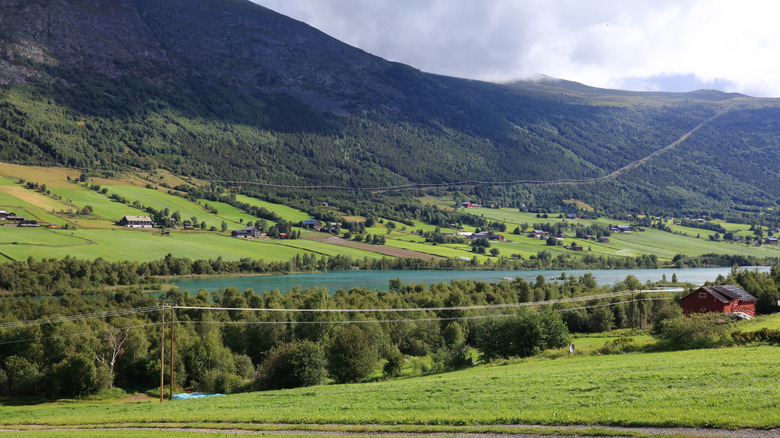
Norway is a top destination for dramatic mountain scenery. However, one secluded valley at the edge of the Jotunheimen Mountains held special meaning for King Harald V, who spent more than 30 years reigning over the country. Sikkilsdalen, a lush mountain valley branching off the Gudbrandsdalen region near Vinstra, became a place where Harald could step away from his royal duties for holidays, skiing, and moose hunting in the fall. He first came to know the region in his childhood and kept returning for decades.
The royal roots in the valley actually go back generations before King Harald V. Prinsehytta, the Norwegian royal family's private mountain property in Sikkilsdalen, was finished in 1902 and gifted to three Swedish princes. However, after Norway separated from Sweden in 1905, the lodge sat unused until former Swedish King Prince Gustaf Adolf gave it to Norway's King Olav V in 1924. In the years after this handover, the Norwegian royal family made Sikkilsdalen one of its traditional holiday retreats. Photographs on the Royal Court's website, show Harald skiing on Easter vacation in Sikkilsdalen with his family in 1950. Another photo taken 18 years later shows Harald and the soon-to-be Princess Sonja Haraldsen on Easter holiday together at Prinsehytta. That tradition continued well into their reign. As recently as Easter 2026, Harald and Queen Sonja returned to Prinsehytta for another holiday.
In 2019, Harald told reporters that Sikkilsdalen was important to the couple because it gave them somewhere to withdraw (via Aftenposten). While Harald died on August 28, 2026, his long attachment to Sikkilsdalen helps explain why this relatively little-known corner of Norway, one of the happiest countries in the world, deserves attention in its own right. The royal lodge is private, but the surrounding valley is very much a place travelers can experience for themselves.
Hike above Sikkilsdalen's valley for sweeping views of Norway's mountains
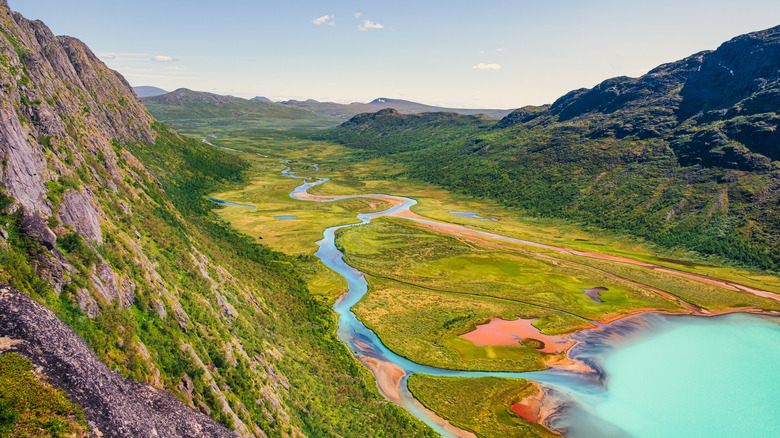
In all of Norway (one of Rick Steves' favorite places in Europe), Sikkilsdalen's isolation is part of what makes it such a favorite retreat for royalty. Open green pastures, glacial lakes, and high peaks surround Sikkilsdalen, while Jotunheimen's towering mountains rise nearby. It's around 3,300 feet above sea level at the historic Sikkilsdalseter Mountain Lodge, which is far removed from Norway's larger cities like Oslo and Bergen. The lodge dates back to 1868 and has been a family operation for five generations. Even for visitors who aren't interested in mountain hiking, it's a convenient base for opportunities to appreciate the valley, such as fishing for mountain trout, boating on the valley's glacial lakes, and skiing during the wintertime.
However, one of the best ways to appreciate the setting is by climbing Sikkilsdalshø, which overlooks the valley. Visit Norway lists a roughly 7.5-mile round-trip route from Sikkilsdalseter and classifies it as a challenging, full-day hike. The reward at the top is a panoramic view of famous peaks like the Besseggen ridge, icy-blue lakes, and nearby national parks. Hikers should watch out for the red trail markings as a guide upward.
From the valley, one of the closest mountain villages is Skåbu. Here, visitors can also find accommodations at Skåbu Fjellhotell, which offers quaint rooms, apartments, and suites for rent alongside the on-site, farm-to-table restaurant Skadir. Spring and summer walks on the trails around Skåbu offer chances to spot moose migrating through the mountains. The town is also a gateway into Jotunheimen National Park. While Jotunheimen isn't Norway's largest national park (the waterfall-filled Hardangervidda), it's home to some of the country's highest mountains and unique attractions, like preserved medieval stave churches. Getting to Skåbu requires a roughly three-hour scenic road trip from Oslo, or you can catch a train to nearby Vinstra, which offers bus service into the town.
Sikkilsdalen's horse tradition
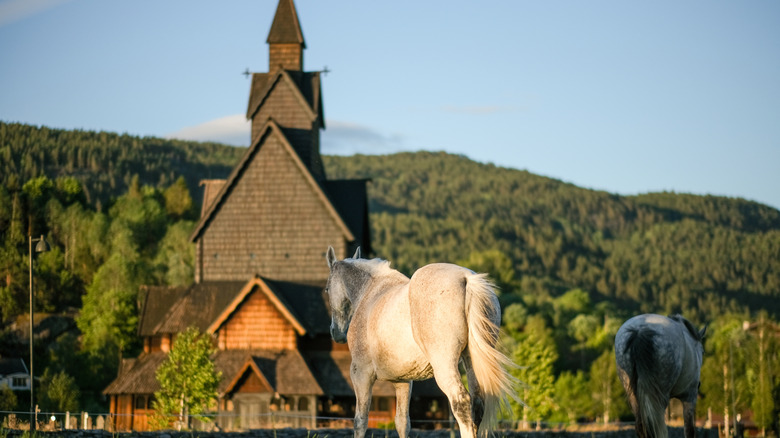
Sikkilsdalen's rich mountain pastures have also played a unique role in Norwegian horse breeding for more than 150 years. Horses were first brought into the valley for summer grazing in 1868, beginning a tradition that continues with the annual hesteslipp, or horse release. In early summer, stallions and mares are released onto the mountain pasture for their own mini-vacation. From June to late August or early September, the horses spend the season grazing in the open valley (and hopefully getting romantic along the way). The spring release is open to spectators and draws in horse lovers as well as locals maintaining this breeding tradition passed down through generations.
Reaching Sikkilsdalen is easiest in the warmer months. UT.no says you can drive to Sikkilsdalsseter from Skåbu during the summer, or even bike there. However, winter is much trickier. Visitors going into the valley typically must sleigh in, travel by horseback, or journey with a tracked vehicle. The limited winter access may discourage less adventurous travelers. Even the royal family traditionally traveled by train to the mountain village of Vinstra before continuing to their cabin, with a tracked vehicle needed for the final snowy stretch.
For most international visitors, summer offers the ideal visit. While Sikkilsdalen's royal connection put it on the map, its mountain appeal speaks for itself. Still, King Harald's return visits across more than seven decades say something about the valley's beauty. In a country known for spectacular landscapes, this was one he kept choosing to return to again and again.