
Not Everglades, Not Yellowstone: This Popular National Park Is Home To The Most Endangered Species
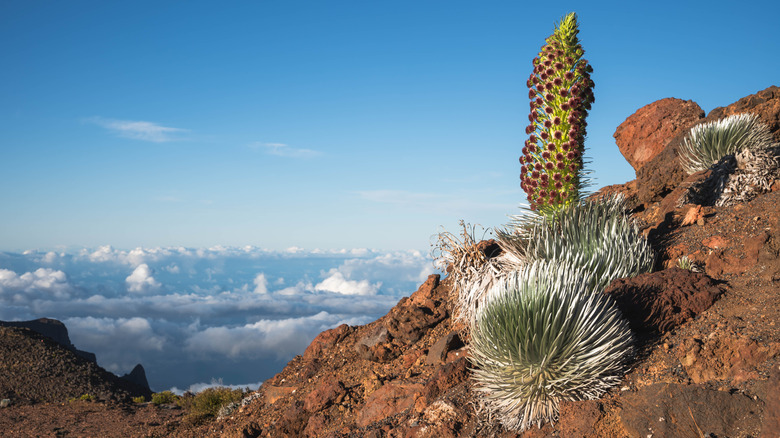
Over a hundred of America's rarest plants and animals find refuge in a place almost a million visitors flock to annually for its volcanic views. Haleakalā National Park — which encompasses the summit and slopes of Hawaii's third-largest volcano, Haleakalā, as well as lush coastal ecosystems — stands out for an even more remarkable reason: An analysis by the National Parks Conservation Association (NPCA) found that it has more endangered species than any other U.S. national park. Located on the island of Maui, the extraordinary concentration of rare life is partly a product of the island's isolation, as well as its dramatic range of habitats. Today, visitors can encounter some of those species simply by exploring the park: Hikers might spot the Haleakalā silversword, which grows only around the summit, or listen for one of Maui's six remaining native forest-bird species that the park protects. In other words, Haleakalā isn't just a destination for crater views — it's a refuge for an extraordinary number of species found nowhere else.
The NPCA worked with Defenders of Wildlife, a conservation nonprofit, to compare species' habitat ranges with each National Park Service (NPS) site. They used species data from the U.S. Fish and Wildlife Service, the Environmental Conservation Online System, and the NPS to tally threatened and endangered species numbers. Haleakalā came out on top by a wide margin: 103 endangered species live within the park, including 81 flowering plants and 10 birds. The total is striking even among other biologically significant parks. Florida's Everglades National Park had the largest number on the mainland, but with 44 endangered species, it still had fewer than half as many as Haleakalā. In Yellowstone National Park, iconic for its abundant wildlife, the NPCA analysis counted just two endangered species. That remarkable difference underscores just how important Haleakalā's varied habitats are, from its elevated volcanic slopes to lowland rainforest, for species with extremely limited ranges.
Visiting Haleakalā National Park for its rare species
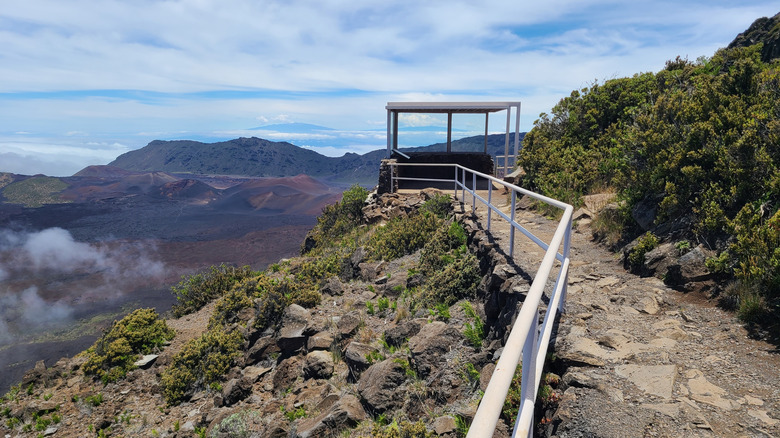
Haleakalā's biodiversity is part of what makes it such a special destination, and the park's visitor counts show this. In 2024, it saw 732,477 visitors, according to the NPS. That popularity can be a double-edged sword. On the positive side, the NPS notes that highly visible species, such as the silversword, serve as examples to educate the public on conservation. But large crowds also pose a risk for vulnerable residents, particularly if people leave designated areas, trample sensitive plants, or leave trash behind. For travelers, visiting Haleakalā comes with a responsibility: Stick to designated trails and keep wildlife wild.
With precautions in mind, a visit here is truly unlike anywhere else. You might get to spot some of America's rarest species below crater views or in misty cloud forests. The Hosmer Grove Trail, a roughly half-mile nature loop in the summit area, is an easier option (with only about 50 feet of elevation gain) for spotting native honeycreepers, a rare forest bird. The park's subalpine shrubland trails pass through habitats important to endangered species like the nēnē, or Hawaiian goose. At the summit, Kalahaku Overlook offers views into the crater where visitors may see the famous silversword. If seeing a silversword in bloom is a priority, you'll want to come in summer, although fall is the best time to visit Maui to avoid peak crowds. There are also longer hikes in the park that descend into the crater — the 11-mile Keoneheʻeheʻe (Sliding Sands) Trail even leads to unique wilderness cabins on the Haleakalā slopes.