
America's Worst City To Drive In Is A Popular East Coast Destination (And It's Not New York City)
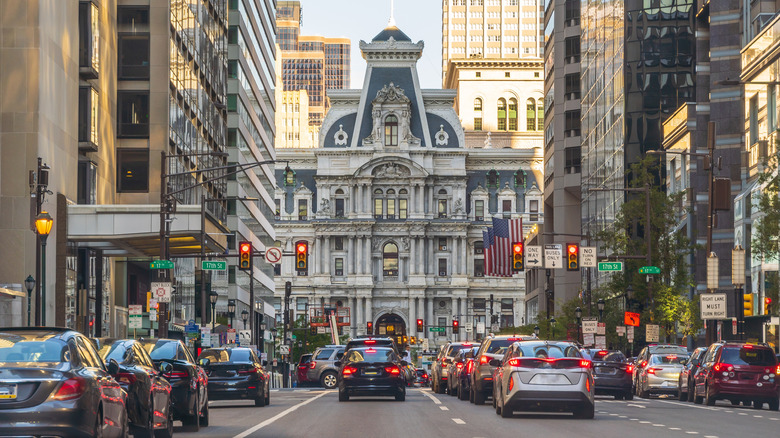
Philadelphia has been ranked the worst U.S. city for driving in a WalletHub study — beating out even New York City for the dubious honor. WalletHub's ranking placed the Pennsylvania city last among the nation's 100 largest cities, based on 30 measures ranging from traffic congestion and road quality to gas prices and auto-repair availability. That adds an extra consideration for travelers, particularly those planning to explore by car. For what it's worth, Philadelphia is hardly short on visitors: 26.6 million people visited the city in 2024, as reported by Visit Philadelphia. For those millions of people drawn by the Liberty Bell, cheesesteaks, museums, and historic streets, the ranking suggests that getting between these attractions by car might cause some headaches.
WalletHub's 30 metrics were grouped into four broader measures: cost of ownership and maintenance, traffic and infrastructure, safety, and access to vehicles and maintenance (i.e., things like car dealership and gas station availability). New York City ranked 97th overall, while Washington, D.C., and Oakland, California, took the 98th and 99th spots, respectively. Corpus Christi, Texas, took the top spot as the best city for driving. Some factors, like cost of ownership, are much more relevant to residents than to short-term visitors. For travelers, however, Philadelphia's particularly poor showings in traffic and infrastructure (97th) and safety (96th) are worth paying attention to, since congestion and safety-related measures affect anyone navigating the streets of Pennsylvania's city full of rich history and an amazing food scene.
The case for visiting Philadelphia without a car
Philadelphia's latest title is hardly out of character: The city has developed a reputation for stressful driving (being careful on the streets is one of Philadelphia's unwritten rules to know before visiting). One local wrote on Reddit, "Philly is a pretty stressful city to drive in. Plenty of visual clutter in the more metro areas, small streets, bad drivers, speed traps." Another user countered, "[P]hilly to me is incredibly simple to drive in," owing to "so many one lane one-way streets and very few complicated intersections." Still, the layout of the city doesn't make up for where Philadelphia scored worst, namely safety concerns and congestion. For example, the average Philadelphia-area driver lost about 70 hours to traffic in 2024, according to a report by the Texas A&M Transportation Institute.
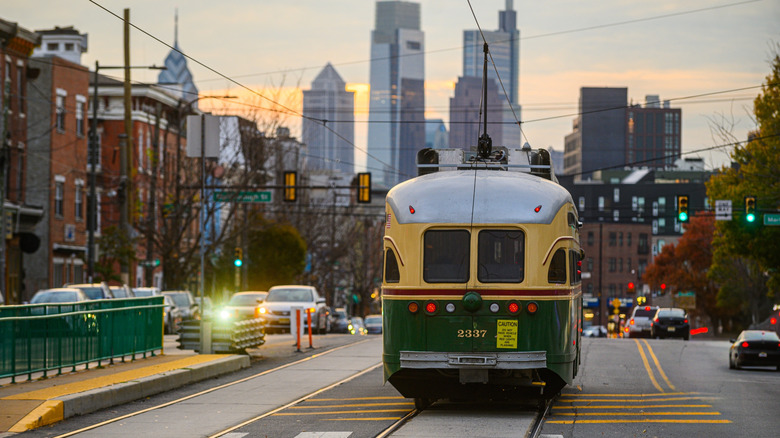
Concerns about driving don't necessarily make Philadelphia a destination to avoid. Rather, they make a stronger case for exploring the city on foot or with public transportation. Philly was crowned the most walkable U.S. city for 2026 by USA Today's 10Best Readers' Choice Awards. In Center City, for example, you can cover Independence Hall, the Liberty Bell, Reading Terminal Market, and the Pennsylvania Academy of the Fine Arts in a 30-minute walk. When your destination is farther afield, SEPTA (Philly's regional public-transit system) has buses, subways, trolleys, and a rail network that cover the city and surrounding counties. Walk Score ranked Philadelphia the sixth-most transit-friendly U.S. city, faring much better than its driving score. With SEPTA, you can get to and from Old City, Fishtown, University City, and the Philadelphia International Airport without having to deal with traffic or parking.