
Unwritten Rules You Should Know Before Visiting Philadelphia
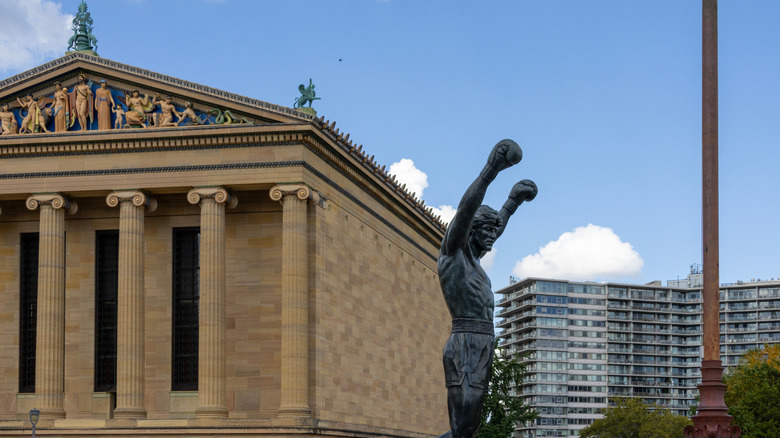
It is borderline shocking that Philadelphia is so underrated. The Washington Post has called the city a "perpetual underdog," while an article in The Independent featured the City of Brotherly Love as one of the most underrated cities hosting the 2026 FIFA World Cup. Still, when you consider everything there is to do, it seems the city should be more highly respected. In many ways, this is where the United States was born, and the city is packed with historic sites like Independence Hall and the iconic Liberty Bell. Sports enthusiasts will discover a passionate sports scene they'll either love or hate, and museum lovers will be spoiled for choice with plenty of engaging options, including the Philadelphia Museum of Art, which has the world's largest collection of impressionist and post-impressionist art.
The city holds plenty of other charms. If you're a foodie, Philadelphia is considered a culinary paradise and is home to one of the U.S.'s most iconic sandwiches (you know the one). Then there are the famous Rocky steps, and it's easy to find cool neighborhoods with breweries and art to explore. These splendid attractions are probably why those who visit quickly fall in love — and return at a rate of 80%, according to city officials (as reported by WHYY).
That was my family's experience when we first visited from our home in New York City. As big track and field fans, our reason for the two-day trip was the city's annual Penn Relays, but we found a down-to-earth city that was easy to love. We would return to the city and its surrounding counties for full vacations on many more occasions, and many of these tips were picked up from those trips, and local threads, blogs, and legislation were also consulted.
Always check if you have to bring your own alcohol to restaurants
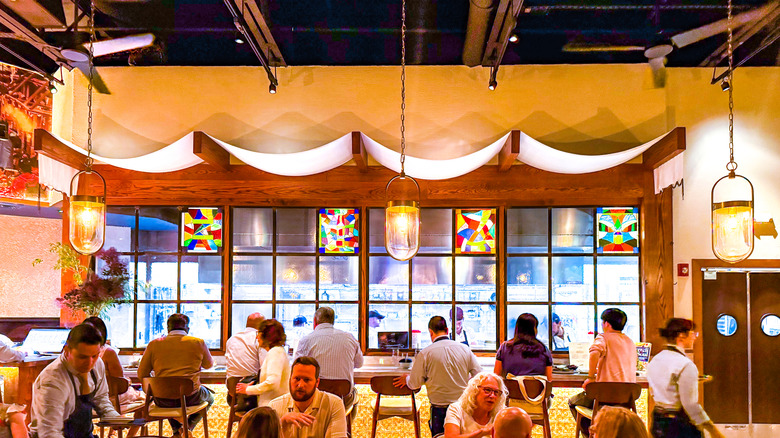
After visiting Philadelphia many times, I can confidently say that if you plan on dining out a lot during your trip, chances are high that you'll happen on a restaurant that doesn't serve alcohol. I've been to casual eateries where alcohol wasn't served — and that was expected. But I've also eaten in finer restaurants without a drinks menu, so you can expect this rule to apply across the board. The city has a high number of BYOB restaurants because of the difficulty food and drink establishments have obtaining the permit required to serve alcohol.
Alcohol sales are under the jurisdiction of the state government, with the Pennsylvania Liquor Control Board setting the regulations that eateries have to follow to obtain a license. In 1939, the board set a quota limiting how many permits could be issued, and that limit has already been met. This means restaurants can't apply for a new license through the board. The only way to get one is from a restaurant that had a license before the quota was met, but doing that is extremely expensive. To put it into perspective, where a restaurant can get a license for as little as $4,800 in NYC, it can cost up to $300,000 in Philadelphia. This translates to a restaurant scene where even popular eateries may not serve alcohol.
If you want to have drinks with your meal, check with your desired restaurant beforehand so you can arrange to bring your own if they don't serve spirits. A zero-proof dining scene has caught on in the city, with plenty of eateries crafting delicious drinks and cocktails without alcohol, so you may also want to consider checking out a restaurant with tasty non-alcoholic drinks.
Mentally prepare for Philadelphia's sports fanatics
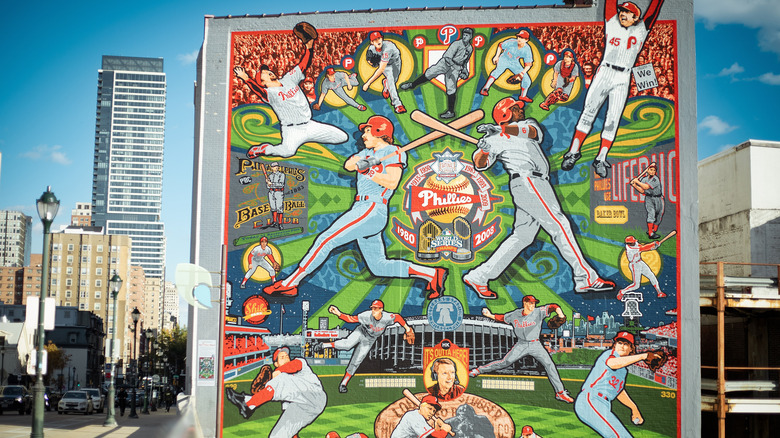
This rule applies whether you're visiting to attend a game or your trip happens to coincide with one of Philadelphia's sporting events. When I used to visit the city for Penn Relays and other games, I was always amazed at how passionate Philadelphians got about their teams (and I come from Jamaican heritage, where track and field culture is wild). I've witnessed street-side yelling matches after games, sidewalks clogged with congregated fans who refuse to budge, and cars full of fans yelling back and forth at each other in parking lots. In 2025, Eagles fans infamously destroyed city infrastructure after the Eagles won the Super Bowl.
If you're going to a game, things can get similarly rowdy. Documented incidents range from throwing objects onto the field (bracelets at a 2016 Flyers playoff and hot dogs at a 2025 Union game) to fans fighting each other. But it's not all bad news. I've seen endearing scenes like enthusiasts with their bodies fully painted in their team's color, groups singing hilariously off-key after a successful game, and the occasional camaraderie between followers of competing teams. These are a welcome reminder that Philly's sports fans can also be good-natured. Professor Timothy J. Brown argues as much in an article in The Conversation, where he theorizes that Philadelphia's reputation for "gritty" sports fans is unfairly earned, as positive incidents that disprove it are often ignored.
You can easily stay away from areas likely to be affected by sporting events if you do a bit of research to see if any games will coincide with your visit before you go. If you're visiting for a game, remain observant so you can leave your seat quickly if the crowd gets rowdy.
Order a cheesesteak but don't forget Philly's other sandwiches
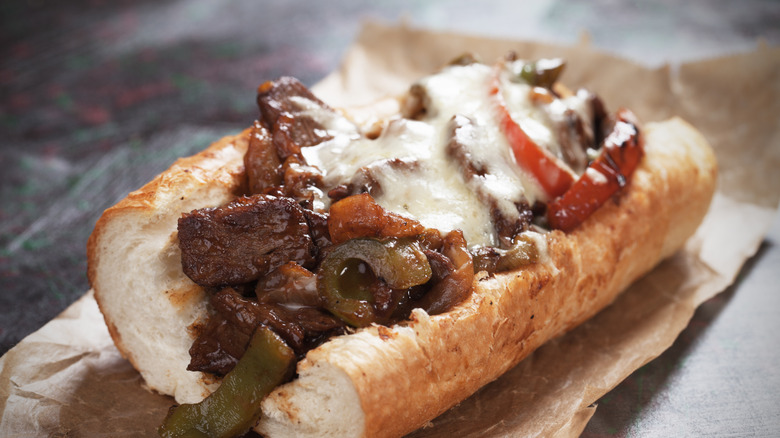
You likely know about the famous Philly cheesesteak sandwich. The cheesy, oniony concoction has stolen the hearts of sandwich lovers all around the nation and is Philadelphia's most iconic food. While cheesesteak sandwiches remain a must, Philadelphia is home to a few other delicious sandwiches you may want to try. The runner-up is the hoagie, a long-time staple that any visit to Philadelphia must include. Thanks to their combination of delicious ingredients, the city's popular roast pork sandwiches should also be on your 'to try' list.
While it's unclear where hoagies were invented, they have historic ties to Philadelphia's Italian community. The sandwiches start out on a long Italian roll, which is stuffed with Italian meats, lettuce, tomato, onion, and cheeses. For extra oomph, olive oil, vinegar, and spices are added. My favorite for hoagies is Ricci's Hoagies. And for cheesesteaks, Angelo's Pizzeria is around 10 minutes away on foot.
Roast pork sandwiches are another uniquely Philly food to add to your itinerary. Made with roast pork dripping its juices, broccoli rabe, and provolone, the flavorful sandwich has been part of Philadelphia's culture since 1930, when John's Roast Pork invented it. That original eatery remains one of the top places to try it. It's bested only by Tommy DiNic's Pork and Beef, according to Philadelphia sports blog Broad Street Hockey.
Use public transportation (but if you drive, be careful on the streets)
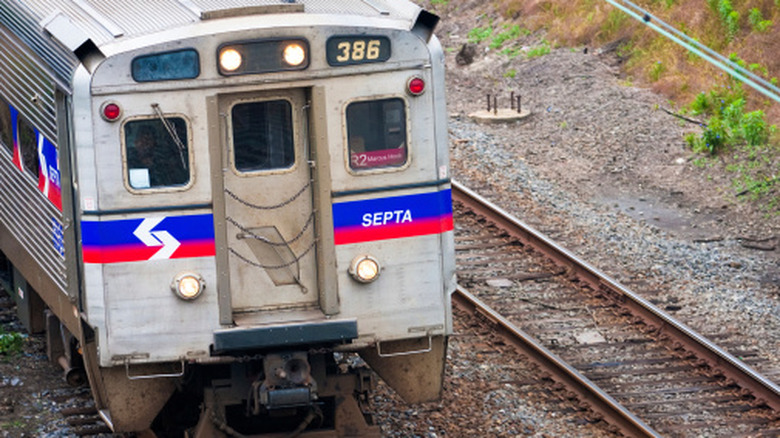
Philadelphia is known for having one of the best public transportation systems in the U.S. In fact, All Transit ranks the city's transit system seventh among the U.S.'s larger cities. The network, called SEPTA (Southeastern Pennsylvania Transportation Authority), is popular with locals as its extensive coverage of many attractions and destinations makes it possible to go completely car-free. I advise taking a page from the locals' book and using SEPTA to get around as much as possible
If you plan on attending a sports event, you can use SEPTA's metro to take you to Lincoln Financial Field, where the Eagles, Flyers, Sixers, and Phillies have their games. The metro also services popular Rittenhouse Square, a superb destination for dining and shopping. Other destinations like Chinatown and South Philly are similarly easy to reach on the train. The typical fare for a one-way ride is $2.90 per trip at the time of this writing (with steep discounts if you get a SEPTA Key Card and purchase a multi-trip pass).
Of course, you may prefer to drive. If you do, always drive cautiously. Philadelphia is the U.S.'s worst city to drive in, according to a 2025 study by WalletHub. Locals are known for hard brakes and fast starts, so always keep a good distance. There are consistent complaints about cell phone usage while driving, so be on the lookout for distracted drivers, too.
If it rains, head underground (in Center City)
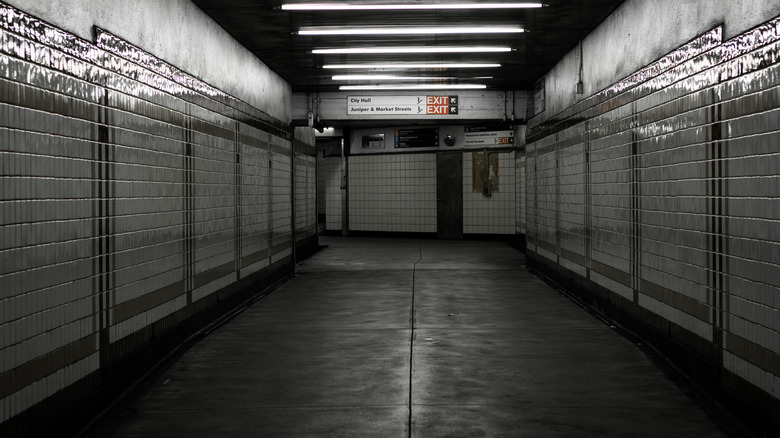
You'll probably head to Center City at some point in your trip. History buffs heading to Independence Hall or the Liberty Bell will find themselves in the area. If you plan on exploring attraction-filled Rittenhouse Square, you'll also need to head to Center City. And if enjoying the arts is on the itinerary, Philadelphia's arts district is also there. If it happens to rain while you're out and about in Center City, do as the locals do and head underground.
Center City has an extensive network of underground tunnels, called the Center City Pedestrian Concourse, that connect to the various metro train stations so commuters can escape inclement weather while trying to get a train. But you could also stay underground and walk between many points in the area. For example, if you wanted to do some shopping at the three-block-wide Fashion District Mall, you could easily use the concourse to walk there. You can also use the underground network to get to events at the Pennsylvania Conference Center and other attractions. The tunnels have many twists and turns, so be sure to get a map or precise directions before heading down.
Don't try to find 14th Street
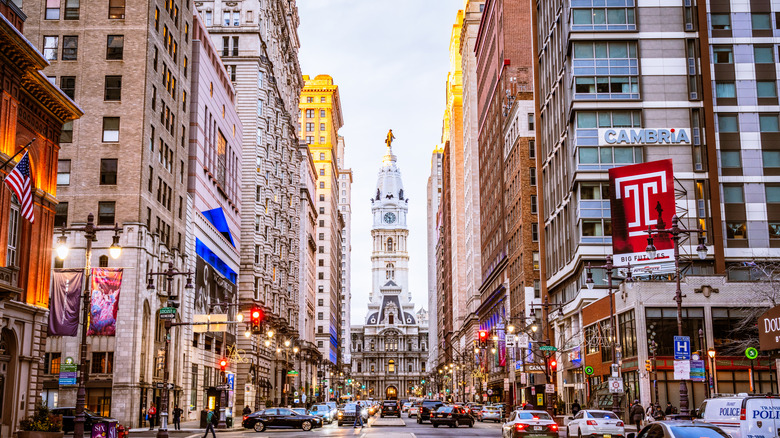
If you're heading to Philadelphia, don't be fooled: there is no such thing as 14th Street. It may seem that, since all of Philadelphia's north-south streets are numbered, there must be a 14th Street between 13th and 15th Streets. But there's never been a 14th Street in Philadelphia. If you ask for directions to 14th Street — or worse, insist to locals that it exists — you'll become fodder for laughs or annoyance. "A tourist stopped me on the street and asked, 'Where's 14th Street?' And I told him, 'There isn't one,'" shared one local on Reddit. " And before I could explain that it was actually Broad street, HE told ME, 'Yes there is.' So I just walked away."
The street that sits where 14th Street should be is called Broad Street, so named because of its massive width — Broad Street is 100 feet wide. Some think that Broad Street pre-exists Philadelphia's grid system, so when the street grid and its numerically named streets were laid out in the 17th century, it already stood where 14th Street should be. There is evidence, though, that the grid's designers, William Penn and Thomas Holmes, invented Broad Street as part of their original grid, so the validity of that story is questionable. Broad Street is where popular destinations like The Met, Kimmel Center of the Performing Arts, and one of America's oldest museums, the Pennsylvania Academy of Fine Arts, can be found, so you may just find yourself there at some point!
Check vendor hours if going to Reading Terminal Market on a Sunday
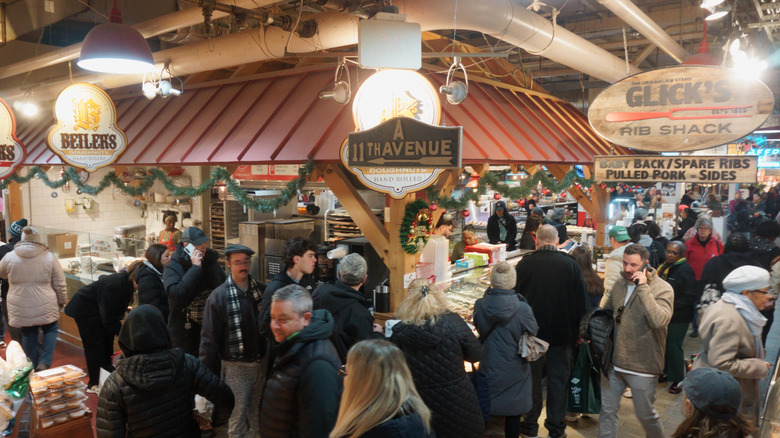
Reading Terminal Market is one of my family's favorite places to visit. From a vendor serving spicy Caribbean cuisine to Amish stalls with hearty meals, we've always been able to find something to satisfy everyone's taste buds here. Try to find some time to squeeze in the historic market, especially if you have a large family with diverse culinary leanings. But check the schedule if you plan on going on a Sunday, as some vendors do not open on the weekend.
The more than 80 stalls in the more than 100-year-old market include DiNic's, the award-winning eatery famous for serving a sandwich that's been voted the best sandwich in America. Famous 4th Street Cookie Company, a regular nominee in USA Today's best cookie shop category and one of its top 10 winners in 2023 and 2025, is also in the market. That said, if you're looking for foods from the Amish stalls, they all close on Sundays. The beloved Beiler's Bakery happens to fall into this category, so if you had your heart set on donuts from them, it's best to visit on a Saturday. You can check the opening hours on the individual merchant pages on the market's website for the opening hours of specific vendors before you go.
Don't expect to be served alcohol after 2 a.m.
Like the rest of Pennsylvania, Philadelphia establishments with alcohol permits have to close their doors and ensure all patrons have stopped drinking alcohol by 2:30 a.m. The law actually requires the restaurants and bars to stop serving alcohol at 2 a.m., leaving patrons with half an hour to finish up their drinks and leave the establishment. If you're visiting the city with plans to celebrate a special event into the wee hours of the morning, or you simply enjoy staying out drinking until late, you'll want to adjust your plans.
The law may be changing, though — or at least bending. In March 2026, Pennsylvania Governor Josh Shapiro signed a temporary bar hour extension, valid between June 11 and July 20, 2026, to allow approved bars to open until 4 a.m. The "Philadelphia 250 Permit" was created to accommodate traffic during America's 250th anniversary celebrations and the city's hosting of some matches of the FIFA World Cup. It's possible that this extension could pave the way for more such extensions in the future, or even a change to the law altogether.
Don't wear stiletto heels (even low ones) to some attractions
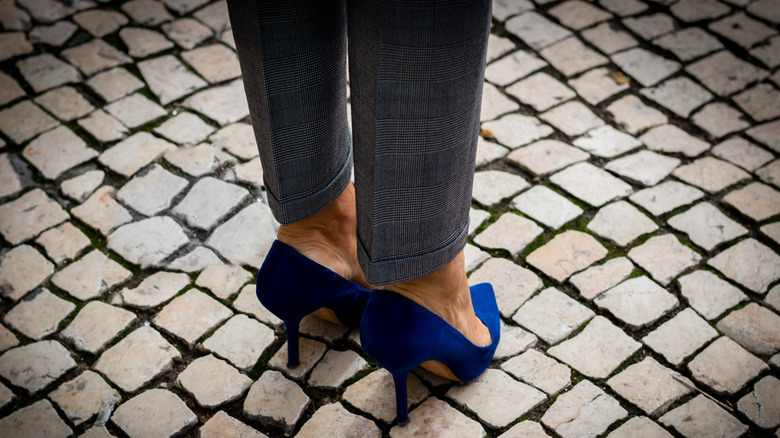
Although Philadelphia paved over most of its historic streets by the early 20th century, some still look like those picturesque cobblestone streets you see around Europe. Admittedly, the city's collection of cobblestone streets is nowhere near as extensive, but there are enough to make wearing the right shoes necessary. If you plan on visiting these areas, forget shoes with thin heels, even if they're the lower kitten heels, as they can easily get stuck in the grooves and lines of the cobblestone.
Attractions that still have cobblestone streets include Old City's Elfreth's Alley, a destination famous for its well-preserved, historic homes. The cobblestones extend to the sidewalks on both sides of the narrow street in many areas, so wearing improper shoes will make walking difficult. If your plans include the history-filled Headhouse Square, you'll similarly need to walk on cobblestones in the main square and on some streets. If you must wear high-heeled shoes, opt for wide stacked heels or wedge heels that won't get stuck in the lines and ridges on the cobblestone.
Explore the less-famous attractions
With Philadelphia being home to America's most historic square mile and a dizzying number of museums, you won't run out of things to do. But why visit one of America's quirkiest cities if you don't plan on going off the beaten track to some of the less-visited attractions? After you've done the famous things, try to see some of the unique, secret spots that make Philadelphia special.
For a different kind of museum, head to The Fabric Workshop and Museum or The Shoe Museum at Temple University School of Podiatric Medicine. Entry to the latter is free, so it's perfect if you're on a budget. If you enjoy fashion and celebrities, you'll probably like the exhibits of shoes worn by Nancy Reagan and Lucille Ball. For the history buffs, there are exhibits examining foot-binding in Chinese culture, burial sandals from Egypt, and Himalayan rope shoes. The Fabric Workshop and Museum is also free and offers unusual experiences like an art walk where quilts play an important part!
Don't bring your electric scooter
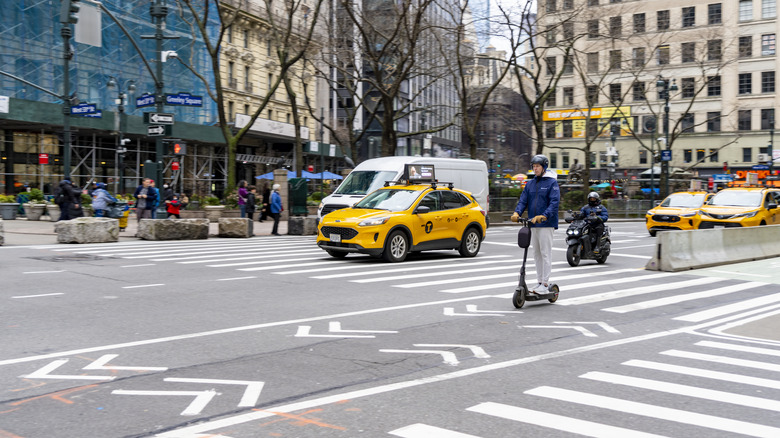
If you have kids who are into scooters, you probably know they want to carry their scooters everywhere. Many adults also love the convenience of navigating a city with a scooter. While the zippy inventions are convenient and freeing, not all cities welcome them if they are electric. Airports also ban most recreational types, so they are only an option if you're based on the East Coast and plan on driving into Philadelphia, or your scooter meets battery size requirements for flying. But that won't be your greatest issue. While surrounding cities like New York City and Baltimore allow electric scooters on public streets, Philadelphia's laws make them illegal.
The law stipulates that electric scooters are illegal on public thoroughfares, whether they're personally owned or from bikeshare companies like Lime and Bird. They are also banned from bike lanes where e-bikes are usually allowed. If you do infringe the law, you may be ticketed and fined. You could also lose your scooter pending the payment of fees to get it returned.
There is one bright spot if you or your kid really wants to use your electric scooter on your trip. If you plan on staying on private property with space for scooting around, the law does not prohibit them there. But you will still be responsible for any accidents they may cause.