
The Largest Artificial Lake In Nova Scotia Is A Freshwater Gem With Fishing, Wildlife, And Paddling
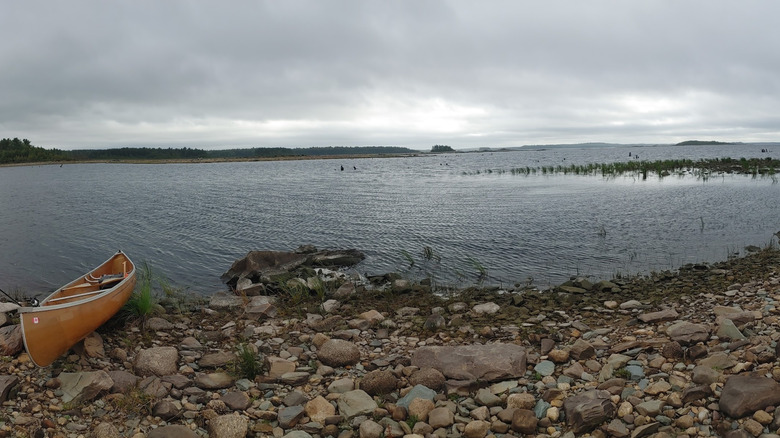
With a shoreline that extends for more than 8,000 miles, according to the Government of Nova Scotia, it's not surprising that life along Canada's East Coast revolves around the water. But that doesn't necessarily mean the Atlantic Ocean. Canada's second-smallest province is also home to more than 3,000 lakes. Its largest freshwater one, a reservoir called Lake Rossignol, is a peaceful spot to go fishing and paddling. You might even catch a glimpse of a rarely seen species in the Lake Rossignol Wilderness Area that borders it.
Waterways have always been vital in Southwest Nova Scotia. The province was originally the home of the Mi'kmaq people, who used its rivers to seasonally move between the abundant coast and the protected interior. After European settlers arrived, those rivers were used to first transport logs and then as recreational spots. One of those rivers, the Mersey, was eventually dammed by the Mersey Paper Company as a pulp and paper mill in the 1920s. As its dam flooded the area, it created numerous freshwater lakes, including the 9.3-mile-long and 12.5-mile-wide Lake Rossignol.
Lake Rossignol is in Queens County, one of the province's least populated regions. It sits just southeast of Kejimkujik National Park and National Historic Site and is now part of the Southwest Nova Biosphere Reserve. That nearly 4-million-acre area, which spreads across five counties in Southwest Nova Scotia, was designated a UNESCO biosphere reserve in 2001.
Go paddling and fishing on Lake Rossignol
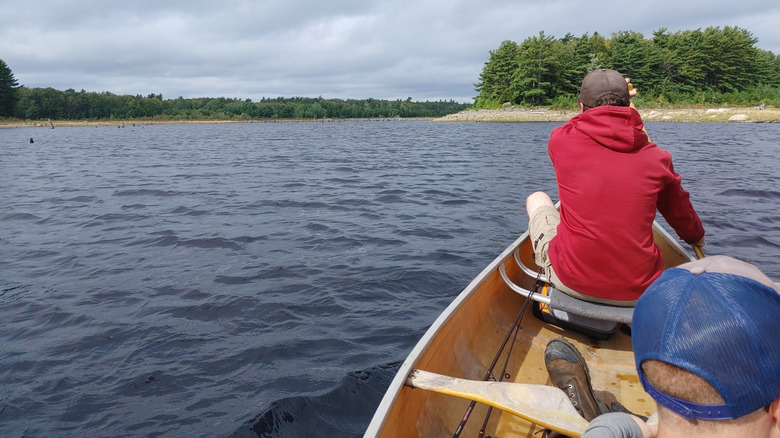
These days, remote Lake Rossignol — with its wooded shoreline, empty beaches, and hidden coves — is a tranquil spot to paddle across the water. You can access it from the Lake Rossignol Boat Ramp, which is easy to reach from Liverpool, a Canadian coastal town known for its affordability and endless outdoor fun. From the small town, which is home to fewer than 3,000 people, you'll follow the Mersey River northwest for 18 miles. You'll know you're getting close when you see Mersey Hydro Lower Lake Falls, a hydropower plant. The boat ramp, located where the river meets the lake, sits at the end of a gravel road.
Once you've pulled your canoe or kayak into the water, you can follow the Lake Rossignol Paddle trail. This 7.5-mile loop heads into open water before circling an island in the southeast corner of the lake. Strong winds can make this a challenging water route.
You can also go fishing on Lake Rossignol. Various trout, bass, and perch species are common in Nova Scotia and could be caught here. You can then return in the winter to go ice fishing, whose season usually runs from January to March when the lake is frozen. To go fishing on this lake, you'll need to obtain either a one-day or annual Nova Scotia fishing license in advance of your trip. Additionally, you must remember to submit a General Fishing Licence Report Card — detailing when, where, and what you caught — when you're finished.
Explore Lake Rossignol Wilderness Area along the lake
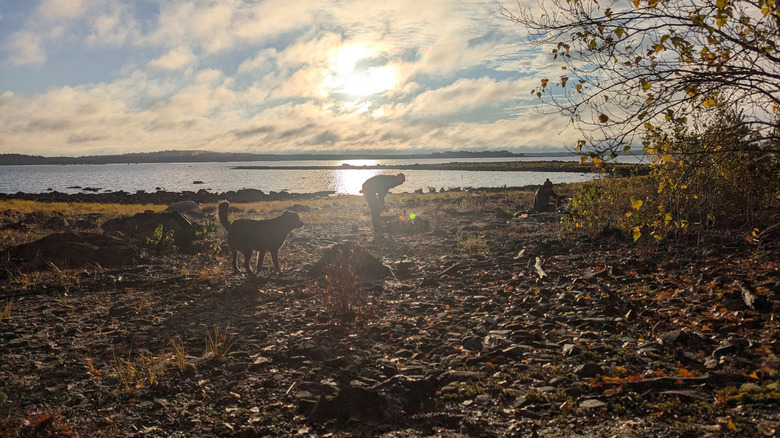
Though the pristine reservoir and serene water activities drew you to Lake Rossignol, they aren't the only reasons to visit this remote gem. There's also a nature preserve along the northeast shore of the lake. More than 10,000 acres were set aside as Lake Rossignol Wilderness Area in 1998. It was part of Nova Scotia's Wilderness Areas Protection Act, which sought to preserve biologically diverse areas while allowing people to use them for educational purposes, leisure activities, and scientific studies.
In Lake Rossignol Wilderness Area, you'll find old-growth forests covering glacier-formed drumlins, wild cranberry bogs, and conifer trees surrounded by wetlands. Black bears, red foxes, white-tailed deer, and even moose live here. The striped Eastern ribbon snake, an at-risk species, does, too. The one thing you probably won't find here is other people. There are no facilities or roads within the nature preserve. This is truly an untamed spot in Nova Scotia.
To reach Lake Rossignol, you can fly to Halifax, the capital of Nova Scotia and a vibrant Canadian harbor city with strong European vibes and maritime history. Halifax Stanfield International Airport (YHZ), which is the largest airport in Nova Scotia, receives nonstop flights from cities across North America and Europe. Then, before heading southwest toward the lake, you might want to take a quick detour to Musquodoboit Harbour, a stunning East Coast escape near Halifax.