
The 'Home Of The Killer Whale' Is A Historic Canadian Island Village With Incredible Wildlife Watching
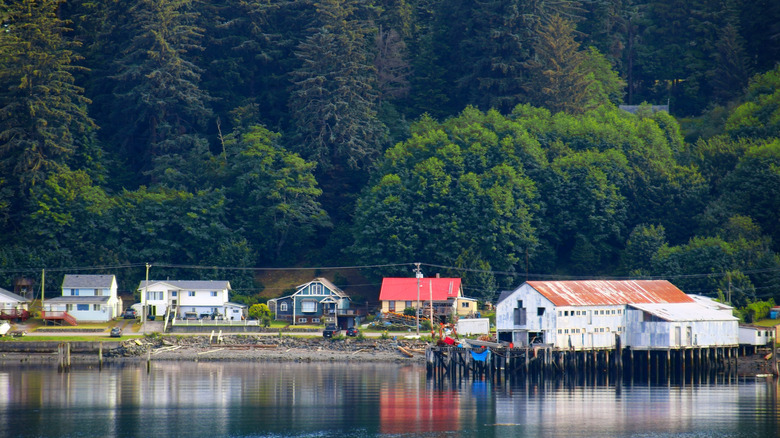
Travelers can truly appreciate how rich Canada is once they've experienced a taste of its vastness: its sprawling natural beauty, its First Nations communities and historic settlements, and its magnificent wildlife. If these are on your bucket list, head to Alert Bay, a charming fishing village in British Columbia known as "the home of the killer whale." This small, misty, maritime community is shared with the 'Namgis people, who call it 'Yalis. It's located on the southwestern coast of Cormorant Island in the Queen Charlotte Strait, just off the northeast coast of Vancouver Island.
Cormorant Island was once a summer fishing camp and seasonal stopover for the Kwakwaka'wakw people and was also used as a cemetery by the 'Namgis people. By the mid-19th century, European colonizers had established a settlement that developed into a thriving commercial fishing village. Today, the population of Alert Bay is just under 1,300, with the island home to the Village of Alert Bay and communities of the 'Namgis First Nation and other Kwakwaka'wakw peoples.
Alert Bay is also home to pods of killer whales that move through the cold waters of the Johnstone Strait and around the protected Robson Bight Ecological Reserve. It boasts a rich cultural heritage, as well as the world's tallest totem pole. Visitors can experience Alert Bay's historic waterfront area and enjoy a variety of outdoor activities, from kayaking, hiking, and biking to whale watching and more. At less than 3 miles long and just over half a mile wide at its narrowest, Cormorant Island and its main settlement of Alert Bay are easily walkable. A waterfront boardwalk links Alert Bay's ferry landing with U'mista Cultural Centre, one of the longest-operating cultural facilities in the province, as well as Alert Bay Ecological Park and the 'Namgis Original Burial Grounds.
Exploring Alert Bay and its cultural heritage
Historic buildings and harbor slips create a scenic backdrop along Alert Bay's waterfront walkway downtown. The visitor center offers information, maps, and an art exhibit. Stroll past the old wharf, a saltery-turned-cannery, an 1870s Anglican church, and the Fire Hall, now the Alert Bay Public Library & Museum. Then, check out Culture Shock Interactive Gallery, an Indigenous women-owned space showcasing art, jewelry, and coffee. Alert Bay Lodge and the Seine Boat Inn provide charming overnight options, as does the circa-1930s Orca Inn. Enjoy lunch at the Nimpkish Hotel & Restaurant or have dinner at Orca Restaurant.
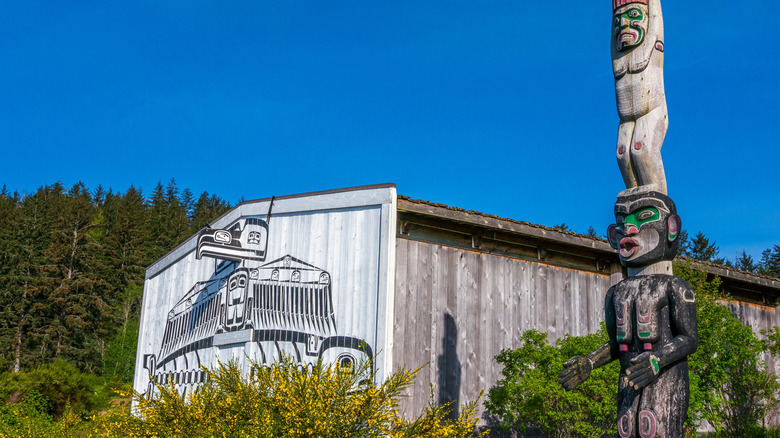
North along the boardwalk lies the U'mista Cultural Centre, featuring Indigenous artifacts, ceremonial masks, a gift shop, and classes and workshops. Take a 12-minute stroll from here to the 'Namgis Traditional Big House, which is modeled after traditional cedar-plank longhouses and remains a cultural hub for 'Namgis ceremonies and potlatches. Each summer, guests are invited to the Big House to watch traditional dance performances from the T'sasala Cultural Group. "A transformative experience!" shared one visitor. Next door, the world's tallest totem pole towers 173 feet high and features symbolism related to the Kwakwaka'wakw. More totems can be seen at the 'Namgis Original Burial Grounds south of downtown (the grounds are closed to the public, but visitors can observe them from the street).
East of downtown lies Alert Bay Ecological Park, known as "Gator Gardens" by locals. A boardwalk spans mossy swampland, while a trail system surrounds a graveyard of cedar trees and bogs. The overgrown element adds to the park's remote atmosphere. Expect to see a plethora of wildlife, including migrating birds, loons, eagles, and even humpback whales offshore. For a more immersive stay in nature, camp next door at the Alert Bay Campground, with tent and RV sites available.
Wildlife spotting and whale-watching around Alert Bay
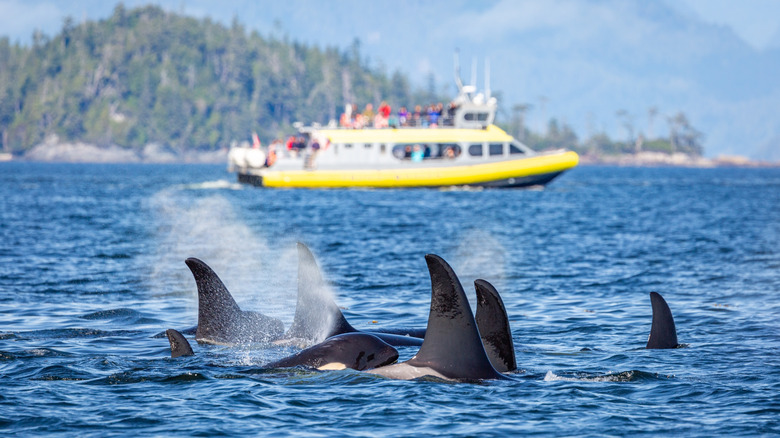
Alert Bay isn't called the "home of the killer whale" for nothing. Orcas, those black-and-white beauties also known as killer whales, live in the cold, nutrient-rich coastal waters of Alert Bay and its connecting channels: the Queen Charlotte Strait and the Johnstone Strait. Whale-watching tours from Alert Bay are popular, and June through October is a particularly popular time to head out with local tour operators like SeaSmoke Whale Watching. Intrepid travelers can even book kayak experiences out of Port McNeill for up-close encounters.
"We were lucky enough to see whales, porpoises, and sea otters, making it a truly unforgettable experience," wrote one previous traveler. Another praised the guides' wildlife expertise, sharing that "they answered every question and were genuinely excited by the animals and birds of the region." Visitors may also have the chance to observe orcas rubbing; that is, swimming into shallow waters to rub against stony ground, a phenomenon often witnessed nearby at the Robson Bight Ecological Reserve. Orcas aren't the only whales you'll see in the area — humpbacks and gray whales migrate through these waters, as do small minke whales.
One of the most straightforward ways to get to Alert Bay is to travel to Vancouver, an idyllic and vibrant Canadian destination. From there, flights connect to Vancouver Island via Pacific Coastal Airlines. Port Hardy Airport (YZT) is a 30-minute drive from Port McNeill, where you'll catch the 30- to 45-minute BC Ferries ride to Alert Bay. Before you go, read up on the unwritten rules you should know before visiting Canada. And for more outdoor adventures just across the Queen Charlotte Strait, consider visiting the Broughton Archipelago Marine Park, a Canadian gem with beaches, wildlife, and endless outdoor fun.