
Ignoring The Airport Liquid Rule With This Common Food Is A Red Flag For TSA
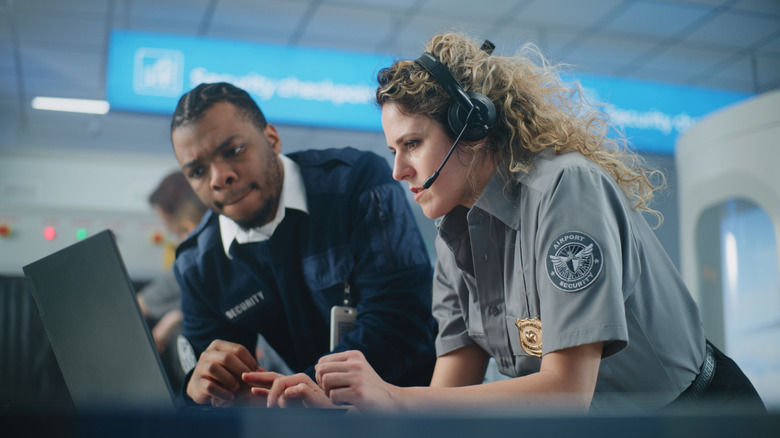
Picture this: You've meticulously packed your carry-on and checked luggage, distributing items between bags to ensure a smooth ride through the TSA checkpoints. Yet, despite all your planning, you're pulled out of the line for further screening after the TSA spots a common pantry item in your bag that violates its rules. The culprit? A single jar of peanut butter.
On September 3, 2026, the TSA took to X to remind the public that peanut butter is officially classified as a liquid under its rules, and thus falls under the agency's "3-1-1" limit. The post, captioned with "Peanut butter is a liquid... we said what we said... this time with receipts," is followed by a screenshot of Google's AI overview, which confirms that peanut butter is scientifically classified as a liquid and can only be packed in carry-on luggage if in a container that holds less than 3.4 ounces. If you choose to ignore the rule, expect to have your luggage flagged at the security checkpoint.
The post has sparked a debate online, with users weighing in on whether peanut butter should count as a liquid. Some replies ask whether frozen peanut butter is considered a liquid (the answer: no, as long as it's fully frozen), and others question whether this rule applies to chunky peanut butter (yes). Still more scoff at the idea of peanut butter being a liquid at all, arguing that you can't drink peanut butter, so it can't possibly be liquid. However, some replies point out that peanut butter is indeed a type of liquid — a non-Newtonian fluid, as user @brianoflondon says. This type of fluid changes shape if stress or pressure is applied to it, rather than automatically conforming to the shape of its container like regular liquids.
How to get around the TSA's confusing definitions of liquids and solids
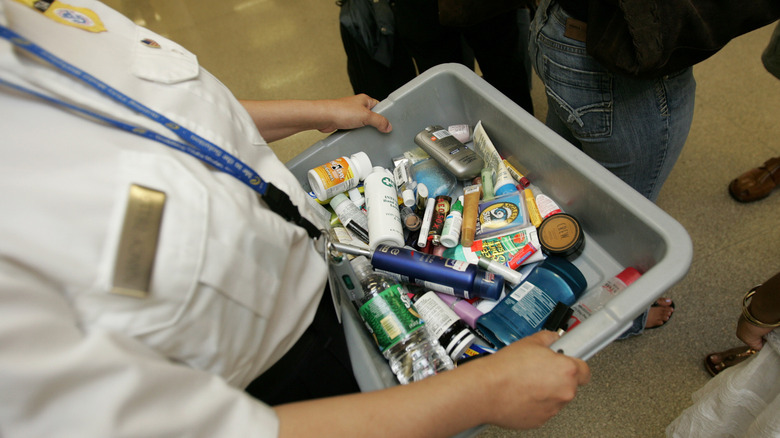
While the TSA considers peanut butter a liquid, it also classifies peanut butter sandwiches (and sandwiches in general) as a solid, according to its website. As you dig into the TSA's food and liquid rules, you'll realize that there can be some confusion over what counts as solid food and liquids. The TSA has several exemptions to its 3-1-1 liquids rule, such as wet wipes, sealed liquids from duty-free stores, and the aforementioned PB&J sandwiches. However, there are also some TSA food rules travelers must be aware of — like canned foods, sandwich spreads, and dips falling under the liquid limits.
These restrictions were created in response to a foiled terrorist attack involving liquid explosives in 2006. The agency's reminder on X also follows a similar incident in June 2026, when the TSA discovered a smoke grenade hidden in a jar of peanut butter. Given these incidents, TSA agents are trained to be suspicious of large cans or jars of liquid-y food.
If you're unwilling to risk an altercation with TSA agents over food items, a few simple workarounds can ensure you avoid the problem entirely. For dips, sauces, sandwich spreads, frosting, and similar foods, simply spread them onto your sandwiches or cakes first. And, to be safe, limit the amount you use to 3.4 ounces or less. Otherwise, eat before going through security. If you need food for the flight, scan the TSA's "What Can I Bring?" list before you start packing, so you can plan your meal around the kind of food that's allowed on the plane. We also suggest using TSA's packing tip and starting with an empty suitcase to ensure you don't unwittingly forget large cans or jars of food in your carry-on.