
France's Newest National Park Is A Forest Getaway With Trails And Rare Wildlife Just A Few Hours From Paris
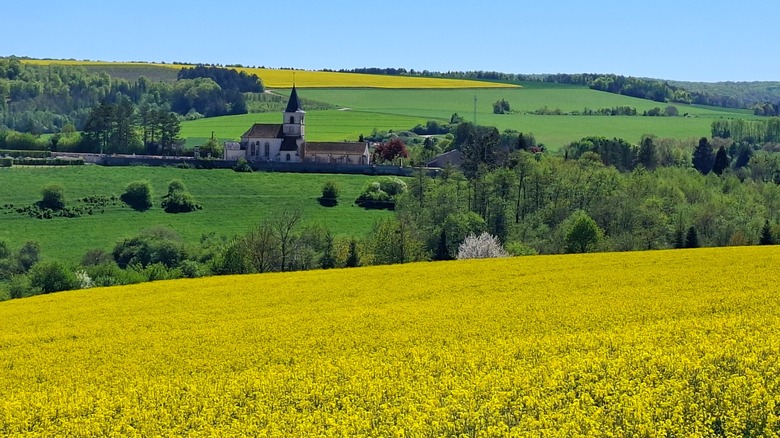
Once you've done Paris and surrounding treasures like Versailles, hop the train from Gare de Lyon for a journey into the dreamy French forest straddling the border of Burgundy and Champagne. Just three hours from the French capital lies Forêts National Park, an enchanting, forested region teeming with ancient trees, varied flora, and rare wildlife. With extensive trails, rivers,and wetlands, this precious green lung perched on the Plateau de Langres region became France's eleventh national park in 2019.
Encompassing a staggering 700 square miles of forest with more than 50 million trees and over 100 towns, Forêts National Park — officially the Parc National des Forêts de Champagne et Bourgogne — was created to protect the plants, animals, and archaeological sites within the medieval forests of Châtillonais and Champagne. Sixty towns sit within the park's core region, which is 95% forested. The park boasts one of the country's most diverse habitats for tree species, with beech, oak, and hornbeam forests thriving in the region's mixed Mediterranean-Alpine climate.
More than 370 miles of rivers, most notably the Aube, flow through the park, along with numerous springs, wetlands, and tufa marshes, like the tiered cascade in Rolampont. Forêts is also the source of the Seine. Located 25 miles from Dijon, a sculpture of a nymph reclining in a grotto marks the spot where seven springs converge at the head of the famous river. As the nearest city to the park, Dijon — an underrated French town with world-class wine — makes a natural starting point, but it's still an hour and 15 minutes by car and 1.5 hours by train from the park. Some towns in and near the park are easier to access than others, like Langres, which has a direct train from Dijon. More remote spots will require a rental car to explore.
Explore Forêts National Park's best sites along dozens of wondrous trails
Walking, hiking, cycling, and horseback riding along the park's trails are excellent ways to bring its forests, towns, and archaeological wonders to life. Countless trails cover hundreds of miles of terrain, ensuring scenic options abound for visitors of all physical levels. As you explore, keep an eye out for wildlife and unique botanicals like the Lady's Slipper orchid, the largest on the continent.
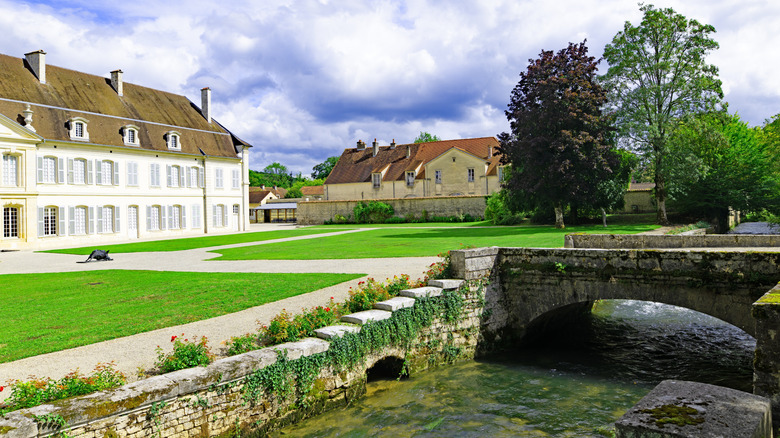
One of the park's biggest highlights is the sprawling, 12th-century Auberive Abbey (pictured above). You can take in this marvel on the Auberive Abbey loop, a gorgeous, easy hike that Komoot users give 4.7 stars. The two-hour trek starts and ends in the abbey's parking lot, located in its namesake town of Auberive, and meanders for 4.5 miles. Another easy, family-friendly path with 4.6 stars on AllTrails is the bucolic Chemin de la Brosse loop. The 1.9-mile, hour-long loop starts and ends in Musseau, a village housing a 13th-century church and several other historic buildings and sites.
Challenging but rewarding is the Neolithic Sites trail, a 9-mile loop that takes about five hours on foot or 2.5 hours by bike. It starts from the train station in the village of Chantraines. If you can brave climbing and crossing over rough, forested terrain, you'll see some of the park's coolest sites, like a Neolithic necropolis from 3000 B.C. and the 12th-century Septfontaines Abbey. For a moderate-intensity, history-filled jaunt best suited to biking, the picturesque 30-mile Gallo-Roman loop skirts the Marne River, Lac de la Mouche, ancient bridges, and a Roman-era structure. This trail passes through the city of Langres.
Marvel at Forêts National Park's diverse wildlife
Forêts National Park is a paradise for nature enthusiasts angling to glimpse abundant wildlife in one of Europe's biggest and most unspoiled protected areas. A great place to see animals is along the easy, two-hour loop trail around Chalmessin Marsh (Marais de Chalmessin). This massive woodland covered in tufa marshes, peat bogs, and forests of oak, cherry, and beech trees is prime real estate for spotting shrews, bats, badgers, and a rare viviparous lizard. Several insects zip about, too, including dragonflies and a whopping 65 species of butterfly.
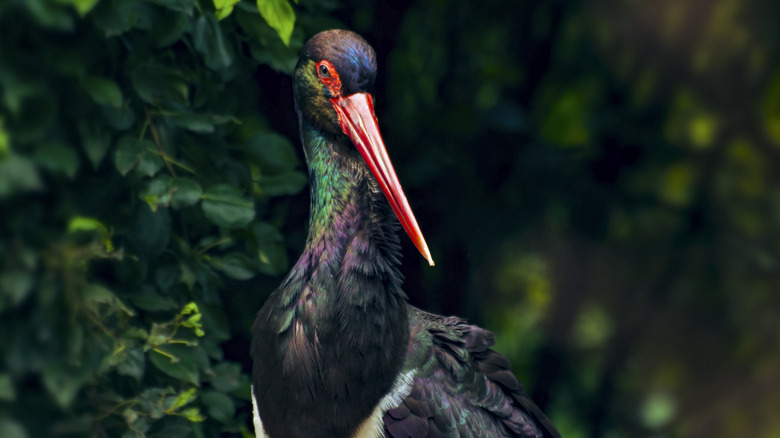
Here and along other trails throughout the park, prepare to meet red deer, roe deer, wild boar, foxes, and even reptiles. If you're lucky, you'll spy some of the park's rarest, most elusive mammals like the pine marten, a member of the weasel family, and the bushy-tailed European wildcat, a threatened species. Yellow-bellied toads, green frogs, and fire salamanders are among the 16 species of amphibians scampering about the park's wetlands. Soaring in the skies are Eurasian eagle-owls, peregrine falcons, and black storks, a striking, red-beaked migratory bird that nests in the tree canopy. About 20% of France's black storks take refuge in the park.
For salubrious air and stunning colors, plan to visit in fall. To avoid "Paris syndrome" on your vacation, skip the French capital and travel directly to Dijon or a similar town like Lyon, another less-crowded, budget alternative to Paris that's known as France's food capital.