
5 Oktoberfest Rules American Tourists Break Within The First 10 Minutes
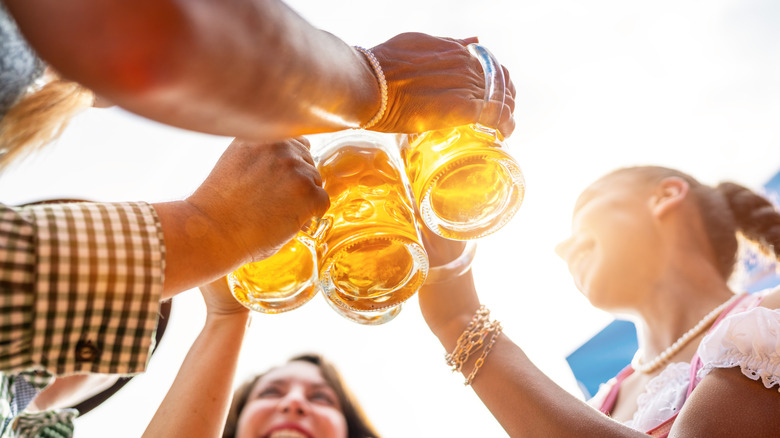
With Oktoberfest starting on September 19 in Munich, you may already be looking for lederhosen and dirndls, dreaming of shouting "Prost!" while tossing back a maßkrug of beer as Bavarian music blasts in the background. But wait, because poor planning can have you breaking some critical rules within the first 10 minutes of your arrival.
Every year, over two centuries of German folk tradition are distilled into 16 days of celebrations at the Theresienwiese (or Wiesn) — the festival's grounds in Munich. Over 6 million guests arrive for the flagship German event. What started in 1810 as a grandiose royal wedding reception has since become a series of raucous events, mixing outdoor beer gardens with tents and the (in)famous lederhosen that feed the Oktoberfest stereotype. From the outside, it looks like a bonanza of beer and pretzels. That stereotype robs visitors of the intricate play between German folk tradition, common decency, logical etiquette, and the oft-contradictory money-making urges of the travel industry.
It's easy to mistake "festive" for a lawlessness that's quite un-German. Some rules and laws require little explanation: keep your hands to yourself, use the facilities when you hear nature's call, public intoxication is frowned upon, and don't bring fireworks (aka explosives). The social costs of these faux pas and disapproving looks from die Deutschen are just part of the hazard. Guests with a carefree attitude often end up ruining the event for themselves and their compatriots. So here are five ways to avoid being declared a Rüpel ("lout").
Your sightseeing bag may not see Oktoberfest
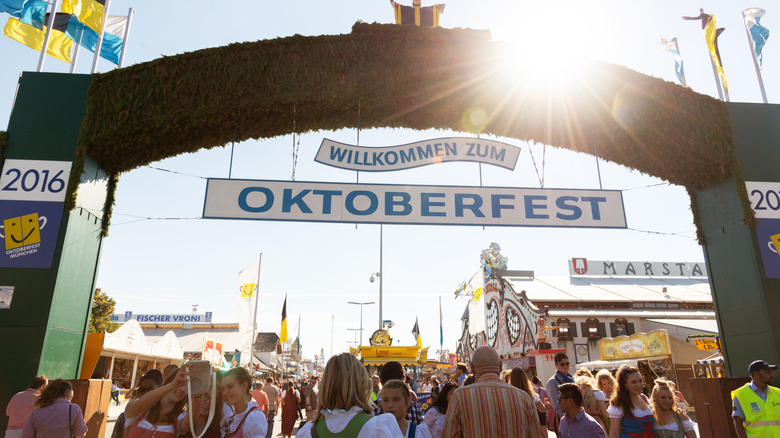
Forget the first 10 minutes; your first major transgression may happen before you even enter the Wiesn, home to one of the largest and best festivals in the world. You may be tempted to bring the full travel kit: electronics, chargers, cables, a camelback for hydration, spare clothes, and room for a souvenir. Curtail those ambitions. The grounds at Munich's Oktoberfest are fenced off and guarded by security and police, with strict rules about what can and cannot be brought in. The regulations stipulate that bags fit within strict dimensions (8 x 6 x 4 inches) and volume (three liters).
Those who have to carry many of their worldly belongings must leave their bags at one of four select entrances, for a $6-ish fee (5 euros). If your "worldly belongings" are a child, then you're in luck. The organizers generally do allow strollers, but only until 6 p.m.
The bigger question is, why would you need such a large bag in the first place? With 35 tents serving Munich-made beer, egged on by bands knocking out the steady march of Bavarian tunes, your hands will likely be full of food and beer, leaving little room for a fancy camera and selfie stick. You won't need to bring a personal hydration station either. Organizers recently added free drinking water with taps at select locations around the Wiesn. Leave the rucksack at home and come empty-handed so you can hold some brews.
Cash, not plastic
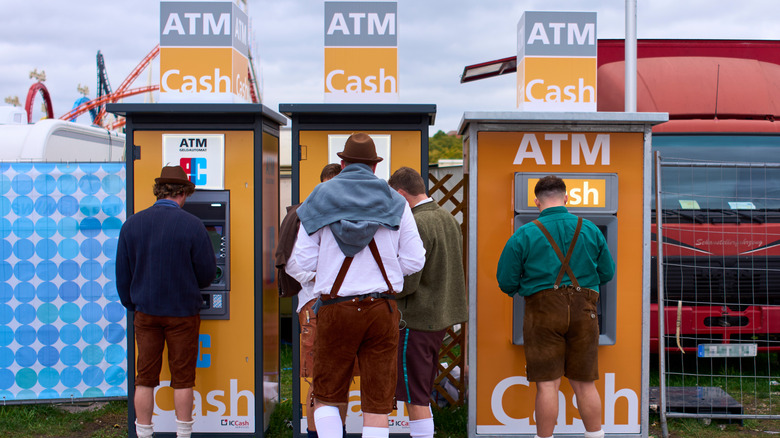
Your shnazzy stateside club-and-pub habits may involve leaving a card to open a tab or tapping to pay. Yet your plastic or contactless phone payment won't go far at Oktoberfest, where cash reigns supreme. When hitting a tent or a beer garden, have a fat wad of euros ready. It'll make several local habits easier to follow.
The tents themselves are generally cash-only, though some allow debit cards in certain circumstances. That means every maß or plate of food will come with a bill you can only pay in euros. There are ATMs located within the Wiesn, though visitors report that the fees can get onerous. Bank-operated ATMs are located at the entrances to the grounds, though you'd best check your bank's ATM and foreign withdrawal fees first. The organizers are making inroads into more contactless payments, which, in their words, are "fortunately continuing to grow."
Keeping a wad of smaller bills and larger-denomination coins on hand will make transactions with the waitresses run smoothly (no tabs, you pay per round). It'll also make tipping them easier — and yes, you should tip. As the Germans say, "nur bares ist wahres" ("only cash is true").
Get familiar with the seating policy
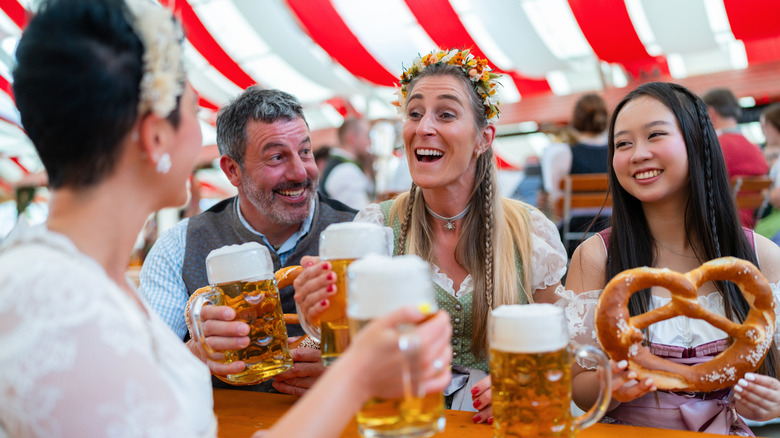
You walk into a crowded tent and think you've seen this before at the clubs and bars back home. If you don't have a place to sit, elbow up alongside other patrons and call an order, expecting some bar service. Nein! The penchant for drinking on your feet is a big faux pas within Oktoberfest's tents, where hanging around like the cast of "King of the Hill," holding beers and saying "Yep," makes you a human speed bump for beer-hauling servers. In general, aisles should be kept clear in the tents. The servers will help find a place to sit, according to visitors.
This creates the fraught, oft-scary realization that comes with communal seating. It's that first day of high school lunch scenario, but you'll have to live with the initial awkwardness and let the jovial environment take over. Hogging seats or saving them is completely unacceptable, according to Ashley Smith at the My Wanderlusty Life travel blog. "At Oktoberfest, the rule is basically 'finders, keepers' when it comes to seats in a beer tent," she writes. "There's no holding of seats for people who aren't there yet, and, if not another thirsty soul, then your server will definitely fill that spot."
Your best solution is to make a reservation for you and your party. Even though a large portion of the tables are left for general admission, many tents allow group reservations well ahead of the festivities. You can also boost your odds of finding a seat by arriving early, well ahead of the 6 p.m. surge. If there's no seating inside the tent, many have adjacent outdoor beer gardens that are just as fun.
Tables are for glasses
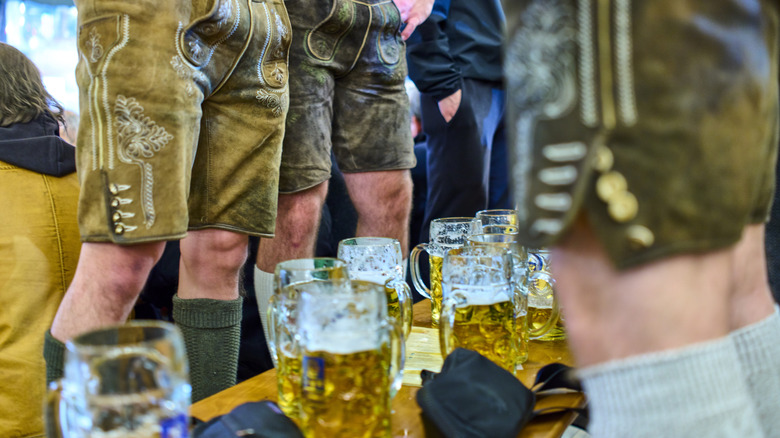
You may have a notion that when an Oktoberfest crowd gets rowdy, a few particularly jolly members rise above the din, both literally and sonically, standing on the benches and then on the tables, swinging their maß of beer through the air and belting a jolly tune. This is all hogwash. While plenty of shenanigans can happen, guests climbing atop tables and perhaps serenading the crowd aren't part of the deal.
One guest discovered the Oktoberfest red line firsthand. After witnessing a few tabletop dances and parties at other tents, he wrote on Reddit that he "hopped up on the table, serenaded the crowd, chugged a beer (spilling a good amount down my shirt) and hopped off." Security was waiting for him as he dismounted, and escorted him out with a stern warning that sent him hightailing back to his hotel. Other Reddit users responded with resounding agreement that a line was crossed. "It is never a good idea to get on the table," one commenter wrote. "It just isn't."
That penchant for dancing on the benches has a downside, as anyone who's ever had a shoulder doused in beer can attest. One astute Oktoberfest guest offered a concrete solution. "Bring a spare plastic bag to store your jacket in while in the tent," they shared on Reddit. "You can tie the bag to the table. That way it doesn't sit on the beer-soaked floor, the jacket, etc., is protected from beer, it doesn't get misplaced, and everything is in one spot."
From BYOB to bierleichen: the sins of maß
Munich's drinking culture offers a tremendous opportunity to explore the traditions and rich lineage of beers that originate in Bavaria. Yet it's easy to get carried away. Simply landing at Munich's airport leaves you at Airbräu, where you can get a taste of an authentic German beer garden without leaving the airport. It may be your first encounter with the city's drinking culture, and the perfect place to stop calling the glasses your server brings you "steins." They're colloquially called a maß (pronounced "moss"), a shorthand for the one-liter glass housing your brew — a maßkrug.
Germans take their beer seriously, to the point where a group of inspectors ensures your maß is properly filled. The Verein Gegen Betrügerisches Einschenken (Association Against Fraudulent Pouring) provides the vital consumer protection ensuring the foam on your beer doesn't dip below the top line of your glass, a rare occurrence. Don't try to sidestep the system by BYOB-ing at a tent or in a garden. That's strictly forbidden.
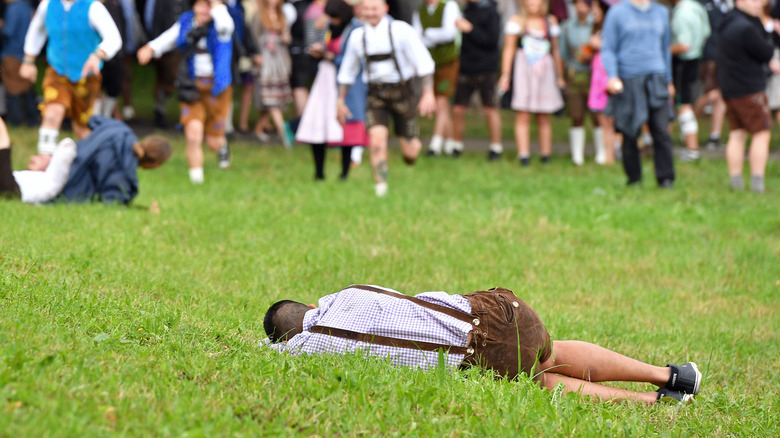
Of course, there's a downside to relying on the local brew — it's pretty drinkable and quite potent, so it's easy to get carried away. The Germans have encountered this phenomenon often enough to coin the term "bierleichen," or "beer corpses." You can find them lined up on the hill opposite the beer tents. On Reddit, one visitor suggested alternating beers and radlers to ostensibly keep intoxication levels in check. A confounding assertion, but worth a try, perhaps. If you do overdo it, try to walk home. Munich is the most walkable city in the world, after all.