
The Largest And Best Festivals In The World
We may receive a commission on purchases made from links.
If you're an Islands reader, you probably don't need an excuse to travel. Instead, as a true travel junkie, any day off work or house-sitting already offers the perfect reason to book a getaway. But some events around the world give you an extra incentive to hop on a plane, no matter how expensive the jacked-up hotel rates are or how long the lines are guaranteed to be. So, Islands rounded up the largest and best festivals on the planet that should be on your travel bucket list, no matter if you're a theater fanatic or a beer nerd. Our chosen festivals range from the largest greenfield festival on the planet, which attracts some of today's biggest artists, to a Carnival so wild it was banned for more than two centuries.
With so many amazing festivals all over the world, it wasn't easy to decide which made the cut. To do so, we first evaluated which festivals are true cultural icons, known around the globe and written about by the media, including Conde Nast Traveler, Britannica, Time Out, and Get Your Guide, for being the juggernauts they are. Then, we considered which of those fetch the most attendees, always numbering in at least 20,000 people, although many have numbers stretching into the millions. Finally, we weighed each festival's number of attendees and cultural value together to see which are the most worth marking on the calendar.
Carnival (Rio de Janeiro, Brazil)
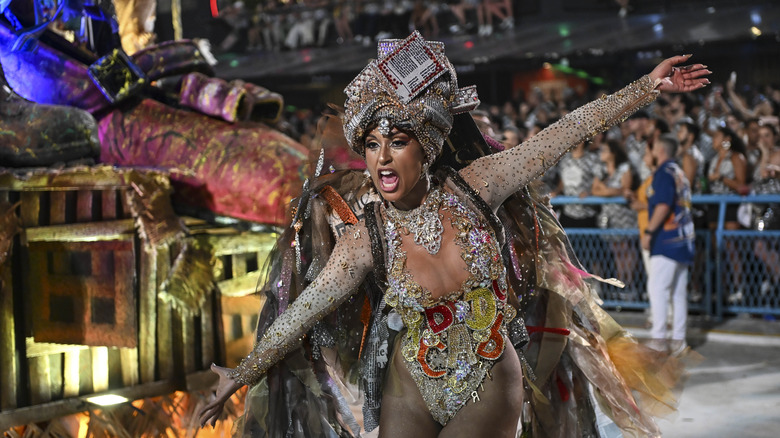
Lent is the 40 days before Easter when Catholics give up their most beloved luxuries. But all over the world, they get a little spirited before Lent starts on Ash Wednesday. One of those places is Rio de Janeiro, Brazil, where Carnival is so big that the Sambadrome was built to accommodate it.
During Carnival, bedazzled-costumed samba schools gather within the Sambadrome for the five days prior to Ash Wednesday and strut their stuff in parades in front of 80,000 people. Each performance is developed over months specifically for Carnival and outfitted with over-the-top floats to boot. Three dozen judges then choose that year's winning school on Ash Wednesday. It's so popular that more than one million people from around the world head here, sometimes buying their tickets months in advance. It's so treasured in Brazil that some Brazilians spend months squirreling away their earnings to buy a ticket.
Luckily, there are plenty of ways to celebrate Carnival in Rio de Janeiro even if you don't score a Sambadrome ticket. Hundreds of street bands called blocos organize their own outdoor parties, picking up participants and dancing to samba along the way as streets close for the fun. These parties marked the beginning of Carnival festivities in the late 1700s, before the Sambadrome was built in 1984. The parties are for everyone, regardless of age. Hotel balls, in spots like the upscale Copacabana Palace or Gloria, also attract Carnival partygoers.
Carnival (Venice, Italy)
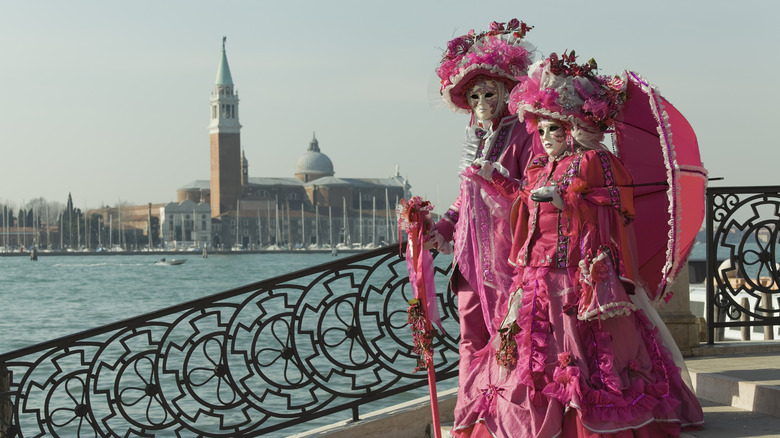
Venice, Italy's Carnival is another that's worth indulging in. It's so massive that Venice starts its pre-Lenten celebration two weeks before the 40 days of fasting, beginning with a floating parade down the Grand Canal. Performers outfitted in masks, as well as dancers, acrobats, and musicians, fill the space. Much of Carnival's action culminates in St. Mark's Square, where costume winners are named atop a wooden stage. The winner of the annual Festival of the 12 Marias, an instrumental part of Carnival, is also crowned here at the end of the celebration.
But interestingly, Venice's Carnival didn't even start with the Lenten time it's now associated with. The city's first Carnival was held in 1162 to celebrate a military victory over Aquileia. Since it was near Lent, it morphed into a Lenten festivity over the years. These days, more than three million people from all over the globe head to Venice to let loose for Carnival. Since every year has a different theme — past themes included "In the time of Casanova" — there's also always a new ambiance to enjoy. You can also check it out from atop the Campanile di San Marco, aka St. Mark's Bell Tower, which is the tallest structure in Venice and offers the best panoramic views of the city.
Coachella (Indio, California)
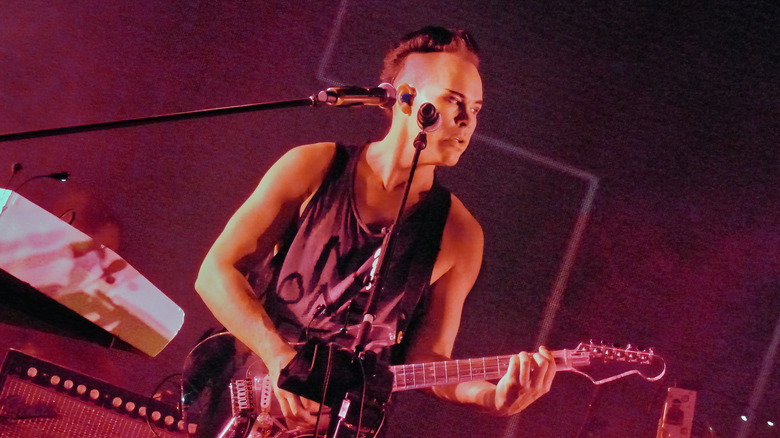
The Coachella Valley Music and Arts Festival is a pop culture phenomenon, attracting celebrities both onstage and off. A-list performers such as Madonna, Jay-Z, Paul McCartney, Beyoncé, Megan Thee Stallion, and Bad Bunny have all performed here. It's held annually over two weekends in April on the fields of the Empire Polo Club in Indio, California. Besides big-name stars, it also hosts up-and-coming musicians who perform rock, pop, hip-hop, and electronic tunes. Celebrities are, however, welcome to attend, and they do.
With such a star-studded guest list and lineup of performers, it's no surprise that Coachella tickets sell for hundreds or even thousands of dollars, and also sell out quickly even though they go on sale nearly a year in advance. If you do snag tickets, first read this first-timer's ultimate guide to navigating Coachella.
Coachella attracts more than 120,000 people each weekend from more than 60 countries — for more than just music. Since Coachella is also an arts festival, both fashion and art are important components, too. Festivalgoers dress to the nines in modern hippie getups with flower crowns and cowboy boots. They also pose in front of eye-popping sculptures and immersive pieces.
Dia de Los Muertos (Mexico)
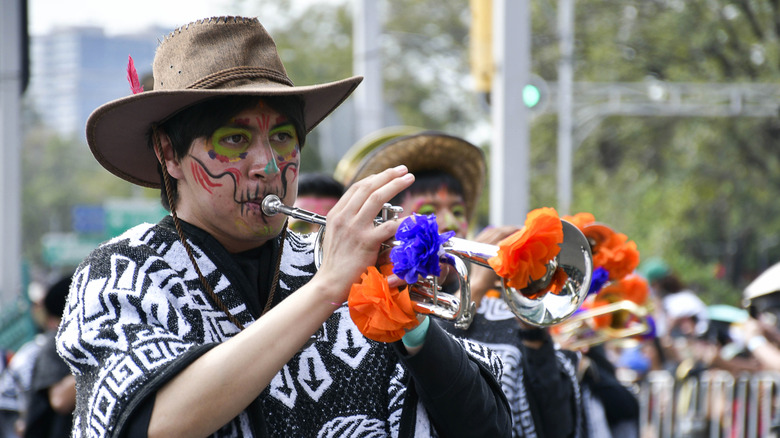
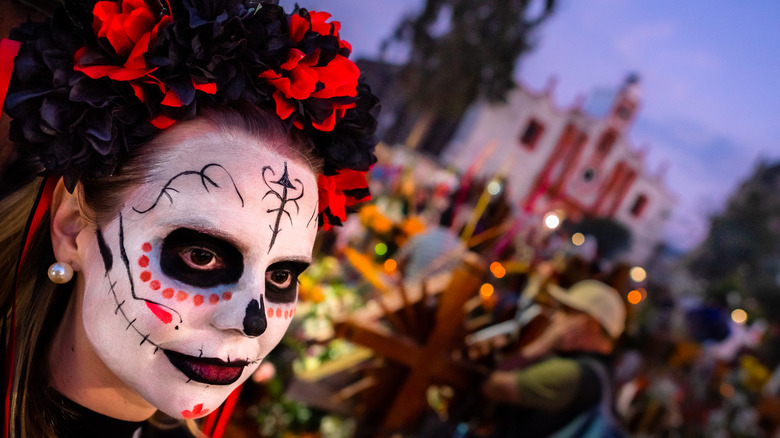
Dia de Los Muertos, which translates to "Day of the Dead," sounds like a morbid holiday. But unlike Halloween, which is often associated with it, Día de Los Muertos, celebrated in Mexico, is anything but morbid. Instead, this two-day holiday rejoices in both life and death, celebrating children who have passed on Nov. 1 and adults who have passed on Nov. 2. It's believed that on these days, those who have passed are reunited with their loved ones. It's been a tradition since the times of the Toltec and Aztec, although it has evolved throughout the centuries.
Just like the food and customs throughout Mexico, Día de los Muertos celebrations vary by region, though there are also similarities. The Día de Los Muertos parade in Mexico City is particularly extravagant, drawing 1.5 million people in 2025. Meanwhile, other jaw-dropping celebrations are held in Mexican spots such as Oaxaca, which also hosts parades and performers, while those on Janitzio Island light candles and sing throughout their local cemeteries.
Back home, Mexicans help deceased souls "find" their families by creating altars, called ofrendas, with marigolds, photos of the deceased, their favorite foods, and sugar skulls. Sugar skulls are handmade, colorful skulls made of clay or sugar. These skulls are usually smiling as a way to "smile" at death. Other items on the ofrendas may include toys for the departed children, liquor for the departed adults, candles, and maybe even towels and washbasins so souls can cleanse themselves before briefly rejoining the living.
Edinburgh Fringe Festival (Edinburgh, Scotland, United Kingdom)
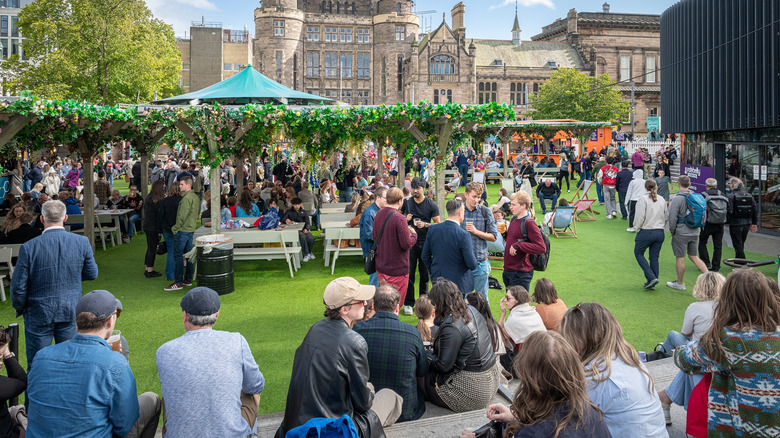
When the government-funded Edinburgh International Festival launched in 1947, it invited a few select theater troupes from around the world to perform in the Scottish capital. But some local theater troupes were left wondering where their invitation was. So, during the inaugural Edinburgh International Festival, they too launched their own festival on the "fringe," which later became the Edinburgh Fringe Festival. It's grown into a massive operation that commands the city, offering more than 2,000 shows and 32,000 performances, including plays and exhibitions at various city venues. A few of the venues include Summerhall, Pleasance Dome, and Pleasance Courtyard. In 2025, more than 2.6 million people purchased tickets.
"The Fringe," as it's dubbed, runs for three weeks each August. It still coincides with two of the same weeks as the Edinburgh International Festival. And just like the Edinburgh Fringe Festival did in its first year, it still welcomes unregistered participants. Anyone who wants to showcase anything, from their dance performance to their kids' show, can do so as long as they find a venue. The festival is equally laissez-faire for spectators, since tickets are usually under 20 pounds and some are free. Plus, tons of walk-up tickets are usually available, and most seats are first-come, first-served.
Glastonbury Festival (Somerset, England, United Kingdom)
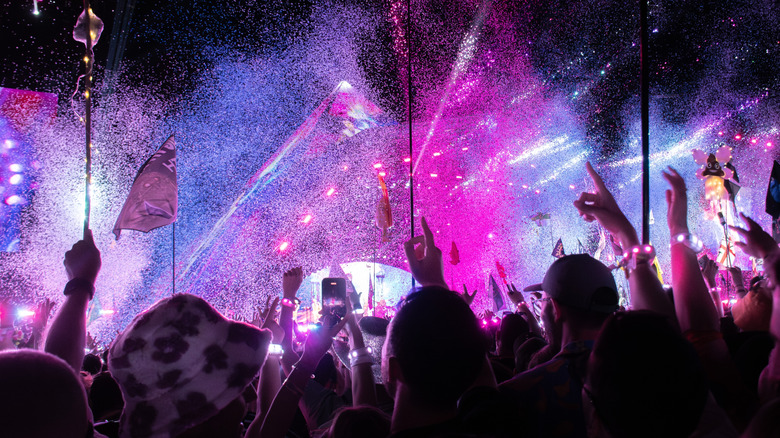
The United Kingdom has another must-visit summer festival. The village of Pilton in Somerset, England, hosts the annual Glastonbury Festival, the largest greenfield music festival on the planet. Over the years, it has showcased both up-and-coming artists and A-list stars, including David Bowie, Paul McCartney, Beyoncé, Johnny Cash, Radiohead, and Adele. Music genres ranging from hip hop to blues grace the stages. It annually attracts more than 200,000 people over five days in June, and millions more people watch it online or live on the BBC.
With such massive numbers and names, it's hard to believe that the counterculture-themed festival began in 1970 as a humble music festival on a dairy farm with 1,500 attendees. For one pound, attendants got to jam out to some tunes, camp, and get free milk. Nowadays, the festival spans 900 acres and features performance art and installations, including pieces by Banksy. Despite all the growth the festival has enjoyed, its flagship themes remain environmental consciousness and spirituality alongside music. Even its Pyramid Stage embodies spirituality, as it's located along an invisible line thought to connect prominent landmarks and the planet's mystical energy.
Plus, beyond being a music festival, the Glastonbury Festival has benefited charitable organizations like Greenpeace and WaterAid and has also served as a platform for healthy debate. Talks are held on the Left Field stage, and artists have addressed prominent issues during their performances.
Holi (India)
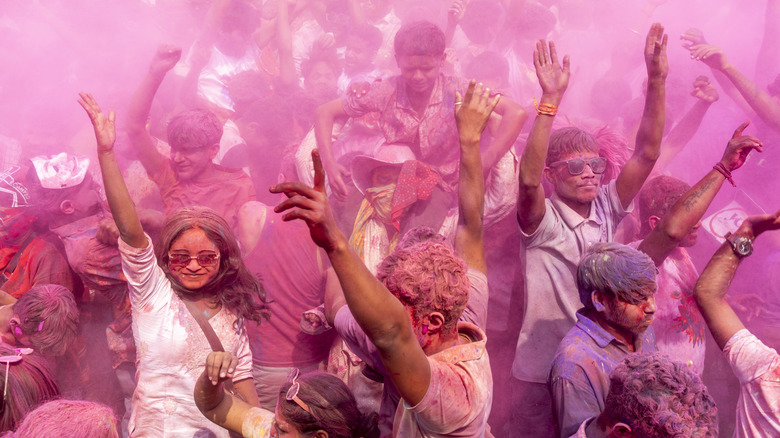
With colored water and powder flying through the air, Holi is one of the world's most striking festivals. Known as the Festival of Colors, this Hindu celebration takes place over two days in February or March. The timing depends on when the full moon, known as Purnima, is in Phalguna, the final month on the Hindu calendar. During the day, people throw colored powder and water. Each color has its own meaning. For example, yellow is for health and sunshine, and red is for love. At night, people light bonfires to signify the disintegration of evil. They also eat traditional Holi foods such as gujiya, a sweet pastry stuffed with condensed milk and nuts, and radga chaat, a savory food made with dried white peas that's topped with onions, tomatoes, chutney, and spices.
Holi is celebrated by millions of people in places all over the world, making it unique among many of the other festivals on this list. Although no one is sure how Holi started, several myths describe its beginnings. One legend states that there was a malevolent leader named King Hiranyakashipu who made all of his subjects treat him as a god. His son, Prahlad — a follower of the Hindu god Vishnu — refused to do the same. So, King Hiranyakashipu had his sister Holika help him kill Prahlad. Since Holika supposedly couldn't be burned, she took Prahlad into a fire. However, Vishnu protected Prahlad, and Holika perished — thus symbolizing the triumph of good over evil.
Yi Peng Lantern Festival (Chiang Mai, Thailand)
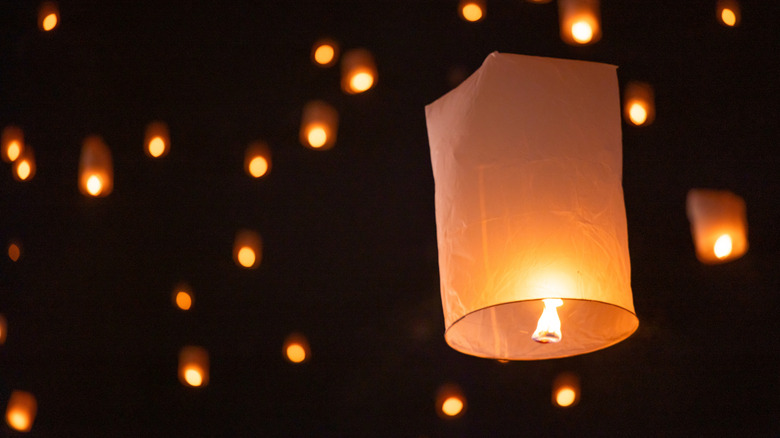
Wouldn't it be wonderful to simply release your worries into the sky to finally be rid of them? At the Yi Peng Lantern Festival in Chiang Mai, Thailand, that's exactly what more than 20,000 people do. During the 2- to 3-day festival, people release glowing paper lanterns that symbolize their anxieties by nightfall, while Buddhist monks pray.
It's a tradition in Lanna culture, which is prevalent in Northern Thailand, especially in Chiang Mai, the former Lanna capital. Lanna people believe that by releasing these lanterns, they can start the new year (and end the monsoon season) with good luck. The timing is also how the Yi Peng Lantern Festival got its name, as "yi" means two and "peng" means the full moon of the second month of the Lanna lunar calendar. This usually brings the Yi Peng Lantern Festival to be celebrated in November.
The Yi Peng Lantern Festival has been a tradition for at least seven centuries. At that time, the Lanna people released lanterns from outside their homes to express their commitment to the Buddha. These days, the festival also includes street décor, temple ceremonies, music and dancing, and lantern-making classes.
Mardi Gras (New Orleans, Louisiana)
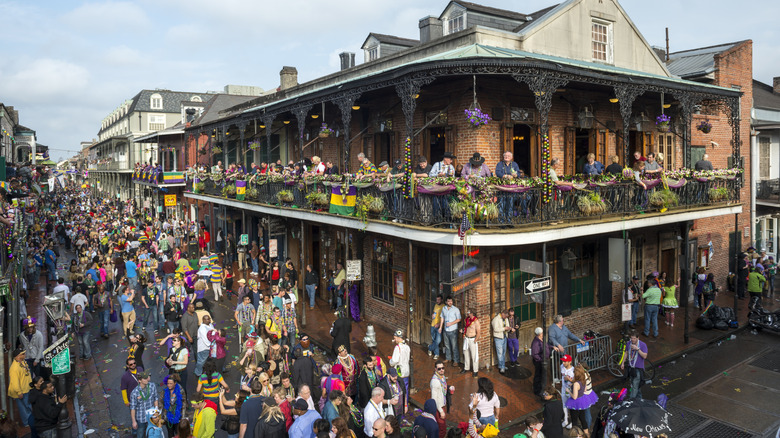
New Orleans, Louisiana, is a city of indulgences, whether it's a Saturday or a Tuesday. But no Tuesday is more raucous than Fat Tuesday, the final day of Mardi Gras. Representing the final hurrah before the start of Lent, this day includes parades, costumes, and purple, green, and gold beads.
One of the most iconic parts of New Orleans' Mardi Gras celebration is its lively parades that feature jaw-dropping floats, dance troupes, and marching bands. Beads, doubloons, and other items are tossed to festivalgoers, who range from families to college kids. The festivities attract more than one million people every year. If that sounds too overwhelming, then you can also avoid Mardi Gras crowds by heading to New Orleans during Halloween, when the city is just as festive.
But to get in on the Mardi Gras excitement, don a costume, or even just the festival's purple, green, and gold colors. While you're there, you can also give back in this meaningful way by volunteering to collect recyclable waste left by partgoers. However, since Mardi Gras begins on the Twelfth Night (the day of the Christian Epiphany) on January 6, there is fun to be had in New Orleans for weeks. It's been a hallmark since the 1700s, when French settlers brought their traditions to the Bayou State.
Mawazine (Rabat, Morocco)
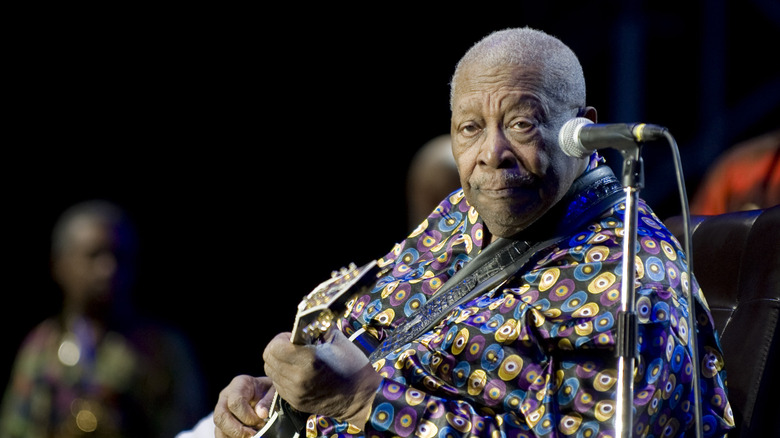
If you're a music festival junkie, it isn't hard to find a fun music festival to attend anytime you're ready to hear some tunes. But in size — as well as price — none surpass Mawazine in Rabat, Morocco. With more than 3.75 million visitors in 2025, Mawazine is the most-attended music festival on the planet. Contributing to that is the fact that 90% of its more than 80 concerts, which are held over nine days in June, are free, making Mawazine accessible to all.
Established in 2001, the massive festival showcases Moroccan and Arab artists alongside today's biggest performers, hosting over 200 musicians across all ages and genres. Musicians have included Rihanna, Beyoncé, Shakira, Elton John, Stevie Wonder, Carlos Santana, and Justin Timberlake. They perform at venues throughout Rabat and beyond, including OLM Souissi, the main stage; Nahda, which focuses on Asian and Arabic tunes; and Bouregreg, which spotlights up-and-coming artists. Acts are even hosted at the Chellah Roman and medieval archaeological site for a one-of-a-kind experience.
Oktoberfest (Munich, Germany)
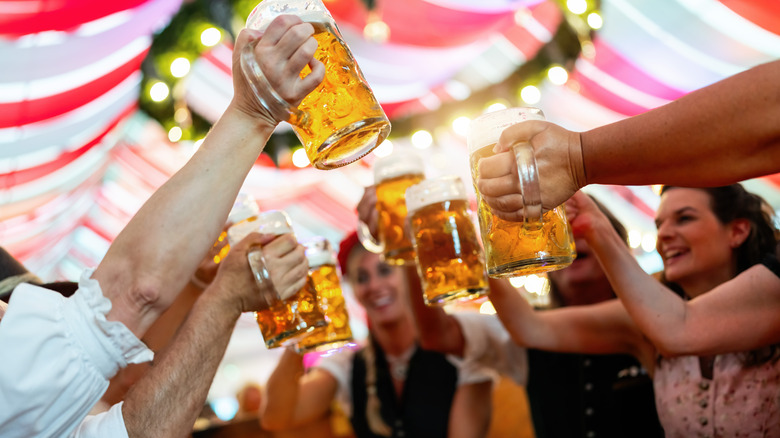
It's hard to resist the charms of nearly 40 beer tents and more than 100 rides. That's why Oktoberfest in Munich, Germany, attracts more than six million people from all over the planet every year, making it the biggest folk festival on earth. They can start the fun before even leaving the airport, as the Munich airport has an authentic German beer garden.
In this massive carnival, people flock to Theresienwiese for more than two weeks in September and October while wearing traditional lederhosen and dirndl garb. Besides chugging beers and going on historic rides, they also often attend Oktoberfest's flagship 8,000-person parade.
Oktoberfest is as old as it is lively. The first rendition of the festival took place in 1810 to celebrate Prince Ludwig's marriage to Princess Therese von Sachsen-Hildburghausen in a nearly weeklong reception. It was such fun that the newlyweds decided to host it every year. Nowadays, the Oktoberfest timeframe includes September since the month tends to have better weather in Bavaria. If you can't make it this fall, then head to Chicago, which might be the best place to celebrate Oktoberfest outside of Germany.