
The One Rule That Sets Scotland Apart From The Rest Of The UK As A Camping And Hiking Destination
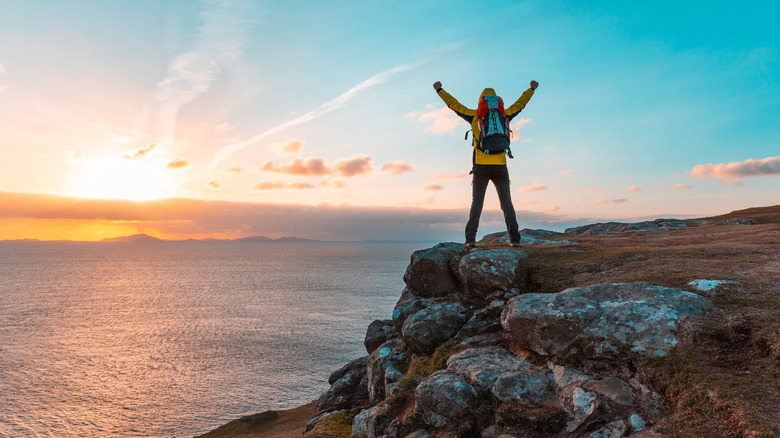
First-time visitors tend to notice it right away: Scotland is very open. More than half of Scotland is moorland, characterized by grass and marsh. The horizon is often dominated by rocky highlands. The landscape opens onto more than 30,000 lakes (or "lochs"), and its edges are an 11,600-mile jigsaw puzzle of seashore and 900 distinct islands, only a fraction of which are inhabited. You'll probably spot large patches of forest, but only one fifth of the land is covered in trees. In short, Scotland is a realm of vast spaces and epic views. No wonder golf — a game that sprawls over huge amounts of empty land — was invented on Scotland's eastern coast.
So it makes sense that Scotland would legalize the "Right to Roam." As a cultural guideline, the right to roam has ancient origins, as shepherds and rovers wandered freely across heaths for millennia. Yet the nation decided to codify this practice into law, with the (literally) groundbreaking Land Reform (Scotland) Act of 2003. The law asserts that travelers may responsibly move through the country, including over private property, without being considered trespassers. In theory, you could start hiking from a town like Gretna, right on the English border, and walk 350 miles to the mainland's northernmost point of John O' Groats, and never once get kicked out or asked what you're doing there.
This right generally extends to camping as well, which is a boon for long-distance hikers looking for a place to crash for the night. However, the same way unspoken campground etiquette rules in the U.S. separate newbies from pros, adventurers in Scotland should know what the Right to Roam actually means. The policy is liberating, but it comes with certain expectations.
How to observe Scotland's Right to Roam
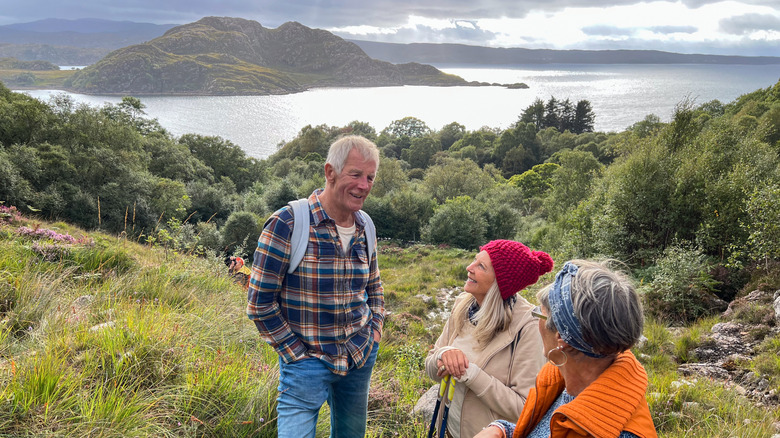
Scotland has won a lot of admiration for its Right to Roam law, but it's hardly alone: Most Scandinavian countries have similar rules, and Central Asia is famous for its nomadic peoples and absence of fences. England has its own version of this policy, although it comes with more restrictions and "excepted lands," which make sense for a country that's more densely populated. Once you venture north of Edinburgh and Glasgow, however, habitation is sparser, and many of Scotland's immaculate destinations will pull you far from the tourist trail, where inns and Airbnbs aren't always easy to find.
That said, if you're not accustomed to unfettered roaming, you may wonder what's allowed and what isn't. In short, non-motorized travel is generally acceptable on private land, as long as the land is "not enclosed," which means no hopping any walls or disturbing locals. Permitted activities could include walking, cycling, horseback riding, paddling, rock climbing, and walking dogs. The three principles, according to the Scottish Outdoor Access Code, are: "Respect the interests of other people. Care for the environment. Take responsibility for your own actions."
Out of respect for residents, stay a good distance from private homes and buildings, and avoid starting fires without explicit permission. The U.S. mantra "Leave No Trace" is helpful here, especially when it comes to litter, moving things around, and treading on delicate ecosystems. While you're figuring out how to take advantage of this generous go-ahead, here are 14 of the best activities you can't skip on a trip to Scotland.