
Are Flight Attendants Required To Learn Multiple Languages?
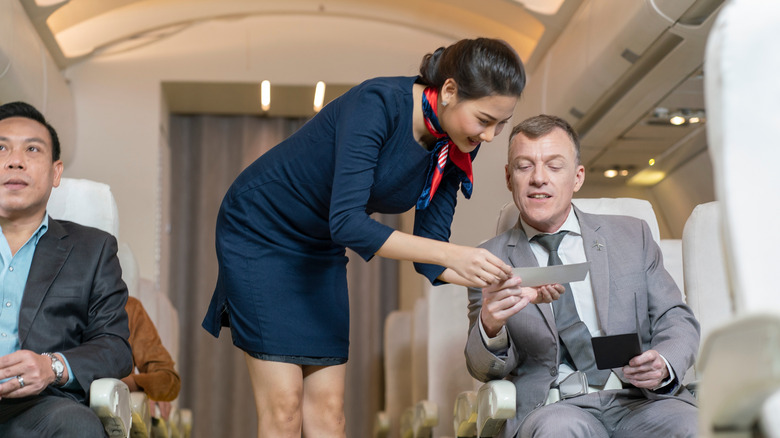
If you've ever stepped foot on an international flight, you've probably heard the flight attendants greet passengers in more than one language. Whether it's knowing a simple hello, bonjour, guten tag, or hola, flight attendants are absolute rock stars at their jobs. This rings especially true when it comes down to communicating with passengers from multiple backgrounds. As you listen to the onboarding message being spoken over the speakers, you may notice that one flight attendant is tackling more than one language effortlessly. It begs the question: Are flight attendants required to learn multiple languages? While you may think the answer is a simple yes, it ultimately boils down to which airline they work for.
As a frequent traveler myself, I've been on some international flights where the flight attendants all speak multiple languages fluently. On Air Mauritius, for example, flight attendants spoke French, Mauritian Creole, and English, and could interact with each passenger regardless of their preferred language. For flights based in the United States, only English is required to be spoken by the flight attendants. Canada, a country with two official languages, doesn't require flight attendants to know both. However, if a flight is heading to a province where a larger portion of the population is French speaking, like Quebec, Ontario, or New Brunswick, at least one French-speaking flight attendant is required on board for that specific route. As a federally regulated organization, Air Canada is required to comply with Canada's Official Languages Act, which recognizes English and French as equal official languages.
Speaking multiple languages can be a valuable skill for a flight attendant. While not every airline requires a second language, being able to communicate in additional languages can make passengers feel more comfortable and understood. Having a few languages up their sleeve can also create more career opportunities and help flight attendants stand out as strong, adaptable candidates.
Not all airlines require flight attendants to know multiple languages, but it certainly helps
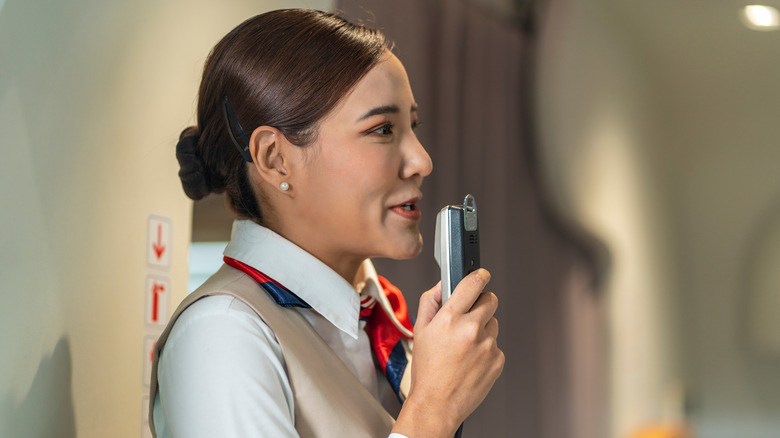
While some major air carriers such as Emirates and European budget airline Ryanair only require their flight attendants to be proficient in English, for other airlines, the requirements are much stricter. Brussels Airlines requires staff to speak fluent English, Dutch, and French. If working for German air carrier Lufthansa, flight attendants must be able to speak fluent German and English. This is on top of knowing the secret language of flight attendants. But, the rules may vary for those who work on private jets. Some travelers in high positions of power, politics, or business, may actually request that their flight attendant have zero knowledge of their language in order to keep discussions private.
Other than being considered a front-runner as an applicant for many airlines around the world, there are plenty of reasons why knowing multiple languages can be beneficial at 30,000 feet. This is especially true when it comes to safety. In high pressure scenarios like an emergency evacuation, a medical emergency, or if a passenger is feeling unwell, which is something flight attendants will notice while you're on a plane, effective communication is key. For some more about language used in the sky, check out the unexpected code flight attendants use when they find a passenger attractive.