
Forget Florida, Retire To This Landlocked Midwest Region With Roaming Bison, Scenic Lakes, And Outdoor Fun
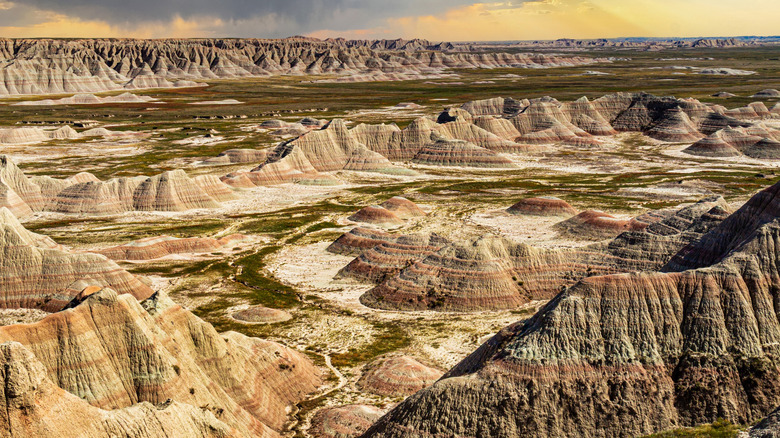
If you're at the tail end of your career and wondering what's next, your mind may reflexively turn toward the Sunshine State, with its sandy beaches and expansive golf courses. That's all well and good, but what if you'd rather spend your golden years imbibing the visually arresting American heartland, where roaming bison and scenic lakes set the stage for oodles of outdoor fun? Well, then forget Florida and consider the West North Central region.
If the multi-directional name seems a bit confusing, welcome to the U.S. Census Bureau's territorial nomenclature! The Midwest subregion covers Iowa, Kansas, Minnesota, Missouri, Nebraska, and both Dakotas in their entirety, representing nearly 508,000 square miles of what'd otherwise derogatorily be called "flyover states," situated far from either coast. But keen travelers and locals in the region know its bountiful treasures, from Badlands National Park to the Mississippi River's constant churn to Minnesota's larger lakes, which combine to create more than 34,000 miles of shoreline. Within that constellation of natural beauty lies a mix of metropolises like Minneapolis and St. Louis, mid-sized cities like Wichita and Omaha, and charming small towns scattered like grains of sand throughout the region. It's a bounty for travelers and retirees alike.
Taken together, the broad array of environments, destinations, and potential new hometowns leaves retirees with a dizzying number of options. Those looking for a chunk of pristine lake shoreline can find a place just as easily as those who'd prefer a quiet countryside lifestyle. But why choose? The interstate highway system and local routes create a web of arteries ideal for a retirement spent road-tripping to some of the country's most overlooked but supremely worthwhile destinations, and meeting the people that call them home. Here are just some of the places you can experience, or live near, during post-work life.
The region's outdoor gems, with bison and lakes to boot
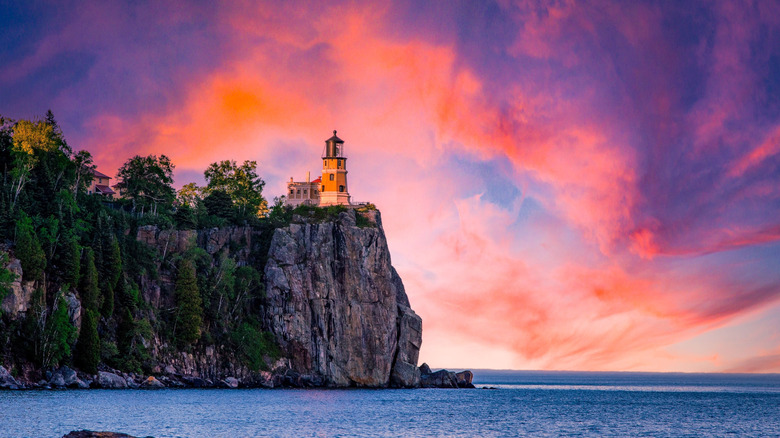
With over half a million square miles to explore, finding outdoor fun in the West North Central region is easy. A cursory list of the area's notable national parks would include Badlands National Park, Theodore Roosevelt National Park, and Gateway Arch National Park. Any of these can consume several days, and all merit repeat visits. But if you've already knocked out the big-ticket attractions, there are plenty of smaller destinations to visit, too. Minnesota's Split Rock Lighthouse State Park, for example, is home to one of Lake Superior's most hauntingly beautiful shipwrecks, with the remains of the schooner barge Madeira sitting just off Gold Rock Point.
Superior isn't the only lake you'll find in the West North Central region. Nicknamed the "Land of 10,000 Lakes," Minnesota boasts a rich collection of reservoirs (some figures suggest the state has an even greater number of lakes) that take up roughly 4,600 square miles of its surface area. It's a veritable paradise for retirees who enjoy the serenity of lakeside life. A destination like Glendalough State Park offers five lakes and ample shoreline for camping, fishing, and idyllic trails.
The aquatic options in the region are great, but so are the land-based attractions. Namely, bison, which once roamed the vast grasslands between Alaska and Mexico. They still have small pockets of territory where they can tramp about freely, yet are accessible to people. Places like Broken Kettle Grasslands in Iowa let visitors see roaming bison while also hiking and taking in scenic views, and the aforementioned Theodore Roosevelt National Park in North Dakota and Badlands National Park in South Dakota both have significant bison herds, too. Consider them a furry counterpart to the manatees seen in Florida.
Retiring in the West North Central states by the numbers
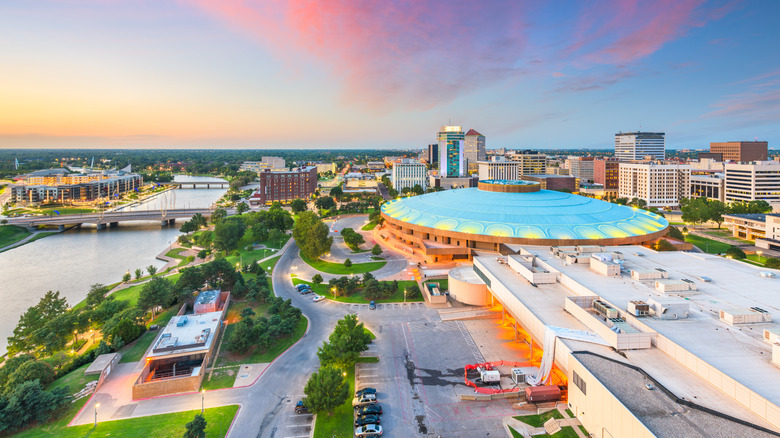
The region's comparatively low prices also favor travelers and retirees in equal measure. The West North Central region wins out in cost-of-living comparisons, especially when compared with coastal states. Depending on the calculation, states in the region are among the country's cheapest. That includes U.S. News & World Report's 2026 ranking of states by cost of living: Four from the West North Central region — Iowa, the Dakotas, and Kansas — cracked the top 10 states ranked by affordability. In fact, the wildly underrated Wichita has one of America's lowest costs of living while still offering a delicious food scene.
The region also has a reputation for friendliness, the sort of down-home, take-care-of-your-neighbor, "Leave It To Beaver" connectedness many of us eulogize. Remember, Minnesotans are so friendly, they even have their own variety of "nice" that helped make it the friendliest state in the country in 2026, according to data compiled by World Population Review.
There are two major downsides to moving to the region: the weather and, to a lesser extent, the healthcare system. State rankings on health system performance conducted by The Commonwealth Fund in 2025 placed the West North Central states somewhere in the middle of the pack, with Missouri ranking lowest at 43rd. Conversely, Minnesota ranked highest at No. 15. That mixed bag also translates to the weather. The bitter winter cold of Minnesota and the Dakotas may be a dealbreaker for some. Farther south, Kansas and Nebraska make up a significant chunk of Tornado Alley. Good for "Wizard of Oz" fans; not so good for retirement accounts, or peaceful golden years.