
Between Gainesville And Tallahassee Is Florida's Wildlife Area With Scenic Wetlands, Fishing, And Boating
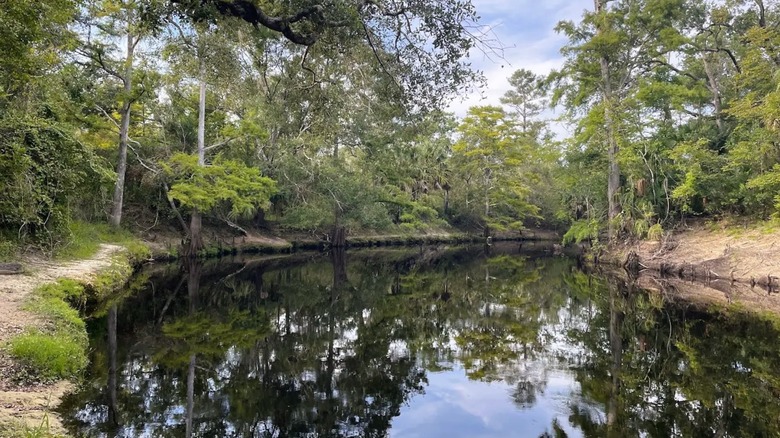
Between Gainesville and Tallahassee are rural parts of Florida that not many visitors know about. Locals refer to this area as "Big Bend," the section of the Florida Panhandle that curves around the Gulf. This is where you'll find Steinhatchee Springs Wildlife Management Area (WMA), a roughly 20,000-acre preserve located off Florida State Road 51, several miles south of the rural community of Mayo, Florida. You won't find crystal-clear swimming springs here. Instead, this wilder side of Florida is defined by acres of pine forests, cypress swamps, and shady riverbanks.
Pronounced as "Steen-hat-chee," the name means "river of man," according to Visit Natural North Florida, and comes from the Native American tribes that lived near the waterway. The 28-mile-long Steinhatchee River snakes through the quiet WMA, with its banks lined with floodplain forest. Near the southern end of the property, the river does something surprisingly wild: It dips underground for about a half mile before resurfacing, and ultimately flows to the Gulf. Since the land is covered with wet floodplains and swamps, there aren't many paved roads cutting through it, making the WMA feel truly untamed. It's the kind of place where you can throw on your boots, trek through wetlands for miles, paddle or boat on the river, and go fishing, without crowded parking lots or trails.
Steinhatchee Springs Wildlife Management Area is open all year long from 90 minutes before the sun rises to 90 minutes after the sun goes down. Although you'll have plenty of time to visit, hunting season could limit access. We recommend checking with the preserve before heading out.
Explore the scenic waterways at Steinhatchee Springs Wildlife Management Area
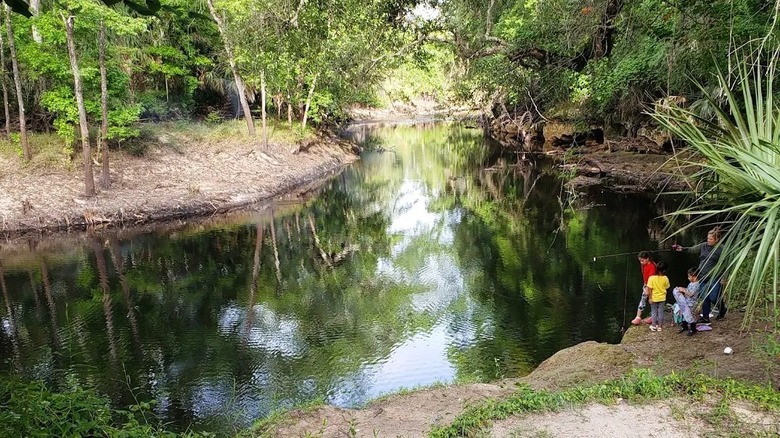
Just like Fred C. Babcock/Cecil M. Webb WMA, Florida's oldest wildlife management area, fishing is one of the best ways to experience the Steinhatchee Springs WMA. One Google user commented, "Lots of bank fishing and several different spots to choose from." Anglers can cast from multiple marked access points off of State Road 51 and the adjacent roads along the riverbanks. Alternatively, small boats, canoes, or kayaks can launch in the Steinhatchee Springs Tract within the WMA. With your Florida fishing license, you might catch largemouth bass, spotted seatrout, and red drum, known species pulled from the river. Users on Fishbrain have also reeled in catfish and snapper.
Another way to see the area is to strap on your hiking boots and hit the trails. The wetland paths aren't well maintained, so expect downed trees and overgrown shrubs the farther inland you go. But for adventurous hikers, this just makes the place feel truly wild and untouched, especially when combined with the sounds of flowing water and screeching insects. This area is suitable for true outdoor enthusiasts who appreciate untouched riverside scenes versus shimmering springs.
For more adventure in the area, drive several miles south to see Steinhatchee Falls. Called Florida's widest waterfall by the Fish and Wildlife Conservation Commission, the cascading water forms a series of rapids over wide limestone plates, making it a fun spot to put in a kayak if you have one. If you have more time on your hands, consider a drive along the Big Bend Scenic Byway, which winds through "Florida's less crowded side," boasting beaches, forgotten villages and forests. Or, if you're looking to turn your pit stop into a full-day adventure, consider an afternoon swim at Royal Springs Park, an under-the-radar Florida park with crystal-clear springs located roughly 30 miles away.