
North Dakota's Hunting Lodge From A Once-Thriving Era Is Now A State Historic Site And Well-Preserved Museum
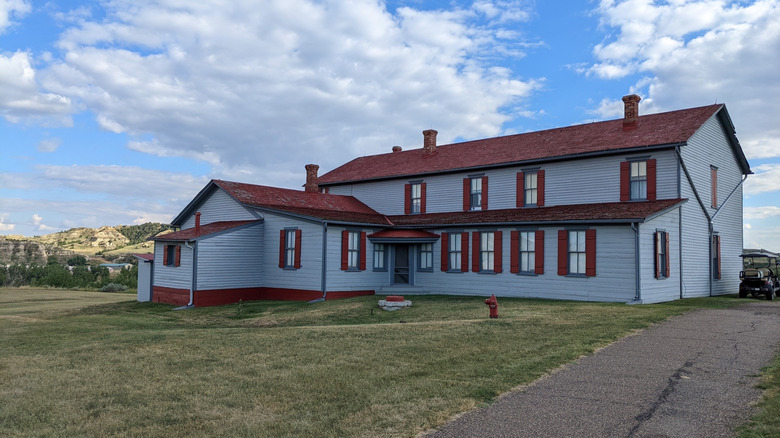
Traveling across the American West reveals scattered traces from its boom years, from crumbling foundations of former ranches to lonely chimneys of long-gone homesteads. In the late 19th century, fortunes came here at a gallop and disappeared just as quickly. One entrepreneur landed in western North Dakota for a few heady years in the 1880s. Known as the Marquis de Mores, he built a short-lived meatpacking empire around the town of Medora, along with a 26-room summer home and hunting lodge. The home — a handsome, red-roofed château — still stands today, preserved with many of the de Mores family's original furnishings, as the Chateau de Mores State Historic Site. For travelers crossing through North Dakota's Badlands (or seeking out day-trip ideas from Bismarck), Chateau de Mores gives you a tangible window into a colorful boom-and-bust story.
The story starts in 1883, when the French-born Marquis de Mores arrived in the Dakota Badlands. His plan was to slaughter range cattle in Medora, today a gateway town to a national park. He built a meatpacking plant that could process up to 150 beef carcasses a day, as well as ranches and the summer home/hunting lodge that became Chateau de Mores. For various reasons, including competition from Chicago packers and a shortage of suitable cattle, the business went bust in 1886. The de Mores family left, and the packing plant burned down, leaving only its tall brick chimney as one of the remnants you can see today, just across the river from the Chateau. The surviving home now doubles as a museum, where visitors can wander the rooms filled with reminders of the Marquis' brief rise and fall.
What to see at Chateau de Mores
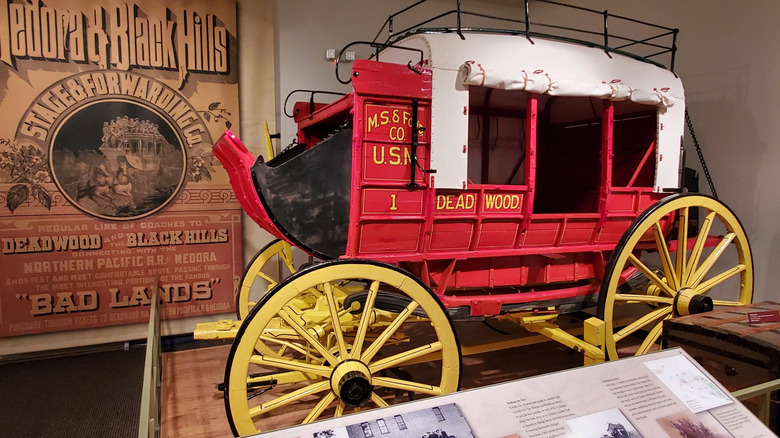
You can start your visit to Chateau de Mores at the Interpretive Center, which lays out the de Mores family's story with historic objects, photographs, a scale refrigerator rail car, and an original stagecoach from the Marquis' stage line. "It is amazing that so many of the home's artifacts are still on the property, even all those bottles of wine!" a Google Maps reviewer remarked. Then, you can explore the 26-room house, which retains more artifacts and original furniture. The historic site has set the house up to look lived-in, with dishes set around a dining table, or a journal left open on a desk. Outside, the Chateau's porch gives you views of the hilltops over Medora. Note that while the Interpretive Center is open year-round, you can only explore the Chateau from May through September.
If you visit on a weekend from June through August, you can catch a "History Alive!" show, which features actors on the Chateau porch who portray people from Medora's past and deliver monologues based on letters and other historical documents. You could also walk about 20 minutes from the Chateau to see the brick chimney left over from the Marquis' meatpacking plant. The park around it has a picnic area, too. To fit your visit into a larger Badlands outing, continue into nearby Theodore Roosevelt National Park for an easy hike. Coming from Bismarck, Medora and its batch of landmarks is about a two-hour drive, making it a doable day trip or a stop on a longer road trip. If you cross the state on I-94, make sure to hit the Enchanted Highway, a stretch of the road filled with one-of-a-kind art under 50 miles from Medora.