
Between Pittsburgh And Harrisburg Is A Scenic Ghost Town Trail With Western Pennsylvania Steel Country History
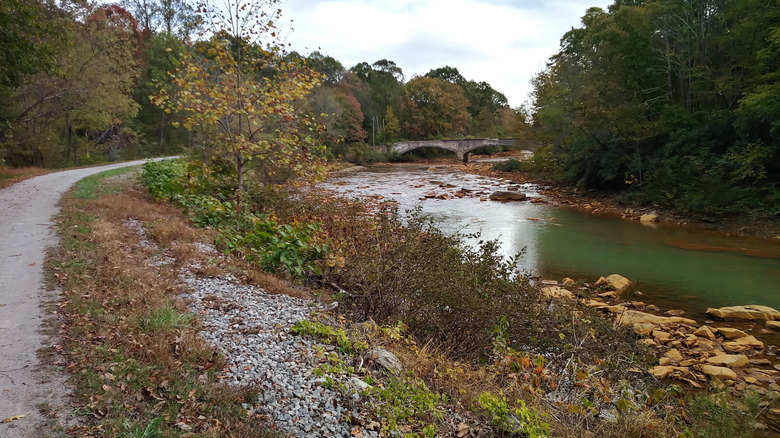
Western Pennsylvania has seen the steel industry rise and fall, and while it's now been more than 40 years since most of the region's mills closed, there are lingering traces of the Steel Country era dotting the counties around Pittsburgh. This includes the remnants of mining communities and company towns that lost their residents once the industry that employed them vanished. Ghost Towns of America has identified 71 of these now-empty places within a 50-mile radius of Pittsburgh. For context, the entire state of Pennsylvania has 105, and 36 are in Indiana County (the most claimed by any county in Pennsylvania). Additionally, nine of the state's ghost towns are along the Ghost Town Trail.
The Ghost Town Trail is a rails-to-trails project that got its start in 1991, using 12 miles of the old Ebensburg & Black Lick Railroad line that had been donated to Indiana County. It's been expanded over the years, most recently with the addition of the 32-mile Cambria & Indiana Extension loop in 2026, bringing the trail's total length to 54 miles across two counties (Indiana and Cambria). It was known as a top recreation spot even before this latest expansion, as it was designated a National Recreation Trail back in 2003 and named Pennsylvania's Trail of the Year in 2020. The completion of the C&I Extension adds another accolade, making the Ghost Town Trail the second-longest rail-trail loop in the United States. For hikers, bikers, nature lovers, and history buffs visiting Pennsylvania, this expansive trail is definitely worth exploring.
Traveling the Ghost Town Trail
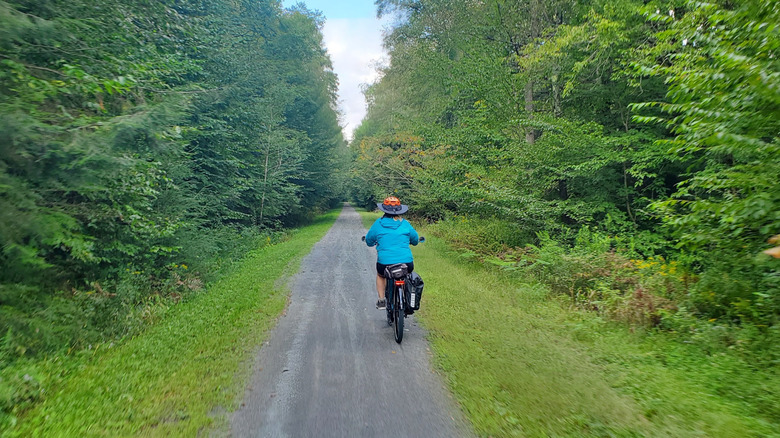
The Ghost Town Trail is open from dawn to dusk year-round for hiking and biking, and cross-country skiing is permitted in the winter. While much of the trail runs through remote areas, the trailheads at Dilltown and Nanty Glo have spots nearby to grab a meal. Camping isn't allowed along the trail. If you're planning a multi-day trip, you can stay in Dilltown or Ebensburg, or you can find accommodations in towns like Blairsville and Indiana near the Black Lick end.
The westernmost trailhead of the Ghost Town Trail is in Saylor Park in the small town of Black Lick, about 50 miles east of Pittsburgh. Saylor Park is also the southern terminus of the Hoodlebug Trail, another rail trail that runs 10 miles north to the charming borough of Indiana (aka the "Christmas Tree Capital of the World"). From Black Lick, the Ghost Town Trail runs east 19 miles to the Vintondale-Rexis trailhead, where it splits into a loop, with one path continuing east, while the other goes north to Duman Lake County Park. The trails reconverge in Nanty Glo and continue east to Ebensburg, about 150 miles west of Harrisburg.
The Ghost Town Trail's blend of history and nature is what puts it among the best rail trails in North America. The trail runs by the ruins of two furnaces, as well as nine ghost towns and eight still-active historic communities. Interpretive signs along the trail give travelers more insight into each location's history. The trail is particularly beautiful when the wildflowers and rhododendrons are blooming in the spring. Wildlife spotted here includes deer, foxes, bobcats, and black bears. Birders can see migrating songbirds in the spring, along with year-round residents like ravens, hawks, vultures, and several species of woodpecker.
Landmarks along the Ghost Town Trail
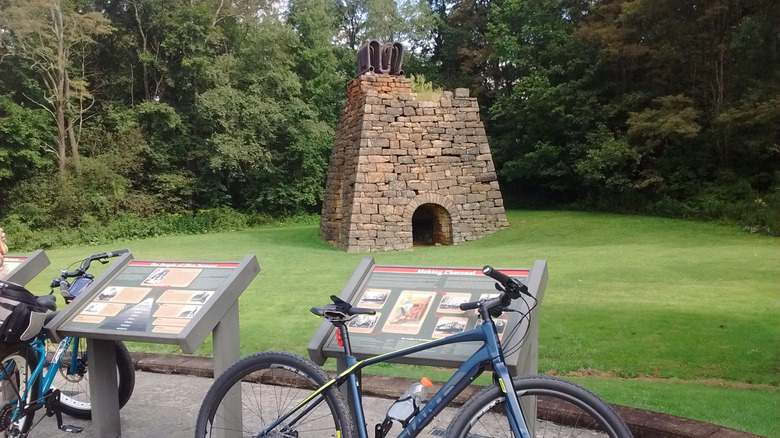
The most noteworthy historic structures along the trail are the two 19th-century iron furnaces. The Eliza Furnace, near the Vintondale Trailhead, was built in 1846, making it the first in the area. It's one of the best-preserved hot blast furnaces in the state, and one of the few in the U.S. with its original heat exchanger intact. The Buena Vista Furnace is about 10 miles west of the Eliza Furnace, between the Dilltown and Heshbon Trailheads. This 30-foot cold blast furnace was in use from 1848 to 1856 and remains mostly intact, though its northern side has collapsed.
Few other visible traces remain of the trail's ghost towns, though signs mark where they stood and explain their histories. One large extant landmark is the Claghorn Bridge, which once connected the town of Claghorn to the mines. It's at the confluence of Blacklick and Brush Creeks, 1.6 miles west of Buena Vista Furnace. There are also still a few traces of the ghost town of Wehrum, including an abandoned cemetery, Saints Peter & Paul Cemetery, about a mile off the trail. To reach it, take Wehrum Road north from the Wehrum Trailhead, then follow Mack Drive until you see it on the left-hand side. There are other industrial remnants along the trail, like old coal tipples and railcars, as well as murals and memorials to the people who lived and worked here.
You can see more history in the still-active communities along the trail. The highest concentration is in Ebensburg, where there are 19th-century structures, including three log cabins built by early settlers. To explore this history further, head about 15 miles south of Dilltown to the artsy and historic city of Johnstown, home to attractions like the Wagner-Ritter House, which shows what working-class life was like here in the late 19th century.