
Under 2 Hours From Blackpool Is The Site Of England's Sunken Ghost Town With Mountain Views
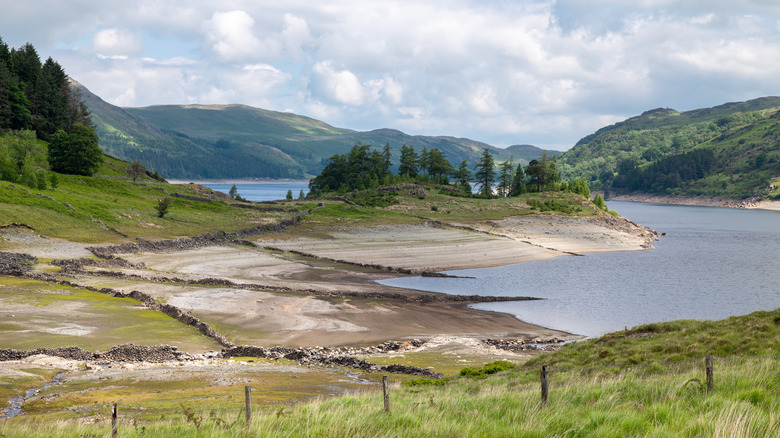
Mardale Green in Lake District National Park might be the most scenic ghost town in England. Set at the head of the remote Haweswater Valley, this eerie sunken village is surrounded by dramatic mountains. With just a single-track access road, it's always a peaceful spot. The "lost" village of Mardale Green has been submerged for decades beneath Haweswater reservoir, and for much of the year, you'd never know it was there. Yet during particularly dry summers, parts of the settlement become visible once again, and visitors looking for something unusual to do can walk down to explore the ruins.
In the 19th century, Mardale Green was a small village with a handful of residents who were mainly farmers. Life for the villagers changed dramatically in the 1930s when the Haweswater Valley was flooded, creating a reservoir to supply the growing population of Manchester with water. Residents were forced to relocate, and the village buildings were completely submerged, including the 18th-century church, a school, and an inn. Mardale Green has been a ghost town ever since, and today the reservoir provides more than 2 million people with water.
Compared to much of the rest of the park, the Haweswater Valley is relatively little visited. People who do venture this far come here to hike. The rugged mountains around the reservoir are home to a network of trails, including part of the famous Coast to Coast path and High Street, an old Roman road that runs through the eastern part of the park. As a Lake District local, Haweswater is on my doorstep, and I've been hiking in these mountains for decades — the views are some of the best in the Lakes. However, it's the reemergence of Mardale Green during hot summers that keeps drawing me back.
Visiting Mardale Green ghost town today
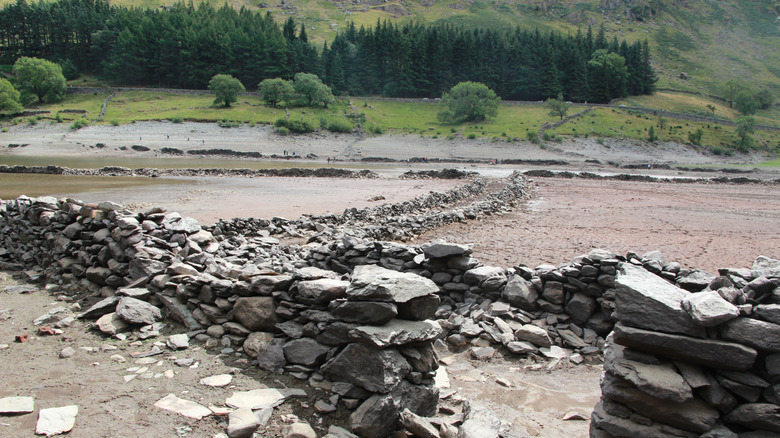
While the village has only been uncovered a handful of times since the 1930s, in recent years, the changing climate has revealed the ruins with more regularity as summers become drier. It's best to visit at the end of a long, dry summer, when water levels are at their lowest. Despite appearing parched after months without rain, the exposed reservoir bed can be muddy, so I recommend wearing rubber boots if you want to venture into the village.
There's little left of the village today, with the buildings long since collapsed. You can, however, still see the outline of the settlement, with the stone foundation walls showing how the village used to look. Locals know it's been a super dry summer if the 17th-century bridge becomes exposed, although this rarely happens, and when it does, you can usually just see the top of it poking out of the water.
Mardale Green is located about 1.5 hours north of Blackpool, a coastal town in North West, England. You'll need a car to get there, as the ghost town is located at the head of a remote valley. The parking lot is small, so come early or late in the day to secure a spot. It's an unusual sight, so it's very popular, although not yet as crowded as Windermere, England's largest lake. To get to the village, it's a 10-minute walk down into the valley. Before leaving, I suggest heading back along the road for a beautiful view of the mountains and valley head. From here, you can appreciate how low the reservoir water has fallen, and you'll get to see the full scale of the village from above. For more eerie towns in England, check out the windswept cliffs of Whitby or the haunted city of York.