
This Scenic Coastal Escape In Ireland Offers Wildlife, A Memorial Garden, And A Unique Lighthouse
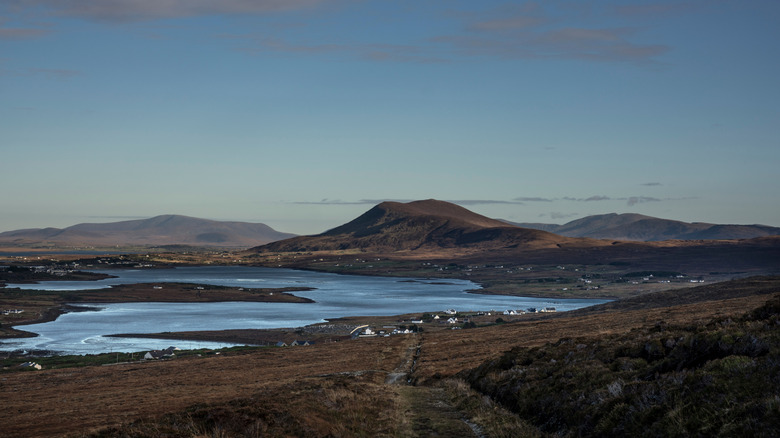
The Wild Atlantic Way is one of Ireland's most beguiling destinations. A sprawling, 1,600-mile coastal route, it seems a contradiction when you consider that Ireland is just over 300 miles from tip to tip. Running along the country's western flank, the Wild Atlantic Way weaves in and out of crooked promontories, rocky bays, and heather-smothered headlands, passing towns and villages that have been battered for centuries by bristling Atlantic winds. One of these settlements, the small fishing village of Blacksod, sits on the coast of County Mayo, overlooking the ocean from the bottom of Mullet Peninsula.
Blacksod has the kind of wild landscape depicted in popular films set in Ireland, like "The Banshees of Inisheran" and "Wild Mountain Thyme." Waves buffet the rocky shoreline, there are hills of wild grasses and grazing animals, and a scattering of ruinous islands lie just off the coast. The 19th-century Blacksod Lighthouse, a squat and austere stone building, is the village's major landmark, playing a significant role in the Allied war efforts of the 1940s. Next to the lighthouse is a memorial garden commemorating the many ships and seabound travelers that have passed through Blacksod Harbor. You can also see some of Ireland's most interesting wildlife around here, including puffins, seals, dolphins, basking sharks, and whales. Waterfowl such as petrels, oystercatchers, and Arctic terns also live in the area.
Blacksod is rural, even by Irish standards. The closest major city, Galway, an affordable coastal city full of art and festivals, is three hours away by car. If you'd prefer to stay overnight, there are hotels, guesthouses, and rental properties within 10 miles of the village. Given its location in the Mayo portion of the Wild Atlantic Way, Blacksod is a worthwhile stop for drivers road-tripping along one of the world's longest defined coastal routes.
Wildlife at Blacksod Bay, Ireland
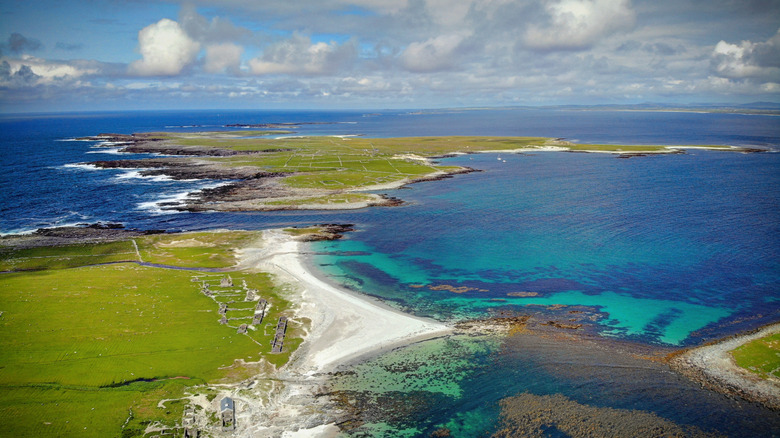
To see Blacksod's array of marine life, reserve a spot on a sea safari. Blacksod Sea Safari & Island Tours offers several trip options, whether you want to admire the local seal and seabird colonies or angle for Atlantic gamefish. You may come into contact with minke whales, porpoises, or orcas, depending on the season, and can also visit other sites, including abandoned villages, a defunct whaling station, and rocky arches rising from the sea.
Bellmullet Boat Charters also offers excursions. On its two-hour ferry ride around Blacksod Bay, keep your eyes peeled for the basking sharks, dolphins, and grey seals of Duvilluan Island populating the waters. You'll get a good view of the lighthouse, the west of Ireland's dramatic coastline, and Blacksod Quarry, filled with rare, reddish granite used in the construction of local buildings and the Houses of Parliament in London. A longer, 3.5-hour boat tour takes you from Blacksod Harbor to the Inishkea Islands, with their crumbling stone buildings and age-old folktales. On this trip, you may see several different cetacean species cavorting among the waves, including bottlenose dolphins, porpoises, and humpback whales.
The best season for spotting dolphins is February through August, while the peak season for whales, March through July, is slightly shorter. Seals are most prevalent between June and October, though you'll get an even better look at these languid creatures during low tide, when they lie prostrate on the rocks, as though waiting for the deft hand of an artist to paint them. These wildlife-viewing periods also coincide with at least one of the tourism shoulder seasons — April to May and September to October — which are the best times to visit Ireland to beat the summer crowds.
Other things to do at Blacksod Bay, Ireland
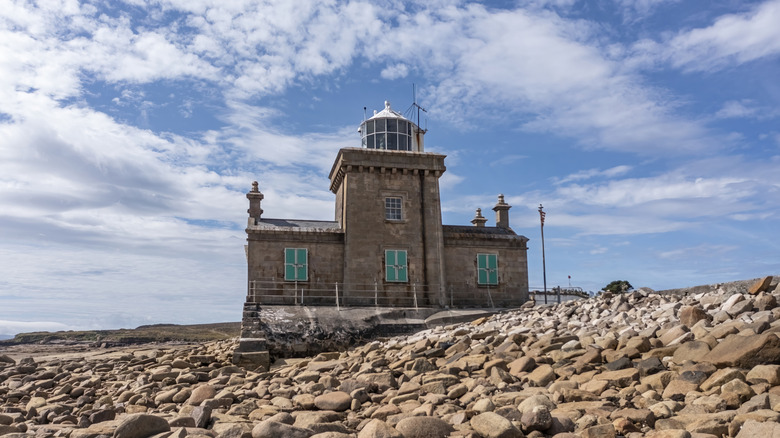
Blacksod Lighthouse has become a symbol of the village. Most lighthouses are tapered cylinders, thinnest at the top where the light pulses. But Blacksod Lighthouse is square, which, according to The Irish Times, makes it one of only two lighthouses in Ireland with such a shape. Though erected in 1866, its most prominent role in history came almost 80 years later in the buildup to D-Day, when Allied forces were awaiting to storm the beaches of Normandy.
The assault required a rising tide and (preferably) a full moon and had to take place just before dawn. In the early hours of June 3rd, Maureen Sweeney, the Blacksod Lighthouse keeper, reported worsening weather conditions. Allied meteorologists then advised General Eisenhower to delay the operation by 24 hours, meaning Sweeney influenced the success of a mission that was a major turning point in the war with Nazi Germany. Book a tour of the lighthouse to learn more about the history and lore surrounding the now-iconic structure.
On the doorstep of the lighthouse sits a memorial garden, created in 2013 to mark the 130th anniversary of the first ship to set sail from Blacksod for North America. Called the Blacksod Memorial Garden, it's an ode to the area's maritime and emigration history. In the 1880s, many people on Ireland's west coast fled across the Atlantic in search of the land of milk and honey, including around 3,300 people from this corner of Mayo. The stone memorial, shaped like a westward-facing boat, is split into 15 sections, each commemorating a ship that set sail and inscribed with the names of its passengers.