
The Most Dangerous Roads In Florida
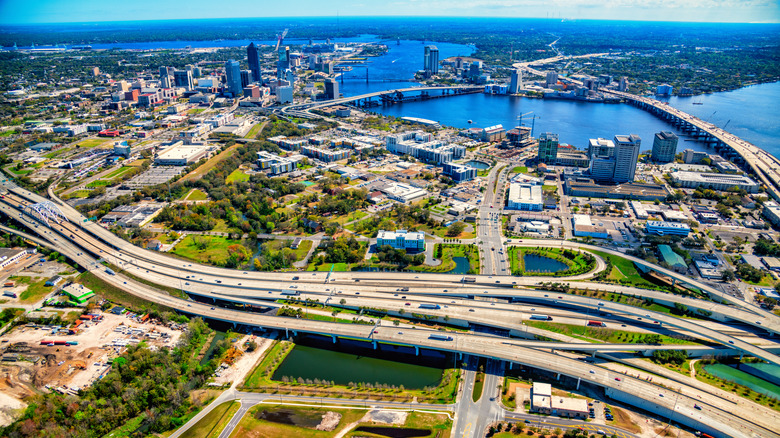
The Sunshine State of Florida can be a great place for a road trip. While many East Coast states are small, Florida is actually one of the largest Atlantic states, only eclipsed in area by Georgia. It also takes the prize for the longest coastline in the continental U.S., at 8,436 miles. There's a lot here for road trippers to explore: the seaside highways near Boca, the long bridge over Lake Jessup, the many interconnected islands of the Keys, and the beautiful Sunshine Skyway Bridge over Tampa Bay. At the same time, anyone who has driven on these roads will tell you that it can be a harrowing experience. According to statistical data, Florida is home to some of the most dangerous roads in the country.
In 2025, Florida saw over 367,000 crashes, and an accident occurs approximately every 44 seconds in the Sunshine State. Although this is due to a number of factors, including construction, congestion, and tourism, Florida unfortunately has an anecdotal reputation for poor driving. Whether this is true or not may be up to interpretation, but Florida does have a large number of distracted and uninsured drivers, which contributes to the danger.
In this list, you'll discover where the most dangerous roads are in Florida. These are loosely ranked by the level of danger, but not every highway is dangerous for the same reason. Some are more dangerous because of a design flaw, like a sharp turn. Others are more dangerous due to pedestrian fatalities. Others still are dangerous due to traffic volume. One thing is sure: when embarking on your Floridian road trip, be a careful and alert driver!
U.S. 1
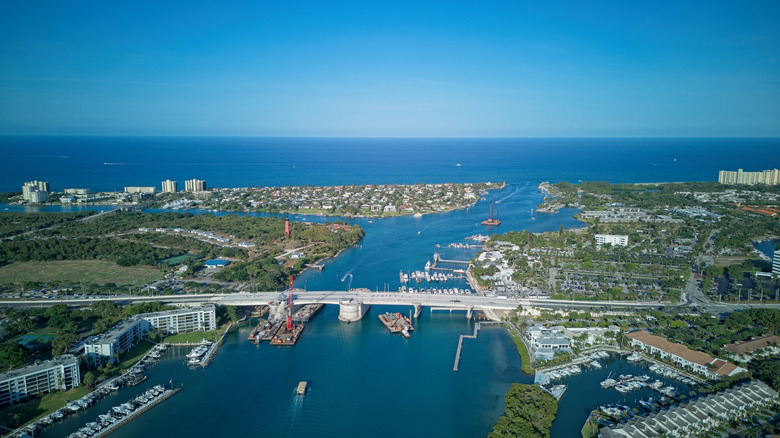
According to Geotab, U.S. Route 1 is the Sunshine State's most dangerous road, based on the percentage of drivers who end up in fatal crashes. Spanning 2,390 miles across much of the eastern United States, it starts in Key West, a beautiful location known for affordable attractions. U.S. 1 then goes all the way to the U.S.-Canada border in Maine. Morgan & Morgan reports that the entire highway saw 1,000 deaths in the course of a decade. It has a lot of traffic, especially near Miami, as well as a lot of intersections. Plus, in some places, it doesn't have medians and has bad lighting. In order to remain safe on roads like this, visitors should follow all traffic laws.
For those who want to find alternate routes to U.S. 1, your success will depend on where you are in Florida. Drivers near Miami will have different choices than those farther north, for example. For much of the route, I-95 runs in parallel — but, as we will soon discover, I-95 is also a dangerous road. When in the Fort Lauderdale and Miami area, it's easier to avoid U.S. 1 due to the number of smaller roads in the area that are immediately visible on most maps. Those who don't mind paying tolls can drive down the Turnpike.
U.S. 192
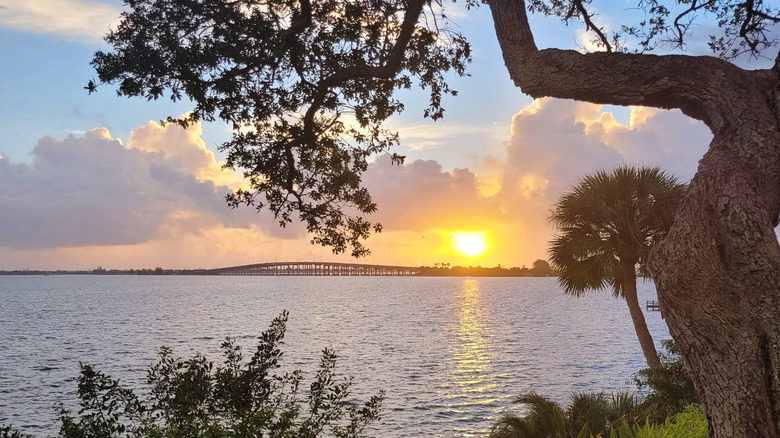
Teletrac Navman determined the top 25 most dangerous highways in the country by the number of deaths per mile between 2016 and 2019. They found Florida's U.S. 192 to be the third most dangerous, with 0.867 deaths per mile. Extending from Indialantic in the east to Four Corners in the west, the highway is approximately 75 miles long and passes near Lake Tohopekaliga, Florida's famous fishing lake. There are a lot of tourists and non-locals who drive here, so it can be extra dangerous. Due to limited alternative routes in the area, this highway has a large volume of people traveling on it, increasing risk.
In order to mitigate this risk, visitors can try to stay relaxed during heavy traffic to avoid reckless behavior, avoid rush hour, keep mindful of speed limit changes, and use headlights during windshield wiper use. Those looking for an alternative can try the Turnpike instead. Another route for those who want to get to the coast would be SR 528.
I-75
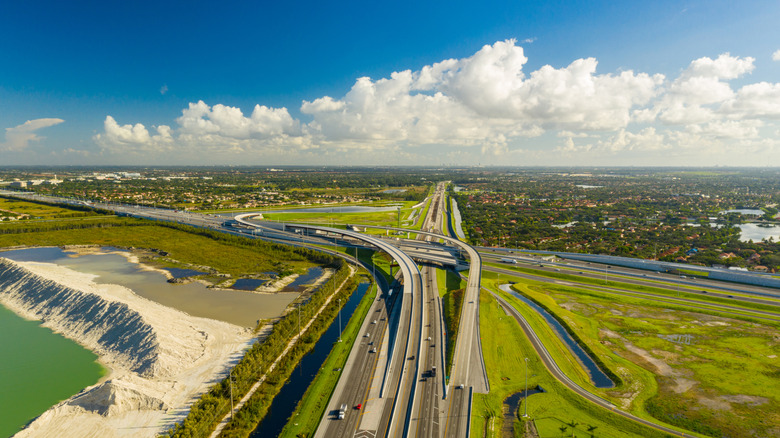
Starting in Florida and culminating in Michigan, I-75 is a staple of Midwestern and Southern driving. The Zebra ranks this road as being the fourth most dangerous in the nation, but its Florida sections can be particularly dangerous. The Law Place notes this is because of its poor infrastructure, number of non-local drivers, number of impaired drivers, and congested traffic. One section, called "Alligator Alley," cuts across the Everglades region. Named for the plethora of alligators that like to sunbathe on its sides, this stretch is dangerous, because it's straight, empty, and monotonous, leading to distracted driving.
Those who want to avoid I-75 can utilize U.S. Route 301, U.S. 17, and U.S. 441, among others. If you do take 1-7, drivers can keep mindful of the large semi-trucks that are frequently found here, keep distance from other drivers, and signal as early as possible.
U.S. 19
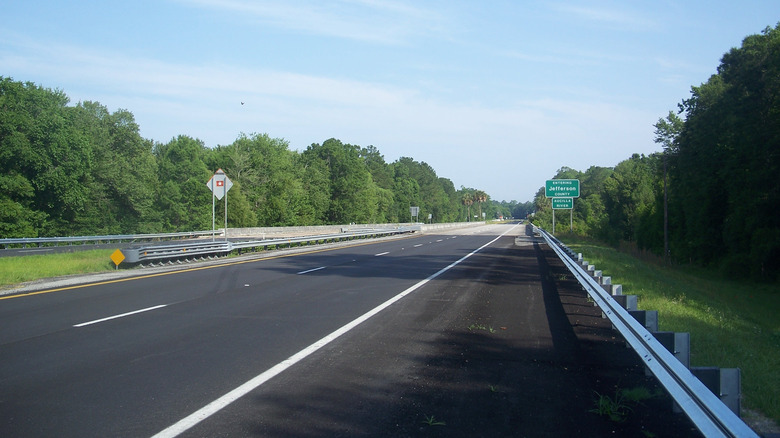
Stretching from Florida all the way to Pennsylvania, U.S. 19 is a busy East Coast route, and part of it runs along the Gulf Coast. One segment here is particularly deadly: Pasco County, which is home to Florida's sleepy, beachy paradise Gulf Coast town of Hudson. What makes it so dangerous is its high number of pedestrian fatalities. Data analysis by Whittel & Melton discovered that this single route had 112 pedestrian deaths in four years. Speeding, distracted driving, and drivers disrespecting crossing pedestrians who have the right of way all contribute to this danger. Based on data from the U.S. Department of Transportation, Florida has consistently had a high rate of pedestrian fatalities, with the 2024 data showing 668 deaths.
While random accidents do happen, there are ways drivers and pedestrians can keep safe. Drivers can remain calm, yield to police and emergency vehicles, and drive the speed limit. Pedestrians can stay on sidewalks, cross at designated areas, and wear reflective clothing at night. Those who don't want to drive on U.S. Route 19 actually have a designated alternative: U.S. 19 Alternate, which runs almost parallel through Clearwater to Tarpon Springs.
I-95
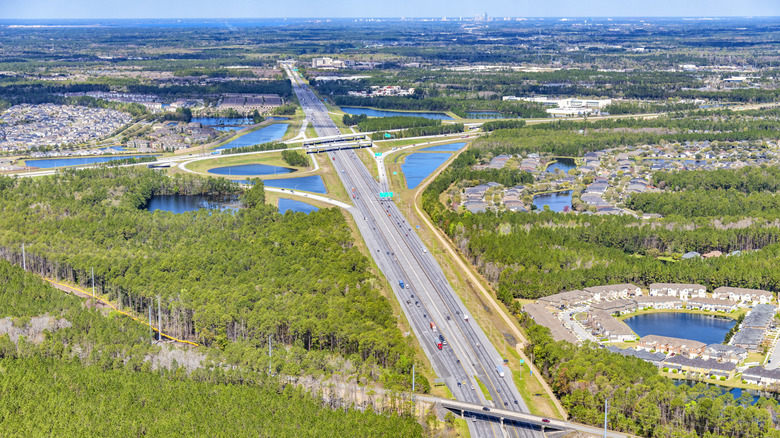
Like U.S. 1, I-95 stretches from the top of the East Coast in Maine all the way down to the bottom tip in Florida. The Zebra found it to be the most dangerous highway in the country due to northeast winter conditions, but the Floridian section can be just as hazardous. A study by Elk and Elk found that I-95 had the single deadliest mile-long stretch in the country. Located in Fort Lauderdale near Marina Mile Boulevard and the Fort Lauderdale International Airport, this single mile has seen 24 deaths over 19 years. A sharp 90-degree turn at the Marina Mile Boulevard's exit is responsible for the area's danger.
Despite its danger, you can do your part to stay safe on this highway by driving the speed limit, not texting, pulling over for emergency vehicles, and being smart about merging. As one of Florida's main Atlantic Coast highways, I-95 may sometimes feel hard to avoid, but there are still alternate routes. As mentioned, U.S. 1 can be a good alternative, even if it is another dangerous route. If you're okay with paying tolls, the Florida Turnpike can be a faster option.
I-4
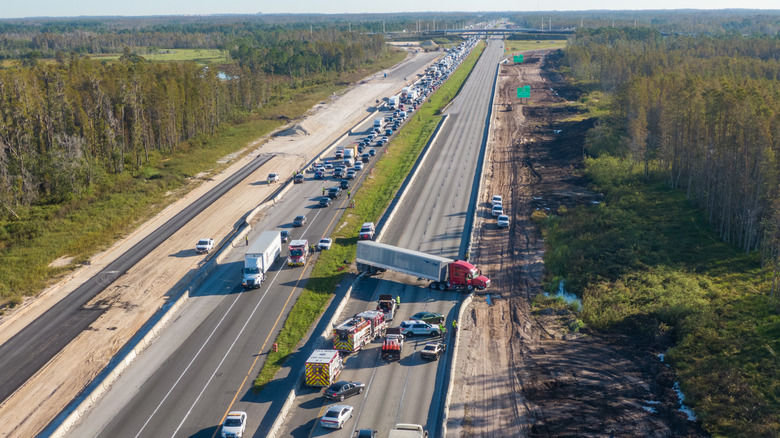
Widely considered by many studies to be the single deadliest highway in the country — including studies by Teletrac Navman, Assurance, and Everquote — the 132-mile long I-4 between Tampa and Daytona Beach is no easy driving experience. Between 2016 and 2019, there were 1.134 deaths per mile of highway here. This road is dangerous for a number of reasons. A staggering 200,000 people drive it daily, as it passes through popular tourist areas like Orlando. The infrastructure of the road itself is also in need of some work in places: there are potholes, limited lighting for nighttime drivers, and missing guardrails.
Anecdotally, drivers report that the road's basic layout is flawed, due to a small number of exits. This means that any delay on the road really exacerbates congestion, as there's often no immediate place for drivers to pull off. In order to fix these issues, there's loads of construction. Unfortunately, this can make the problem worse, because construction doesn't pair well with the high number of distracted drivers that the Sunshine State has. Visitors who want to keep safe on I-4 can drive just at or below the highway's allotted 70 mph, stay in the right lane to avoid aggressive drivers, and follow Florida traffic laws. Those who want to avoid the dangerous road of I-4 altogether can instead take SR 417 or SR 429.