
This Ancient Forest Near London Has Cozy Towns, Lakes, Ponds, And Endless Outdoor Fun
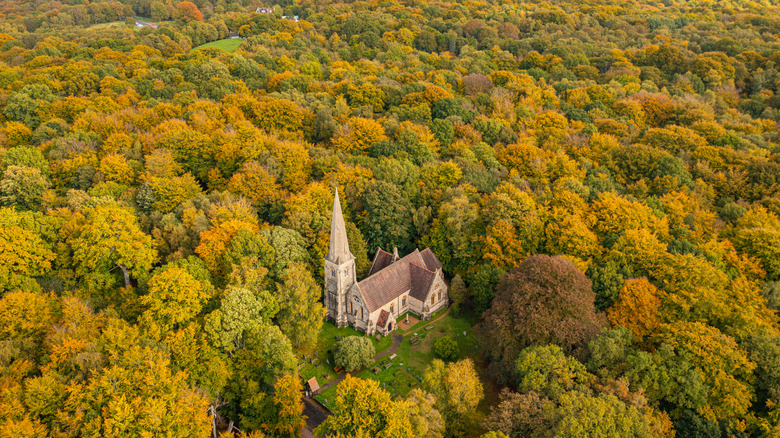
When John Clare wrote, "While Giant London, known to all the world, was nothing but a guess among the trees, though only half a day from where we stood," he was romanticizing Epping Forest. This nearly 6,000-acre tract of ancient woods and grasslands, straddling the boundary between East London and Essex, is home to thickets of hornbeam, beech, and silver birch; badger burrows and rabbit warrens; and a hunting lodge built for King Henry VIII and renovated for Queen Elizabeth I in the late 1500s. While traversing its trails, you'll find the forest is alive with the trill of birdsong, and you'll find it hard to believe that central London is a little over an hour away.
Much of the wider Epping Forest District is still largely rural. An impressive 94% of it (according to Visit Epping Forest) sits within the Green Belt, an expanse of greenery surrounding London, designed to prevent further urban sprawl into nature. There are many walking trails charting Epping Forest, guiding walkers around its meadows, ponds, lakes, hills, monuments, and tree-lined valleys.
Though Epping Forest is a protected nature area, there are towns enclosed within the borders of the Epping Forest District. The namesake town, Epping, is a market town and the eastern terminus of London's Central Line. Loughton has bars, restaurants, and boutiques on its high street, with the National Jazz Archive in its library. Buckhurst Hill, whose Anglo-Saxon name means "a hill covered in beech trees," is a charming town retaining some of its 19th-century architecture, and Waltham Abbey is known for its eponymous church and a hall where some claim that Shakespeare's "A Midsummer Night's Dream" may have been first performed. However you decide to explore Epping Forest, consider booking your trip for summer, which Rick Steves says is the best time to visit the U.K.
Outdoor fun in Epping Forest
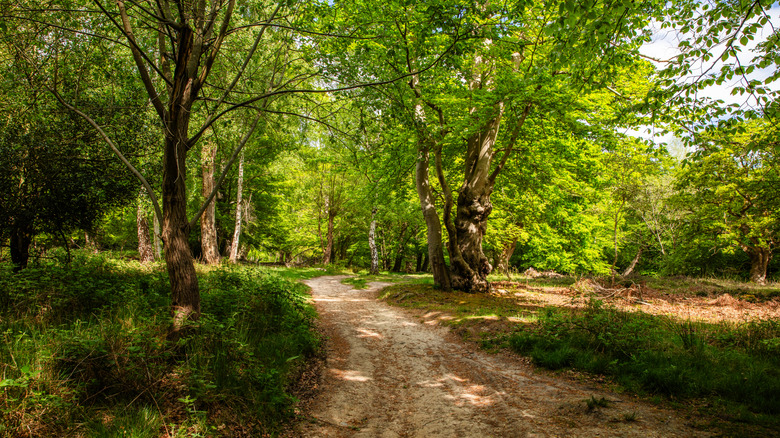
Avid walkers will find no shortage of fun in Epping Forest. The 3.25-mile Chestnut Trail navigates woods, grasslands, and the banks of ponds between Leyton and Ilford. A detour brings you to the Grotto, an ornamental boathouse and landscape garden — now overgrown — that was a marvel when built in the 18th century. The Golden Hill Trail, an undulating 1.6-mile route north of Loughton, passes some of the area's most impressive old trees. Extend the short walk by following side trails through the forest. You can also join guided walks — discovering forest fungi or admiring the changing autumn leaves — a list of which is available on the Epping Forest Heritage Trust website.
The forest is dotted with bodies of water, some attracting waterfowl and anglers. Strawberry Hill Pond is among the most scenic, surrounded by conifers and sweet chestnut trees, and a fine spot for picnics and watching ducks float on the looking-glass surface. Connaught Water, in the southern section of the forest, is a larger lake, accessible from a nearby car park with a path skirting its edge. During the fishing season, throw in a line from the fishing platform or take a seat and watch geese, swans, herons, and magnificent crested grebes on the water.
If you're a two-wheeled explorer, Epping Forest has a 15-mile mountain bike loop, marked out on Komoot. Suited to all skill levels, the loop meanders through most of the forest, with an elevation gain of around 800 feet. Families might prefer visiting the Redwings Horse Sanctuary in Ada Cole, just outside the forest, where you can meet its rescued horses, ponies, mules, and donkeys. Alternatively, head to High Beech Riding School for an introductory horse riding lesson, or meet and feed the farm animals at Lee Valley Animal Adventure Park in Waltham Abbey.
Visiting the towns around Epping Forest
As the town that shares its name with the forest and the gateway to its northern fringe, Epping is one of the key hubs to visit in the region. Take a break from your wanderings in nature by perusing the wares along Epping's High Street, continuing a market tradition dating back to medieval times. Alongside bistros, cafes, and pubs, there are stores selling designer clothes, cosmetics, flowers, jewelry, and other goods, and Epping also has a weekly market (with more than 30 stalls) held every Monday.
Another town with a busy main thoroughfare and cozy residential streets, Loughton merits a visit for jazz fans. The Loughton Library contains the National Jazz Archive, which is free to explore and features journals, photographs, posters, programs, and other materials, some dating to the 1920s. At the time of writing, visits are temporarily on an appointment-only basis. We may think of New Orleans as the home of jazz, but the archive in Loughton proves that there are more great jazz cities across the world worth experiencing.
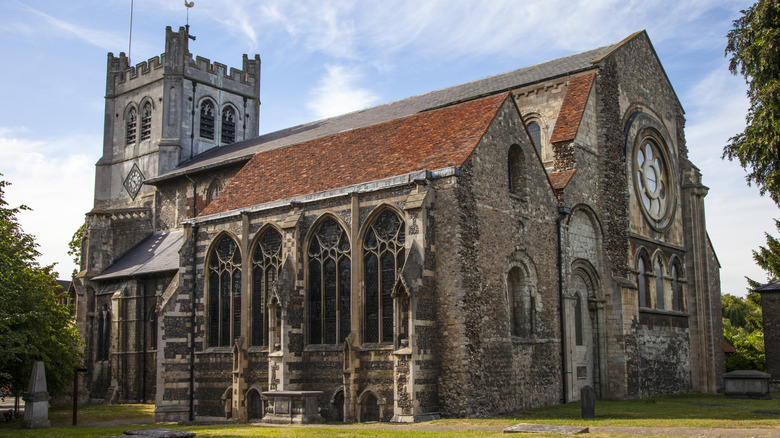
It's also worth making a stop in Waltham Abbey, a charming town dominated by its grand church. King Harold II, the last Anglo-Saxon ruler, who died at the Battle of Hastings in 1066, is believed to be buried in the churchyard. Walk around the premises, where info boards explain the history of the abbey, stretching back to its founding. To get to Waltham Abbey, the nearest train station is in Waltham Cross, around a mile and a half away. You can reach Loughton and Epping directly via the London Underground's Central Line, but Tube riders should take note of the costly London Underground mistake no one warns you about before making the journey.