
The World's Largest Artificial Lake By Volume Is A Scenic Oasis With Unique Wildlife And Fishing
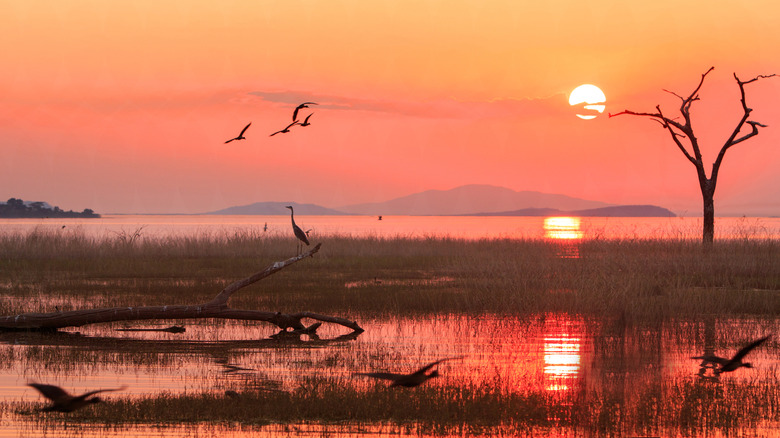
While many travelers have heard of Victoria Falls, the "largest curtain of falling water in the world," according to UNESCO, a lesser-known watery wonder lies downstream on the Zambezi River. Straddling the border of Zimbabwe and Zambia is Lake Kariba, the world's largest artificial lake by volume. It holds an astounding 44 cubic miles of water and covers over 2,100 square miles. The Kariba Dam was built in the late 1950s, creating a reservoir that serves as a source of hydroelectric power to both bordering countries. While the enormous lake continues to serve that function, it also supports a wide range of wildlife and freshwater fish.
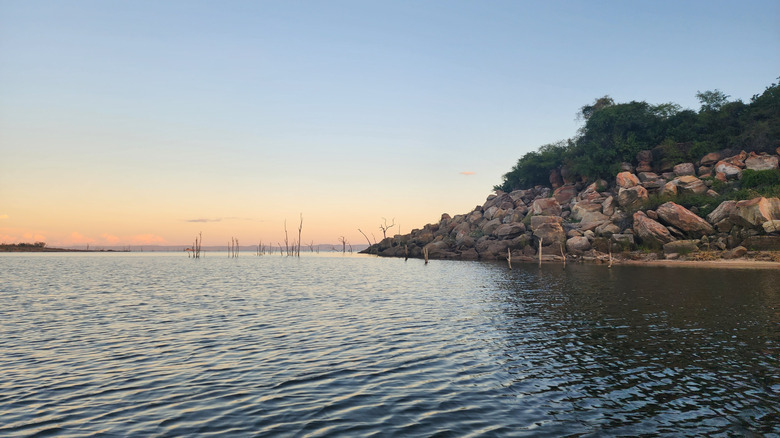
Today, travelers make the journey to Lake Kariba to experience the area's convergence of manmade and natural beauty. The lake's surface is famously punctuated by the skinny trunks of dead trees, remnants of the park's forest that flooded when the dam was built. One of the best locations for spotting wildlife along Lake Kariba is Matusadona National Park, a 540-square-mile expanse on its southern shore where elephants, zebras, hippos, antelopes, and other animals roam. For those who want to get out on the water, anglers can fish for species such as the tigerfish, bream, and catfish.
To reach Lake Kariba, travelers can fly to Kariba Airport (KAB) by charter plane or make the 5-hour drive from Victoria Falls to the western shore of the lake. The dry season, roughly June through October, is a popular time for wildlife spotting, while the warmer months toward the end of the season are favored for optimal fishing opportunities.
A wildlife safari in Lake Kariba's Matusadona National Park
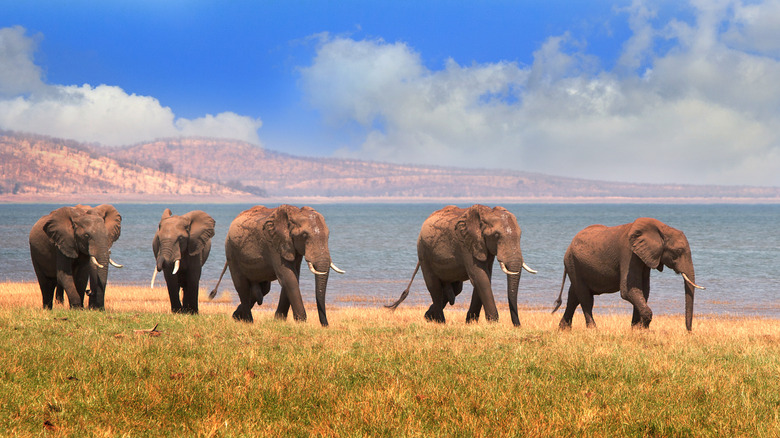
Zimbabwe is an underrated tourist destination for 2026, and Lake Kariba's remote setting and massive scale form a scenic backdrop for a safari. Matusadona National Park is nestled between the Matusadona Hills, which reach over 2,000 feet tall, and the waters of Lake Kariba. Here, you can spot the park's large populations of hippos and herds of elephants, which often swim in the lake. You can also see other members of the "Big Five," such as lions, leopards, buffalo, and even the endangered black rhino, a number of which have been returned to the park in 2026. The park is a destination for bird-watchers, too, with nearly 400 recorded bird species, from the African fish eagle to the colorful lilac-breasted roller. Visitors can explore Matusadona National Park on day trips by self-guided or guided game drives or walking safaris.
Those who want to experience Matusadona National Park and Lake Kariba for longer can stay within the park's borders at campsites or safari lodges. For true immersion in nature, Tashinga Campsite offers the chance to sleep in tents on the lake's shores, but with modern amenities such as kitchens and bathroom facilities. For a more luxurious experience, check into the Rhino Safari Camp, which features seven thatched-roof chalets overlooking Lake Kariba. From here, you can head out on game drives in the park, cruise on boat trips along the lake, and enjoy sundowner cocktails on the lake's shores. "We saw a lot of game – lions, elephants, hippos, impala, kudu, warthogs, crocodiles, baboons, zebras plus tons of birds," raved a reviewer on Tripadvisor, where Rhino Safari Camp has a 4.9-star rating.
Fishing opportunities in Lake Kariba
Lake Kariba supports over 40 recorded fish species and a commercial fishing industry. The tigerfish is Lake Kariba's best-known game fish, drawing anglers for its mighty, fast nature, sharp teeth, and large size. In fact, one record Lake Kariba tigerfish weighed about 35 pounds. The best time to catch tigerfish here is from September to December. Since 1962, the lake has hosted the Kariba International Tiger Fish Tournament, an exciting multi-day competition in October to catch (and release) the largest tigerfish in the lake.
One base for fishing on Lake Kariba is Fothergill, a lodge on Fothergill Island in Matusadona National Park. Fothergill's island location ensures a prime gateway to the lake. In addition to the famous tigerfish, you can catch other species such as catfish and tilapia. The lodge's catch-and-release fishing program is led by expert guides and is offered for anglers of all abilities. "The fishing pontoons and staff were very knowledgeable and so helpful and knew where to fish if you wanted to catch either bream tiger [sic] and even vundu," noted a Tripadvisor reviewer.
Before or after your visit to Lake Kariba, don't miss a stop in Victoria Falls, Africa's adventure capital with one of the world's largest waterfalls. If you're heading to Harare, wildlife lovers should visit the Zimbabwe Elephant Nursery, where visitors can get hands-on with animal conservation.