
Between Bristol And Barnstaple Is A Quaint Village Inside A National Park With Shops And A Scenic Castle
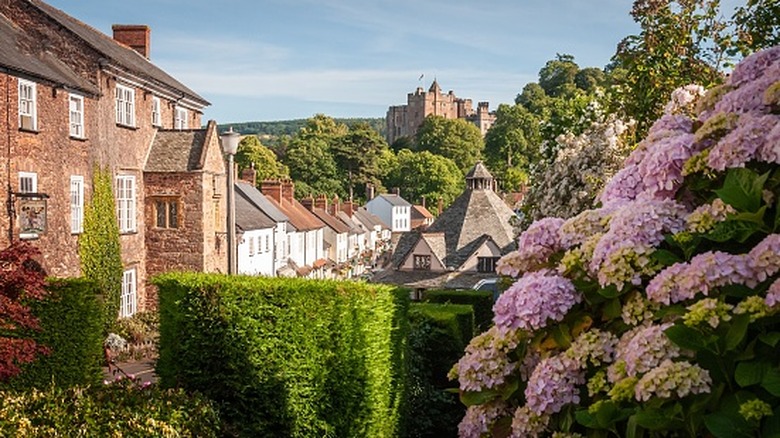
Bisected by the River Exe and overlooking the Bristol Channel, Exmoor National Park is emblematic of the British countryside, with its wild moorlands and gentle contours, its mossy forests of ancient oak and upland farms bound by hedgerows. The village of Dunster sits on the park's eastern edge, and receives the aesthetic benefits of its bucolic surroundings. It's also one of the best-preserved medieval villages in England, with a stone castle commanding a view over the small settlement and the wooded hills.
Elsewhere in town you'll find a winding packhorse bridge; a tithe barn, used to store crops donated to the church as a form of tax (known as a tithe); and from the post-medieval era, a 17th-century octagonal shelter, called the Yarn Market, used for trading wool. This is all set against a backdrop of cottages and a cozy main street of teashops, inns, and independent stores. Despite its inherent appeal, Dunster has yet to succumb to the kind of crowds that overwhelm some of England's other picture-book villages — Exmoor is actually one of the least visited national parks in the country.
Dunster is quite accessible for travelers visiting England's West Country. Another handsome medieval town, Barnstaple, straddling the River Taw, is only an hour's drive to the west. You can also reach Dunster by public transport, but it's not particularly convenient, and Great Western Rail, the operator of trains in the region, is considered the UK's most unreliable.
Visiting Dunster Castle
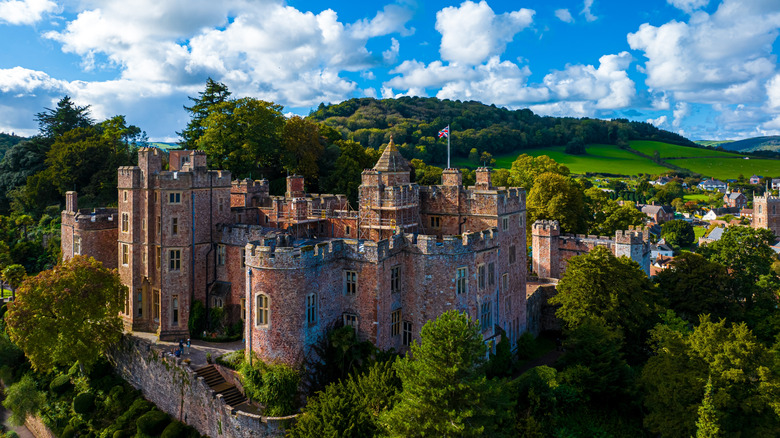
Dunster was settled by the Anglo-Saxons, who ruled England from the fifth century until their defeat at the hands of Norman invaders in 1066. Sometime in the eighth century, an Anglo-Saxon commander named Dunn or Dunna, to whom Dunster owes its name, established his headquarters here, and later, a fortress was erected on the hilltop area where Dunster Castle now sits. Over the subsequent centuries, the castle underwent multiple renovations, fortifications, and rebuilds, so the current stone structure is an amalgamation of different architectural eras.
A handful of elements, like the Great Gatehouse and the remains of the towers in the Lower Ward, evidence Dunster Castle's history as a medieval fortress. Other additions — a decorative wooden staircase, an ornate conservatory, living spaces dressed in Rococo wallpaper — allude to the 600 years it spent under the auspices of the Luttrell family, who used it as their lordly manor. Now a Grade I listed building operated by the National Trust, visitors can walk the castle premises, inspect the interiors, its subtropical gardens (where micro-climates ensure non-native plants can thrive), and a still-functioning watermill.
Though the imposing gatehouse, with its square turrets and weather-beaten crenellations, evokes Dunster Castle's history as a fortress, it feels decidedly palatial to walk around, all antique furnishings and wood paneling and flattering portraits in gilded frames. For an alternative way to view the castle, book a ghost tour, during which a guide recounts the history of ghost sightings, phantom noises, strange shadows, and paranormal happenings that have long haunted the castle.
Shopping in Dunster
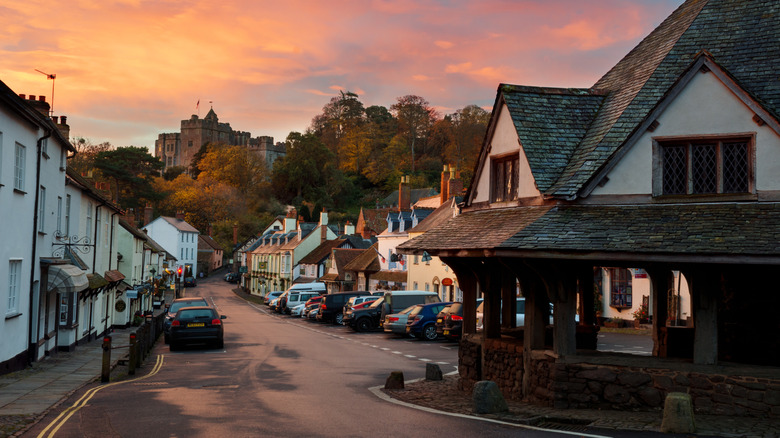
Rick Steves has called England's southwest a "a minefield of tourist traps," but you wouldn't know it walking along Dunster's High Street. It's charming, in the way English village high streets tend to be, but it's also unbusy and unhurried, lined by independent stores with neatly stocked window displays. Shops sell items that might actually be worth buying, and even the souvenir stores feel more purposeful — one doubles up as the local newsagent — than those peddling cut-and-paste tourist tat.
Among the more interesting stores is Hall of Names, where travelers fresh from visiting the castle can enquire about their own aristocratic lineage. Through their database of more than one million surnames, you can find the history of your family name and any relevant coat of arms, and have them inscribed on plaques, mugs, glassware, candles, and other items. The 5 Quarters is a gift shop inspired by the classic elements — earth, water, air, fire, spirit — and sells appropriately thematic items like crystals, minerals, fossils, gemstones, jewelry, and figurines. Dunster Living also sells quirky goods: toys, puzzles, nature prints, Dunster-themed children's books, textile art, and other handcrafted items.
For local produce, check out The Deli, also on High Street. You'll find local cheeses, charcuterie meats, cider from Somerset breweries, gin-infused marmalades, and jams made from whortleberries, damsons, blackcurrants, and blackberries. If this gets the stomach rumbling, The Deli also serves homemade pies and pastries. There are several cozy pubs in the village, each worth stopping in for a pint of ale or cider. The Stags Head and The Foresters Arms, both well regarded on review platforms, have the look and feel of old-school country boozers, with stone and timber interiors and no-frills seating areas. When you're done traipsing around Dunster, consider heading next to Bristol, ranked as one of the best places in the world to travel, about an hour and 45 minutes away by car.