
Spain's Largest National Park Is An Underrated Mediterranean Gem With Ethereal Blue Waters And Underwater Forests
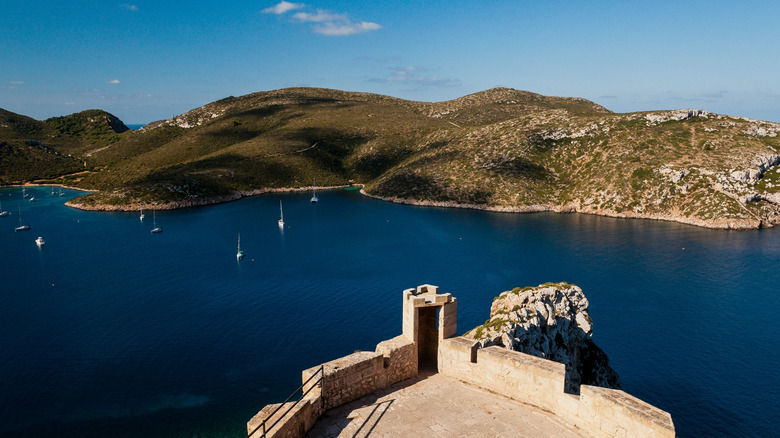
Spain's Mediterranean coast is no stranger to eager tourists. According to Mallorca Magic, the Balearic Islands saw 19 million tourists in 2025, with Mallorca alone accounting for around 13.5 million. However, just a few miles from this popular tourist spot lies a similarly gorgeous island paradise, with exquisitely blue waters and hidden caves. Despite its stunning vistas, this haven remains quiet and secluded, far from the crowds of its popular Balearic neighbors. It's called the Cabrera Archipelago Maritime-Terrestrial National Park, and it lies just 10 nautical miles from Mallorca.
The Cabrera Archipelago Maritime-Terrestrial National Park was officially established in 1991, and at the time, it only included the islands themselves. In 2019, following a motion to expand conservation efforts of the marine environment, Spain added the surrounding seas to the park's protected territory, increasing its area from around 25,000 acres to almost 225,000 acres. With this move, Cabrera Archipelago Maritime-Terrestrial National Park officially became Spain's largest national park, surpassing the 212,000-acre Sierra Nevada National Park in Andalusia. Today, the park includes 19 islands (of which Cabrera is the largest), plus the surrounding waters. Because it's a marine preserve, daily visitors are strictly capped at 200 to 300 people.
The waters surrounding the islands of Cabrera Archipelago Maritime-Terrestrial National Park flaunt their signature azure hue that characterizes the Balearic Sea. They are crystal-clear thanks to the underwater seagrass meadow, which grows across the Mediterranean. To reach the park, you'll have to take a 30- to 40-minute boat trip from the coastal town of Colònia de Sant Jordi. At the southern tip of Mallorca, it's less than an hour's drive from the airport in Mallorca's capital, Palma de Mallorca, the island's friendliest city.
Exploring Cabrera Archipelago Maritime-Terrestrial National Park
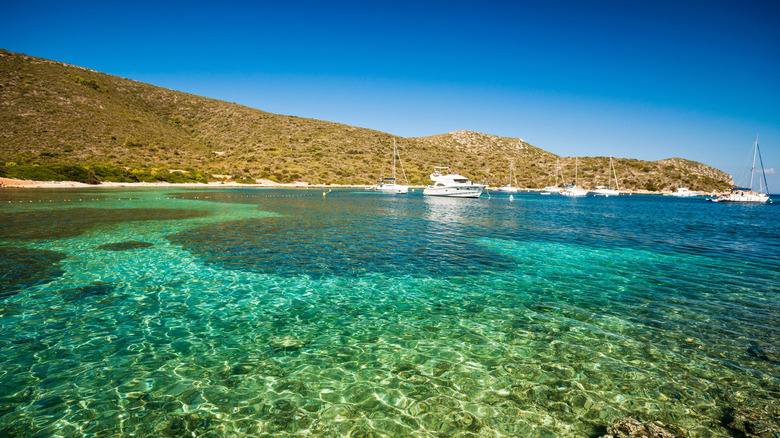
Water activities are the top reason for visiting the Cabrera Archipelago Maritime-Terrestrial National Park. Start by swimming in the shallow shores near the park's three beaches — Sa Platgeta, Platga d'es Pagès, and S'Empalmador. Alternatively, take a boat tour of the park's lagoons and caves. One of the most popular swimming spots is Sa Cova Blava (the Blue Cave), which gets its name from the brilliant blue hue the water takes when sunlight hits it at a particular angle.
You can also snorkel or scuba dive to explore the nearly untouched underwater environment around the islands. For most of its history, the islands of Cabrera Archipelago Maritime-Terrestrial National Park were used as a military outpost, with a brief but dark stint as Spain's version of Alcatraz during the Napoleonic Wars. By the time it became a conservation area, the islands had been mostly uninhabited for more than a century, making Cabrera one of the lesser-known islands in Spain. As a result, scuba divers and snorkelers today enjoy a stunning medley of pristine, wild seagrass "forests" and their thriving marine communities, featuring turtles, dolphins, sea slugs, sea bass, bream, starfish, and the occasional octopus. Snorkeling is included on most boat tours, though you might have to rent or bring your own gear. You'll have to arrange for government permits to go scuba diving.
If you want to bring your own boat, you need to secure an anchoring permit at designated mooring sites. For those who want to stay overnight, you can book a room in advance at the Cabrera Shelter — the only accommodation on land. You can also stay an extra night at Colònia de Sant Jordi and combine this trip with a visit to one of the world's best beaches, Caló des Moro, just a 20-minute drive away.