
Germany Turned Its Once-Thriving Mine Into The Largest Artificial Lake In The Country With Outdoor Fun
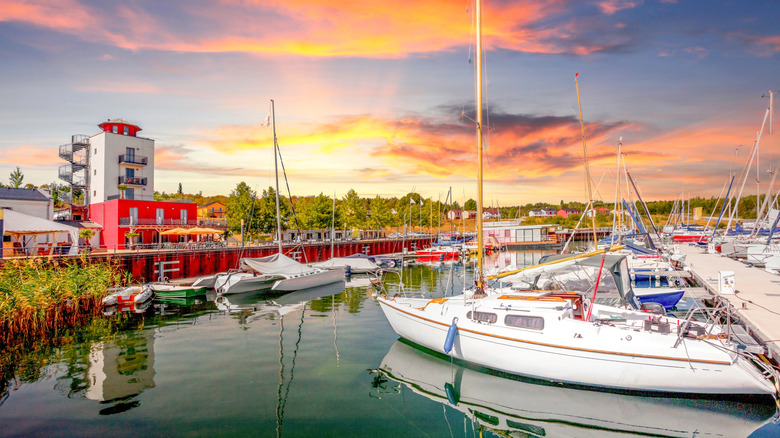
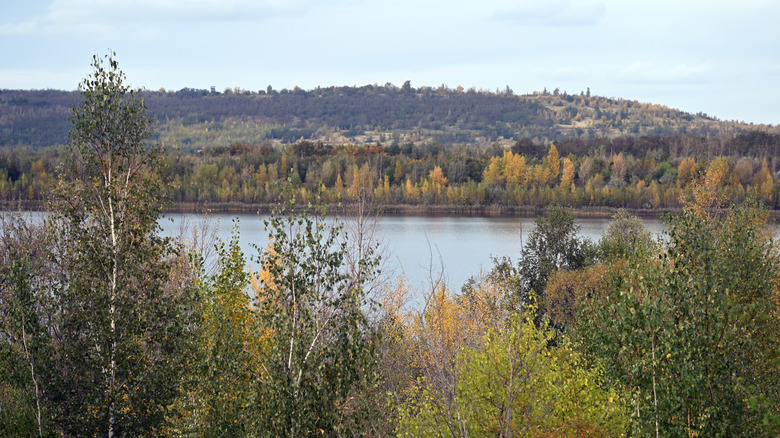
There's nothing artificial-looking about Lake Geiseltal. The waters are wide and placid, and forested hills rise around its shores. The lake has just the right water levels, which rise to the edges of several surrounding towns. On warm days, boats drift past and sunbathers spread out on the sand at Stöbnitz Beach. The scenery feels natural here, as if this lake has existed for eons. You might never guess that what lies beneath the water was once a coal mine, where workers harvested lignite — not for years, or decades, but for nearly three solid centuries.
Lake Geiseltal is a beautiful escape in the middle of Germany, and it has the unique distinction of being the largest artificial lake in the country. But it's also an environmental success story: Open-cast mining started at the end of the 1600s and continued right up until 1993. The Geisel Valley spent many decades as part of East Germany, which didn't score it any livability points. A decade after mining was discontinued, the massive void was filled with water and nature started its reclamation process. Since then, 240 bird species have been documented around Lake Geiseltal, and fishing is popular here; anglers have caught northern pike, European perch, and Prussian carp, among others. The lake is well suited to both sailboats and motorboats.
Things to do around Lake Geiseltal
During the warmer months, Lake Geiseltal is ideal for relaxing on the water. From May to September, visitors can rent watercraft of various types and sizes — from SUPs and kayaks to speedy motor boats and large luxury pontoons — at the Mücheln Marina on the southwest corner of the lake. On a hot summer day nothing beats motoring out to the middle of the lake and jumping into the conspicuously clear waters. The surface is calm and easy to navigate, and you don't need a special license to operate watercraft; just be mindful of other boaters around you. The lake is definitely large — about 7 square miles — but the geography is straightforward, and you're not likely to get lost.
More compelling still is the terrain under the water, with certain spots as deep as 250 feet. Lake Geiseltal is a favorite freshwater lake for scuba divers; the visibility is impressive, and underwater cameras have captured surreal scenes of preserved forests and the remains of manmade structures. Visitors can rent gear, arrange dives, and get diving instruction at two official dive centers on the lake, one near Mücheln and the other on the eastern shore. In fact, it's required to register with one of them in order to venture below the surface.
Lake Geiseltal is ringed with trails, including a 15.5-mile loop around its shores. Mücheln is a popular starting point; walk, skate, or rent a bicycle from the Mücheln Marina. These trails are open all year, so you can take long walks even in the snowy winters. As you go, take advantage of 3 different observation towers, each standing about 46 feet, or visit the Weinbau am Geiseltalsee (Geiseltal Vineyard), which stands on the lake's north side and hosts guests in its wine bar from late March to October. With all this low-stress outdoor fun, you could easily add Lake Geiseltal to a list of the best destinations you can't skip on a trip to Germany.
Getting to Lake Geiseltal and where to stay
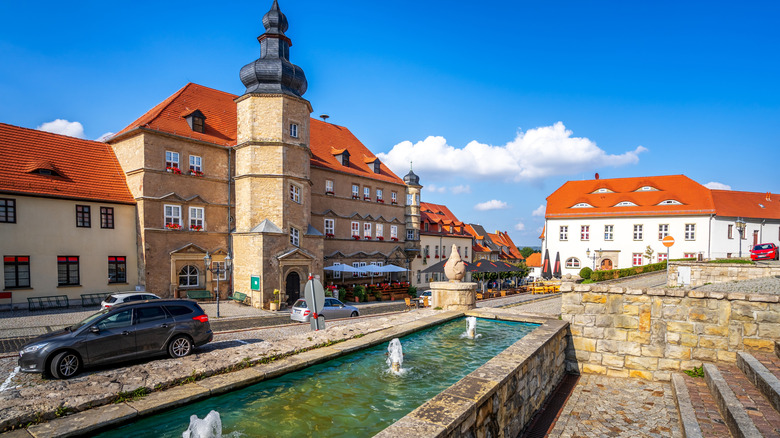
The closest major city to the lake is Leipzig, an underrated German city with less crowds. At about an hour away by car, it's an easy day trip. This being Germany, you can also hop mass transit to the local station, although this method requires at least one transfer (from train to bus) in the city of Halle and takes about twice as long. Lake Geiseltal's most significant hub is the town of Mücheln (pictured), a quaint community of about 8,000 people. Aside from the marina, Mücheln has a decent number of pubs and restaurants, as well as a stone-built Stadtverwaltung (City Hall) and central square.
Most of the lodging around the lake comes in the form of pensions and guesthouses, which tend to resemble bed-and-breakfasts in the U.S. You'll find them clustered in the middle of Mücheln and Braunsbedra, another large town on the southern side of the lake; many will be open even in the middle of winter. Finally, there are several campgrounds scattered along the lake's edges. Many of these cater to RVs, but tent camping is also available at Geiseltalsee Camp, which stands right next to both Stöbnitz Beach and the Dive Center; the grounds are generally open from May to September. This campground also puts you only 1.5 miles from Mücheln and all its handy services. This proximity to towns is one of the major differences between camping in Europe vs America, per Rick Steves.