
Swap Busy Brussels For This Under-The-Radar Belgian City With History, Eats, And Astonishing Architecture
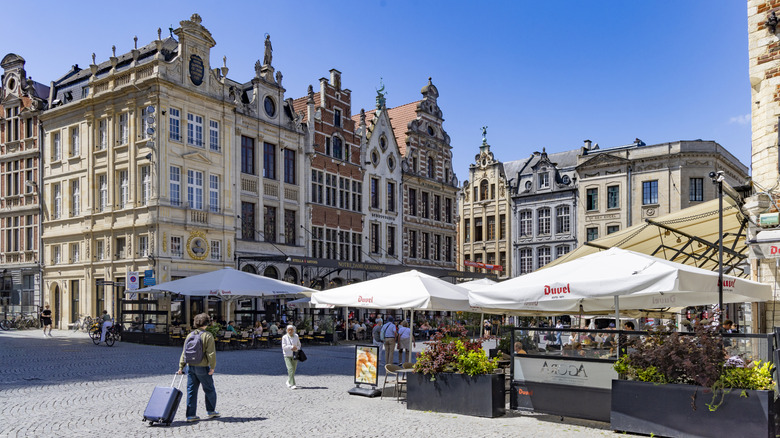
If you're planning a trip to Belgium, you might be looking forward to the Gothic towers, cobblestone streets, chocolate shops, and Belgian beer of famed cities such as Brussels and Bruges. The more well-known Belgian destinations have earned a reputation for these reasons — and they attract plenty of tourists accordingly. If you want to get away from the more touristy hotspots, look no further than Leuven, which comes with all the Belgian trademarks and more, but with fewer crowds.
Leuven is a medieval city, dating back to the 9th century, which you can see on vivid display in the compact center: An ornate Gothic Town Hall, the alleys of the convent-like Great Beguinage, and the centuries-old university are a few architectural eye candy spots to hit in a sightseeing circuit.
The urban center is part of the Dutch-speaking Flanders region of Belgium, alongside the better-known cities of Bruges, Ghent, and Antwerp. Brussels, its own region, sits just 20 to 30 minutes away from Leuven by IC train. Once there, you can head to Grote Markt, its central square watched by 235 statues on the Town Hall, or head to the former De Hoorn brewery where the first Stella Artois was brewed in 1926. Indeed, Leuven has the famed association of being the hometown of Stella Artois, but its dining scene goes beyond beer, with over 40 cafés lining Oude Markt and a couple of Michelin-starred restaurants in historic buildings to its name.
Leuven's historic sights, from a medieval library to a church
Belgium's layers of history make it a great country in which to kick off a European vacation. Leuven prospered in the 14th century as a cloth-making center. That period has left behind buildings such as the Gothic cloth hall constructed in 1317 (now KU Leuven's University Hall). College life, too, has a fairly important place in Leuven's history: When the cloth trade declined in the early 15th century, the city founded a college, and the University of Leuven — now KU Leuven — became the first of its kind in the Low Countries (Belgium, the Netherlands, and Luxembourg).
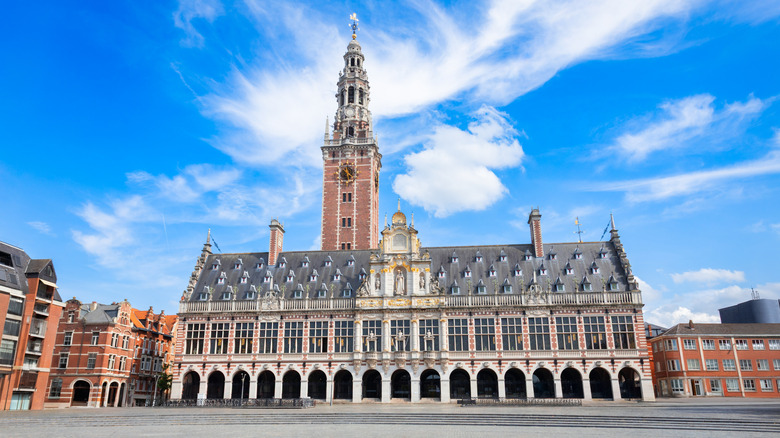
Leuven's heritage as an academic city is still palpable, from the historic college buildings lining the streets to students filling squares and cafés. One building worth checking out in the college quarter is the Leuven University Library, if not for its monumental, neo-Renaissance architecture then for its soaring Great Reading Room. Visitors are allowed to walk around the room on weekends, and an entry ticket to the library also lets you climb up its tower, which offers 360-degree views of the city.
Less than 10 minutes' walk from the library, Grote Markt is worth lingering around, since it brings together a couple of the city's grandest showpieces: The Town Hall and St. Peter's Church, both built in the 15th century, bookend the square. But for a piece of Leuven history that's less Gothic and considerably more boozy, head to De Hoorn. The former brewery is the birthplace of Stella Artois. Today, the building has been turned into a lively cultural space and bar, with its historic copper brewing kettles preserved. The site occasionally offers guided tours.
Where to eat in Leuven
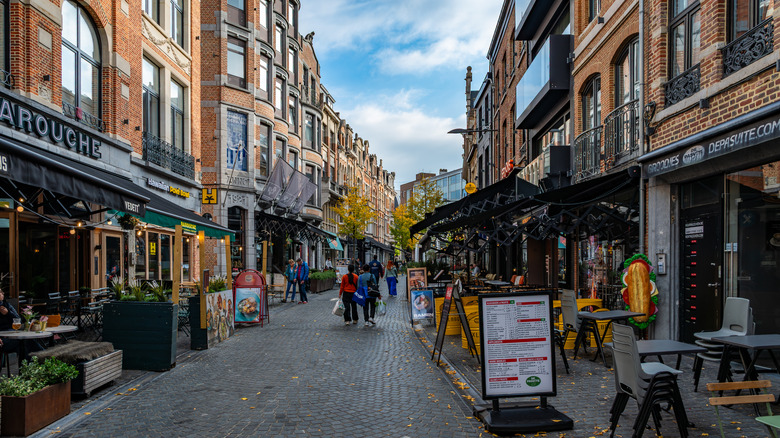
Leuven's medieval center isn't just pretty enough to photograph; it's also dense with places to eat. Muntstraat is a cobbled lane lined with over 20 restaurants spanning Mediterranean, Asian, Mexican, and French-Belgian cuisines.
Just beyond the end of the street, Oude Markt packs another 45 or so cafés and restaurants. Belgian travel blogger LifeAsSaar recommends the square's Metropole for affordable, filling lunch or brunch dishes like omelettes and spaghetti. Bar Nine is a well-reviewed option if you're looking for finger food and cocktails on a terrace. Regardless of where you go, you'll want to sample Belgian frites at some point, since Belgium has a reputation for having delicious fries.
If you're looking for somewhere to dress up and splurge, Leuven has two Michelin-starredrestaurants. EED is the more minimalist of the pair, with simple dishes built around unexpected twists — langoustine (Norway lobster) served with tomato and apricot, or Dover sole dressed with algae butter, for example. The dinner menu is set. Essenciel is similarly upscale, though it does offer an à la carte menu, peppered with the likes of hamachi (yellowtail) with cucumber and wasabi, and plaice with lobster Béarnaise. The restaurant is set in a pretty townhouse with a garden terrace, so you may want to reserve a table for early summer, the season travel writer Rick Steves says is best for exploring Belgium.