
'The Capital Of The Cotswolds' Is A Charming Town With An Award-Winning Museum, Shops, And Walkable Streets
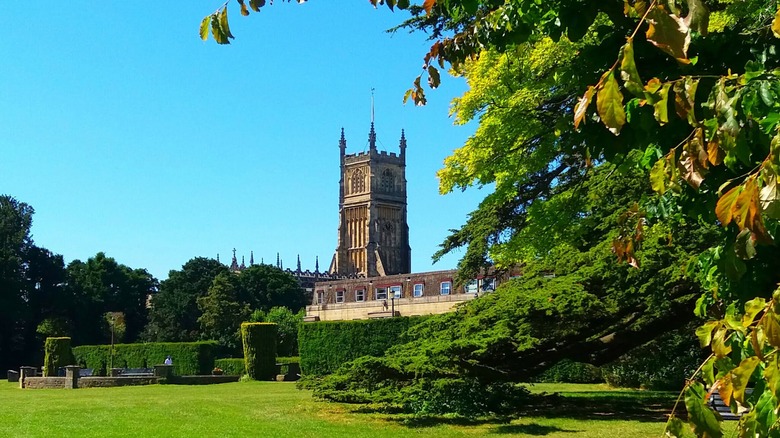
Covering 800 square miles and comprising five counties in south-central England, the Cotswolds have been a popular holiday escape for city slickers since the industrial boom years of the 18th century. The average Cotswold town is one of cobbled streets, weekend markets, and pretty church steeples. The buildings, constructed with a rich, honey-colored stone, house independent stores and country pubs where patrons drink pints of Gloucestershire cider while a Labrador snoozes under their table. Cirencester, the charming "Capital of the Cotswolds," epitomizes this salubrious atmosphere.
If "capital" suggests a city of grand proportions, it's slightly misleading. Cirencester has around 20,000 residents, making it large by Cotswoldian standards, but it's still a pedestrian-friendly market town. According to the Domesday Book, the oldest government record in the National Archives, Cirencester was already a thriving place of commerce by the 11th century. That heritage is preserved today with regular craft, antique, farmers, seasonal, and indoor markets. Shoppers in Cirencester should visit the stores around the main square, Market Place, and the narrow streets near the towering St. John the Baptist Parish Church. Here you can purchase apparel, books, crystals, crafts, souvenirs, and local produce.
Also check out Cirencester's award-winning Corinium Museum, detailing the town's ancient history, from the prehistoric age through the Anglo-Saxon, Tudor, and Industrial eras. But the museum's main draw is its collection of Roman artifacts, recovered from the days when Cirencester was one of Britain's largest settlements. Bath, only about an hour away, might be one of the best-preserved ancient Roman bath complexes in Europe, but the Corinium Museum is arguably one of England's finest repositories of antiques from the era.
Exploring the Corinium Museum
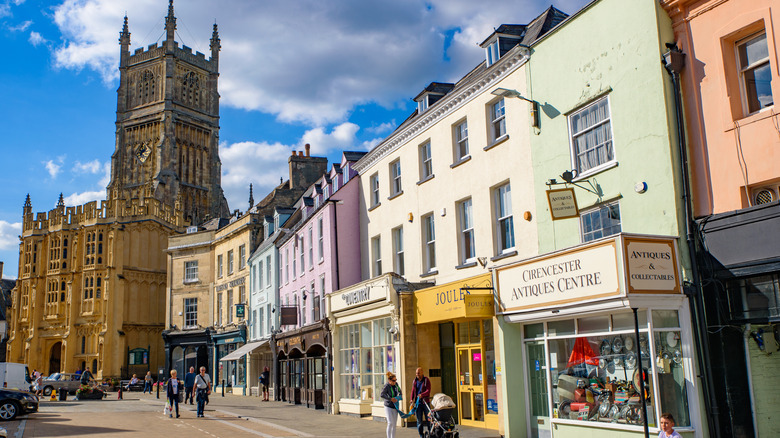
At its height in CE 117, Rome ruled most of Europe, part of the Arabian Peninsula, and the coast of North Africa. Despite being in the far reaches of northwest Europe, Rome conquered Britain, too, establishing control from the first to the fifth century and erecting roads, villas, towns, fortresses, theaters, and boundary walls. These were dotted around England, from Hadrian's Wall in the northeast — an area still hosting some of England's best historical sights — to Dorchester, Bath, and Cirencester in the south.
During the days of Roman rule, Cirencester was called Corinium, a hub of mercantilism and trade. As the town grew, it allowed the empire to siphon taxes from the population and extol the virtues of Roman culture. With perimeter walls that enclosed 240 acres, Corinium was a major market town, with a basilica, a forum, and an amphitheater, the earthwork remains of which are on the outskirts of town. The Corinium Museum — which recently won silver in the Small Visitor Attraction of the Year category at the regional tourism awards — focuses on this era of Cirencester's history.
The museum's mosaic collection features colorful antiquities excavated during the last 200 years. The fragmented Orpheus Mosaic, uncovered on a nearby farm, depicts the mythical bard playing his trademark kithara (a kind of lyre). Also impressive are the Admiral's Walk-Dolphin, portraying the eponymous cetacean surrounded by leaves, and the geometric Meander Mosaic, whose swastika-like shapes appear Asian in origin — the swastika was a symbol of good fortune in Eastern religions before it was appropriated by Nazi Germany in the early 20th century. Other Roman artifacts on display include ornamental birds, items for daily use like combs and receptacles, wall inscriptions, fragments of altars and tombstones, and gold coins.
Shopping in Cirencester
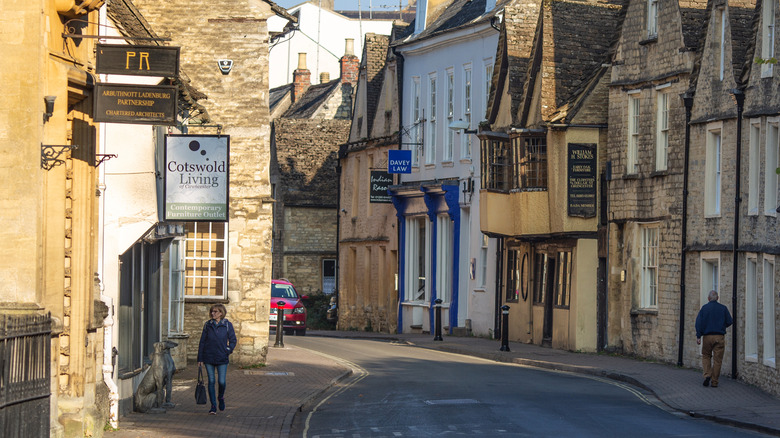
The Cotswolds region is full of great market towns, whether you're browsing the art galleries and antique stores of Tetbury or visiting the cozy tea shops and old-time market of Stow-on-the-Wold. But in terms of sheer abundance and the variety of goods on offer, Cirencester is perhaps the pick of the bunch. It was recently featured in a Daily Telegraph article discussing the best shopping areas in the Cotswolds, while Time Out credited Cirencester's shopping scene as a reason for naming it among the best places in the world to visit in 2026.
Start your retail therapy in Cirencester's markets. Regular indoor markets take place in Corn Hall, where local artists and craftspeople sell their wares. The Charter Market, held every Monday and Friday, is the spiritual successor to the old trade market mentioned in the Domesday Book. Held in Market Place, it hosts stalls topped with fresh food and pastries, local produce, smoked meats, plants, woodwork, textiles, jewelry, and more. Specialty markets — for vegans, twilight shoppers, or Christmas trinkets — also regularly come to town. Check out the Cirencester Markets web page to see what's on the schedule in the coming months.
The town center also has plenty of shops. Cirencester is walkable, so you don't need to overplan; just wander around Market Place and nearby shopping areas like Castle and Cricklade streets or the Woolmarket and see what you stumble upon. Quirky stores in town include m.a.d.e., perfect for earth-toned textiles, handmade jewelry, and gifts for women; Simply Crystals, for buying aromatherapy goods and ethereal ornamentation; and Octavaia's Bookshop, a colorful emporium that will delight bibliophiles. You'll also find some stores, as well as an independent milkshake shop, My Moo, along the Bishops Walk arcade.