
Between Berlin And Leipzig Is A Historic German Town With Colorful Streets, Museums, And A Famous Castle Church
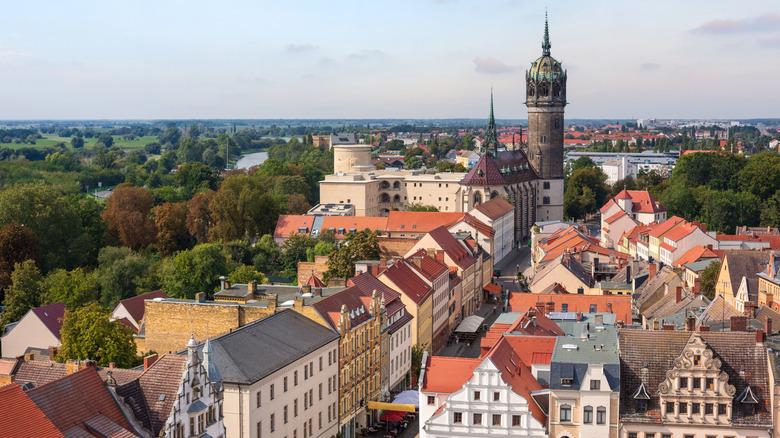
Germany's capital, Berlin, is the country's most visited city and home to landmarks such as the Brandenburg Gate, Berlin Wall Memorial, Victory Column, and more. However, history buffs should also make the journey about 70 miles south of Berlin to a small town where significant historic events took place. On the shores of the Elbe River, Wittenberg is a charming medieval hub marked by winding cobblestoned streets, fanciful facades, and impressive churches.
Wittenberg was first documented in the late 12th century and received town rights in 1293, but it came into the spotlight in 1517 when Martin Luther, an ordained priest and professor in Wittenberg at the time, published his 95 Theses. According to tradition, he posted them on the door of Wittenberg's Schlosskirche (Castle Church). His revolutionary document criticized abuses surrounding the Catholic Church's custom of selling indulgences and helped set the groundwork for the Protestant Reformation and Lutheranism. Luther's theology emphasized a Christian faith rooted in the authority of the Bible, and he later translated the Bible from Hebrew and Greek into the vernacular German so it could be widely understood. Today, Wittenberg is synonymous with Martin Luther, and the town's official name is even Lutherstadt Wittenberg. Wittenberg is home to UNESCO-listed Luther Memorials, including the Schlosskirche and the Luther House, where Luther lived.
Wittenberg is easy to access, located roughly a 40-minute train from Berlin and a 30-minute train ride from the underrated city of Leipzig. If you're flying in, the closest major airport is Berlin's Brandenburg Airport (BER). The best time to visit is between May and September, when average highs range from about 67 to 76 degrees Fahrenheit.
Retracing Luther's legacy at Wittenberg's churches
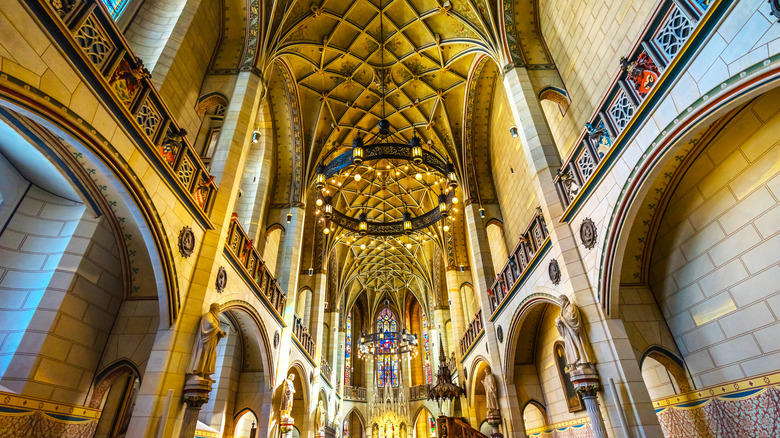
Four of the six sites included in the Luther Memorials UNESCO World Heritage designation are in Wittenberg. While all four are essential stops on a Wittenberg itinerary, a great place to start is the Schlosskirche, the Castle Church where Luther supposedly nailed his 95 Theses on October 31, 1517, a date now commemorated as Reformation Day. Built between 1489 and 1509, the church was connected to the castle constructed around the same time by Elector Frederick the Wise. After a fire in the 1700s, the original wooden doors were lost. In 1858, they were replaced with grand bronze doors emblazoned with all of Luther's 95 Theses. While these doors are a major draw, visitors shouldn't miss touring the neo-Gothic interior of the Schlosskirche. Inside, you can see stained-glass windows, pipe organs, and Luther's tomb before climbing the nearly 300-foot tower. "There's quite a few stairs but it was worth it to see a 360 degree view of Wittenberg," raved a reviewer on Tripadvisor, where the Schlosskirche is rated the No. 1 thing to do in Wittenberg.
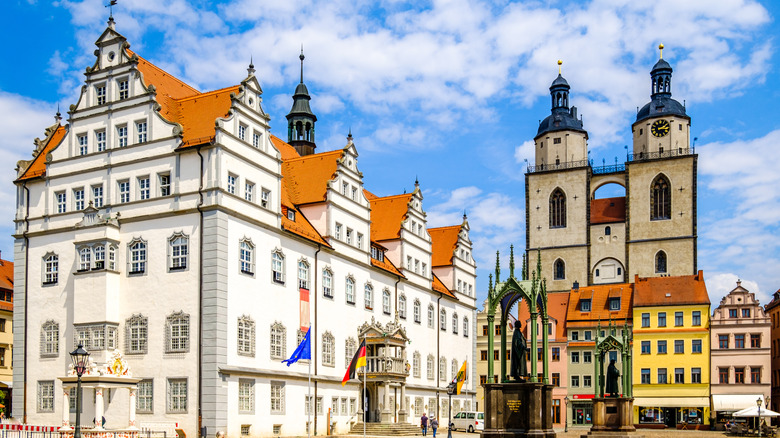
The other UNESCO-designated church in Wittenberg is St. Mary's Church, also known as the Stadtkirche (Town Church), which is described as the "Mother Church of the Reformation." Built in the 13th century, its pair of towers overlooks Wittenberg's main Market Square. Martin Luther preached here beginning in 1512, five years before the publication of his 95 Theses, and married Katharina von Bora there in 1525. Be sure to admire the church's triptych altarpiece from 1547, created by the Cranach workshop. It depicts the Last Supper, with Martin Luther portrayed among the disciples.
The most important museums to see in Wittenberg
To learn more about the Protestant Reformation, you can visit two important museums in Wittenberg, though one is temporarily closed. The Luther House was a 16th-century Augustinian monastery where Martin Luther first lived as a monk. He later moved back with his wife and six children. Today, it is considered the most important museum dedicated to Luther's life and the Reformation. As of this writing, it is closed for renovations and is planned to reopen in the spring of 2027. Visitors, however, can see some artifacts from its collection in the adjacent Augusteum. Another townhouse not to miss in Wittenberg is the Melanchthon House, home to theologian Philipp Melanchthon, Luther's friend and partner in the Reformation. Constructed in 1536, the Renaissance-era house is crowned by a decorative gable. The well-preserved interiors reveal what it was like when Melanchthon lived there, and its exhibits showcase his role in the Reformation.
After you've explored these museums, take time to wander Wittenberg's colorful streets. Historic buildings lining the cobblestoned lanes and Market Square boast vivid facades, ranging from sunshine yellow to rosy pink. A whimsical sight is the Hundertwasser School, remodeled in vibrant colors according to artist Friedensreich Hundertwasser's designs in the late 1990s. The holiday season is especially colorful in Wittenberg, when Germany is known for its spectacular Christmas markets. Wittenberg's festive Christmas market with decorated stalls is held between late November and late December in the Market Square.
If you want to visit another important Luther site in Germany, head to Eisenach, a historic gem with natural beauty, leisure cycling, and affordable living. Here you can tour the UNESCO-recognized Wartburg Castle, where Martin Luther translated the New Testament in 1521 and 1522.