
The Nevada 'Star Train' Near Great Basin National Park Is A Unique Way To See The Lower 48's Darkest Night Skies
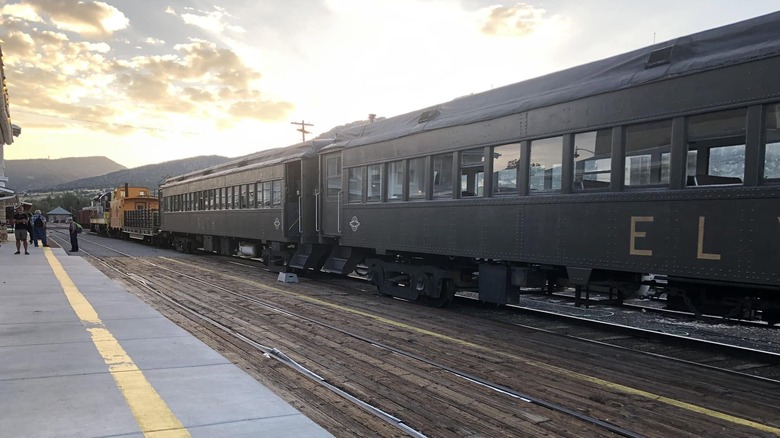
Upon arriving at the East Ely Railroad Depot in Ely, Nevada, one of the first things we see as we step onto the station platform is a man in a cowboy hat. "Woody!" my 2-year-old daughter exclaims in excitement. The man, of course, isn't the cowboy character from the movie "Toy Story," but rather an employee of the Northern Nevada Railway, which hosts a museum that doubles as a National Historic Landmark – and the launching point of our adventure for the evening. But dressed as he is in Wild West attire, complete with boots and jean overalls, I can understand her confusion. Behind him looms a midnight-black vintage diesel locomotive. It rumbles to life as we hand the conductor our tickets, which are inscribed with the words "Star Train."
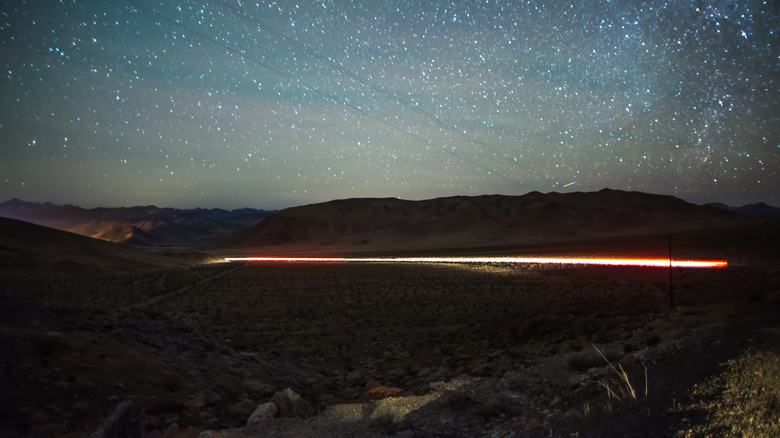
We've traveled almost 250 miles from our home in Las Vegas to ride this train, though the Great Basin Star Train is more than just a train ride — it's arguably one of the most unique ways to stargaze in the contiguous United States. As the train leaves the station and heads west, deeper into the remote high desert of northern Nevada, my family and I move to stand in the open-air train car. The sun is just beginning to set over the rolling mountain ranges of White Pine County, and as the train chugs forward through the biting wind, we watch as bunnies and a small deer leap into the olive-green sagebrush ahead. We're about 55 miles from Great Basin National Park, one of the most isolated national parks in the U.S., and just under 250 miles from the nearest international airports – Salt Lake City International Airport (SLC) and Harry Reid International Airport (LAS). Though my daughter doesn't know it yet, we're headed to a stretch of Nevada known for having some of the darkest night skies on the planet.
Why is the sky so dark near Great Basin National Park?
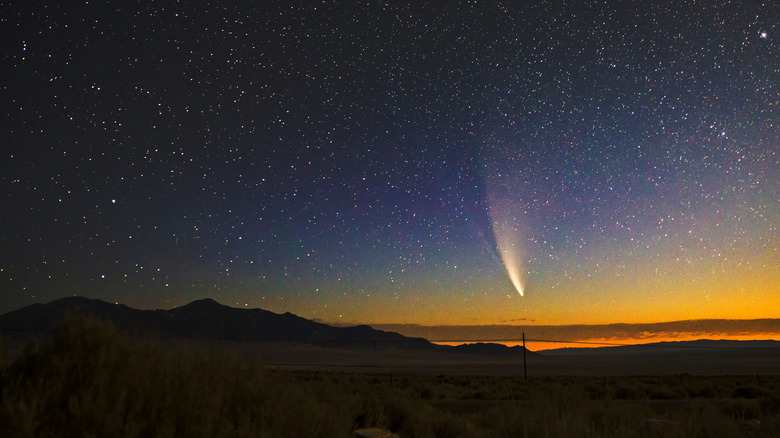
The underrated Great Basin National Park is known for its pristine stargazing and has been recognized as an International Dark Sky Place by DarkSky International. As one of the park rangers on the train pointed out, this is significant given that Nevada is not just home to one of the darkest areas of the United States but also one of the most illuminated. Las Vegas, particularly the Strip, is said to be one of the brightest spots on Earth. Great Basin, and the mountain ranges enveloping it, by contrast, have some of the darkest skies in the Lower 48.
How has Great Basin National Park become a "star sanctuary," as Travel Nevada has dubbed it? The area is ideal for stargazing in part due to the higher elevation — the cloudless and dry high-desert skies are simply clearer than they typically are closer to sea level. But mostly it's because this area of Nevada has very little light pollution. Isolated along Highway 50, known as the "Loneliest Road in America," the park's skies are so bright that you can see more than 6,000 stars, the Milky Way, and even other galaxies like Andromeda and Triangulum, and all with the naked eye.
While the Star Train doesn't run through Great Basin National Park, it traverses a similarly dark landscape at an elevation of 6,500 feet just 55 miles west of the park near the unique, Wild West town of Ely. Although this area of the world has long been notable for its starry skies, it's becoming especially unique now that more and more people live in light-polluted cities and suburbs and have fewer opportunities to glimpse the Milky Way or experience an unobstructed view of the cosmos.
What to expect on the Star Train
Because Nevada has few major metro areas and nearly 90% of the state is federally owned, the Silver State has no shortage of opportunities to view expansive starry skies. But the Great Basin Star Train is one of the most unique ways to experience Nevada's pitch-black nights. For starters, you're stargazing from a train. Plus, Great Basin National Park rangers, known as "Dark Rangers," serve as astronomy guides, teaching passengers about the stars and planets and how to spot constellations. Unlike self-guided stargazing, you won't have to bring your own equipment. During the 2.5-hour journey, the train stops in a remote stretch of the desert where high-powered telescopes await on a platform. With the rangers' help, passengers can use the telescopes to spot intricate details in the night sky, like the lunar craters or Saturn's rings. The night I rode the train, we used the telescopes to see bright blue stars and the ghostly haze of neighboring galaxies.
My daughter's favorite part was the light-up red star necklaces the rangers passed out after sunset, presumably to help passengers navigate the darkened train, but they also made for cute souvenirs. The ride also included drinks and snacks for purchase, which kept the kids entertained as they waited for the stars to make their grand entrance.
The Star Train runs from mid-May to mid-October, with tickets costing $65 for adults (as of this writing) and discounts available for seniors and children. They sell out quickly, so book as soon as they go on sale in August. Ely has several options for lodging, including Hotel Nevada, which is one of the oldest casinos in the U.S. and a five-minute drive from the station. If you drive up from Las Vegas, I recommend visiting Pahranagat National Wildlife Refuge, which has hiking, camping, and acres of lakes and lush wetlands.