
5 Lebanese Restaurant Rules American Tourists Break Within The First 10 Minutes
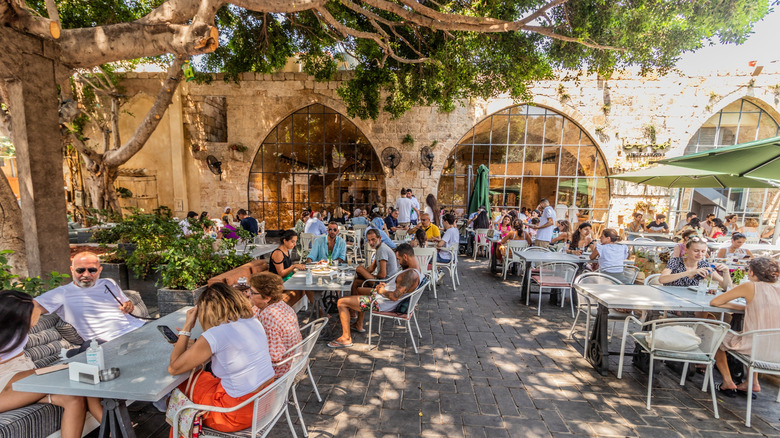
Traveling far and wide to countries vastly different from our own opens our minds to corners of the earth where everything and anything can feel new. And when it comes to food, traveling opens the doors — and our mouths — to an entirely new world of flavors, scents, ingredients, and customs surrounding the way people dine. Yet with every new culinary experience comes a learning curve, especially when dining traditions differ from those we are accustomed to. In fact, there are five rules that American tourists can unknowingly break within the first 10 minutes of entering a Lebanese restaurant, without even realizing they've done anything wrong.
Stepping into a Lebanese restaurant for the first time, however, may feel a little daunting. Dining customs can vary greatly from those familiar to Americans, and what may seem perfectly ordinary in the United States could be considered unusual — or even impolite — in Lebanese culture. For example, choosing not to share food with others at the table or politely refusing a friendly offer of a second helping, even when you are already stuffed from the meal, may be interpreted as unappreciative.
Known for their hospitality, generosity, and communal dining, Lebanese restaurants offer visitors a true taste of what it means to receive a warm welcome. Often serving as an extension of the home, these restaurants create a sense of welcoming from the moment you walk through the door. For American tourists, understanding a few key dining customs can make all the difference and help avoid breaking Lebanese restaurant rules that can easily happen without knowing it.
Expecting a quick sit-down meal
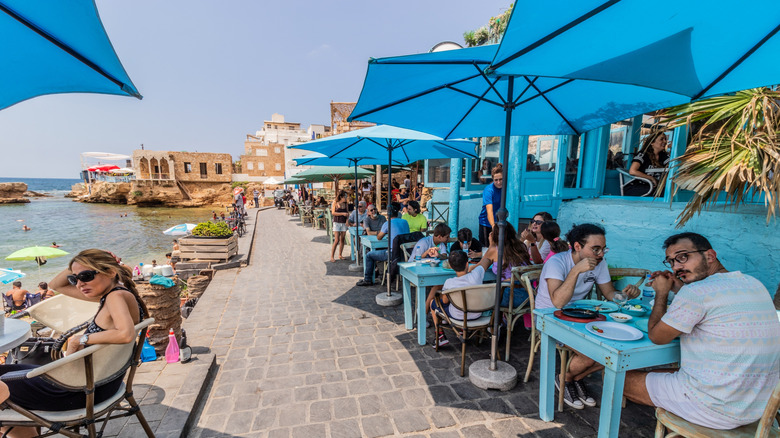
If you're used to quick, grab-and-go meals like those found at an American drive-through, you might be shocked by how long Lebanese restaurant goers stay to enjoy their meal. In an article on Beirut.com, it even discusses the abnormality of some restaurants in Beirut leaning towards a two-hour dining limit, calling it "a strange cultural shift." At a Lebanese restaurant, you'll typically see people lingering for hours, socializing long after the food has been eaten.
Unlike the fast culture found in America, where the bill drops before you can manage your last bite, Lebanese restaurants encourage staying and enjoying each other's company before even mentioning that you need the bill. If you're in a rush, you might be better off grabbing a quick shawarma from a street food vendor instead of sitting down for a meal that can extend from a quick lunch to a five-hour marathon of chatting, drinking coffee, and having a good time.
Refusing food when offered by locals

Lebanese culture is deeply rooted in a virtuous custom known as karaam, which translates to generosity in Arabic. This generosity extends far beyond offering directions or assistance to tourists; it is also deeply embedded in the country's food culture. Whether welcoming guests into their homes or serving them in restaurants, Lebanese hosts often express their kindness by making sure their guests are well fed. As a result, gestures that may seem perfectly polite to an American tourist can sometimes be interpreted differently in a Lebanese setting. For example, while saying "No, thank you" in the United States is a common and respectful way to decline additional food, doing so in a Lebanese restaurant may be perceived as dismissive or even rude, despite the tourist's innocent intentions.
Lebanon is considered to be one of the 10 best destinations across Asia for foodies, making its food culture an important part of the travel experience. The country is also home to Byblos, one of the world's oldest cities with trendy eateries. When offered additional food, a helping of dessert, or even an extra serving of batata harra (spicy potatoes), it may be best to politely accept, even if you are already full. In a r/Lebanon Reddit thread, one traveler described their experience: "Stopped over when in Lebanon a few weeks back. The wife was amazed that they just handed us some fries to snack on while waiting. You don't see that generosity where we live." The experience highlights how Lebanese hospitality can extend beyond simply serving a meal, with small gestures of generosity often becoming part of the dining experience itself.
Not sharing food when dining with others
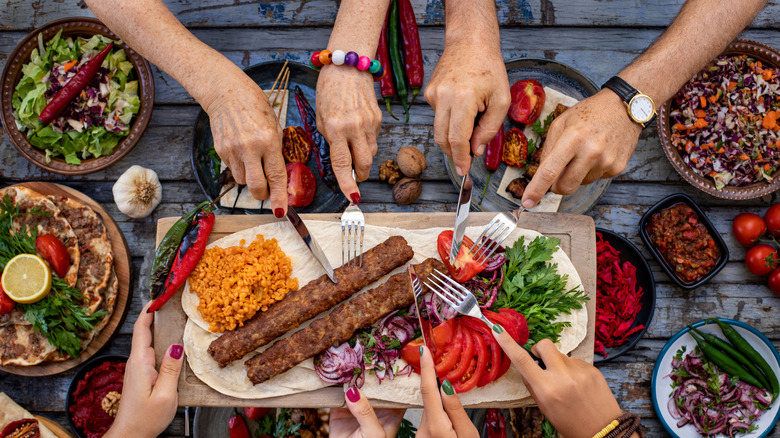
When it comes to food culture in Lebanese restaurants, sharing is caring. Dining with a group of people in America, everyone tends to order their own appetizers, their own main, and their own dessert. In Lebanese restaurants, it is common to share multiple dishes throughout the entire duration of the meal. It's no wonder why Lebanon was one of Anthony Bourdain's favorite food destinations around the world. The shared dining experience, called mezze, is a traditional way of enjoying many small plates of food at the beginning of the meal, rather than one huge individual portion for each person around the table.
When dining with others, everyone is expected to share the little plates that are brought out one by one until the table's surface is seemingly no longer in sight. Mezze dining allows each person around the table to sample every dish that's placed on the table. Dishes like hummus and muhammara (made with roasted red peppers and walnuts) and mahashi (stuffed veggies) all make their rounds with diners passing them to each other — just make sure to use your right hand only, or both hands when passing the plates per customary etiquette.
Talking openly about politics

If there's one potentially sensitive subject to avoid — especially as a tourist — while dining out in Lebanon, it's politics. In American culture, openly discussing political opinions, or religion, or criticizing government institutions can be relatively commonplace. In Lebanon, however, these subjects can be far more personal and divisive, particularly in public settings. With 18 officially recognized religious sects and a history shaped by complex political and religious divisions, what may seem like harmless dinner conversation to a visitor can carry deeper meaning for someone else at the table.
Instead, consider letting the meal as well as the people you're sharing it with take center stage. Conversation can naturally revolve around the food, family, travel, culture, and the stories that bring people together. As a visitor to a foreign country, you may not know the personal history or beliefs of those around you, so avoiding potentially divisive topics is a simple way to show respect. When you're gathered around a table, why not focus on what brings everyone together instead? Enjoy the food, appreciate the hospitality, and the people you're sharing the meal with.
Not understanding the Lebanese greeting etiquette

When going out for a night at a restaurant, many Americans might simply say "hello" or give their friends a quick wave when they arrive. In Lebanese culture, greetings can be a little more personal and usually depend on how well you know the person. For example, when greeting a close friend, family member, or someone you are very comfortable with, it's quite common to stand up and greet them with alternating cheek kisses. This is a friendly and familiar way of showing that you are happy to see them.
If you are meeting someone for the first time, or you do not know them very well, the greeting is usually a bit more formal. Instead of giving them a kiss on the cheek, you would normally stand up, shake their hand, and say hello. As a tourist, even making a small effort to use a local greeting, such as the French "Bonjour" or the Arabic "Marhaba," can go a long way. It shows that you are interested in the culture and are making an effort to connect with the people around you. These small gestures can make a big difference because they show respect and appreciation for the local customs while also helping you feel more comfortable when interacting with people at Lebanese restaurants.