
Nestled Between Edinburgh And Dundee Is A Scenic Park With Dramatic Hills, Trails, And Landmarks

The regions of Scotland where the lowlands gradually transform into the highlands feature some of the most breathtaking and intriguing natural formations of hills, cliffs, and forests, calling travelers to hike the trails that run through them. Lomond Hills Regional Park is filled with gorgeous expanses of rolling, rugged hills that are dotted with stone landmarks, both geological and historic. Here, every mile boasts photogenic scenery, including remnants of Iron Age hilltop fortifications and odd rock compositions resembling a science fiction setting.
Upon reaching the scenic Lomond Hills Regional Park, one will see 25 square miles of otherworldly topography, with hills and valleys rising and falling. 15 of the most prominent peaks in the park have been named, and the tallest among them is West Lomond at 1,713 feet in elevation. These dramatic hills are mostly composed of limestone underneath the green grass. Portions of the landscape also include dolerite and basanite, and these igneous rocks add to the varied and striking formations that create such curious and beautiful sights.
The park is a one-hour drive north of Edinburgh Airport (EDI). If not renting a car, visitors can take a bus or taxi to the nearby town of Kinross, and then take local transportation into the park. From Dundee, the journey to reach the stately park is only a 40-minute drive south. Lovely Scottish farms form the scenery on the way there, with cliffs and hills giving a modest sample of what awaits in the park. Off the road, travelers may even spot crumbling stone ruins of historic structures.
Enjoy the scenic trails of Lomond Hills
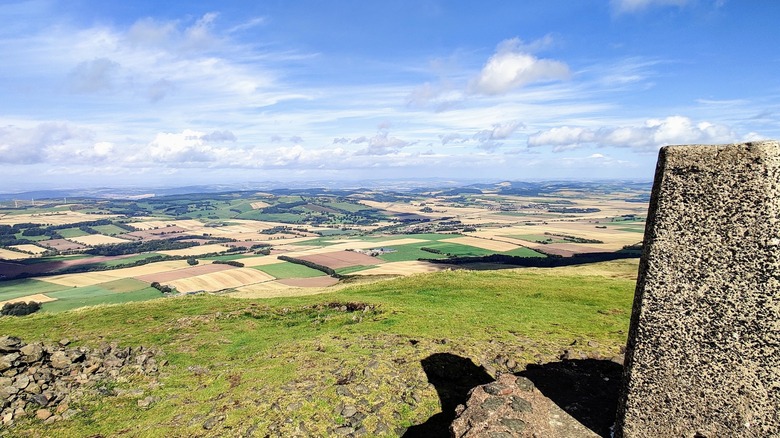
While the beauty of the hills is evident from afar, one can absorb much more detail by traversing their contours on the multitude of scenic trails that roam throughout Lomond Hills Regional Park. The moderately difficult, 4.5-mile East Lomond and Falkland Circular trail has a wonderful combination of sights, with thick forests, open fields, and a historical site that once belonged to the Venicones Celtic tribe as far back as the 1st century. Once at the summit, you can absorb the charming sight of the stunning Scottish village of Falkland below.
Those seeking a less strenuous yet visually rewarding hike will enjoy the 4-mile John Knox's Pulpit walk. On the trail, hikers will find a small sandstone canyon with a trickling stream along the bottom, fed by a small waterfall. Quality hiking footwear will help with the terrain which can be icy or muddy. One photogenic cove on the trail was historically used as a hidden area of worship by a Christian denomination which opposed Stuart royalty during the 16th century. This trail also offers splendid natural views of the rolling Lomond Hills.
The star of the hills is West Lomond, a 4.6-mile trail that leads to the highest summit in the park and the entire region of Fife. On the climb to the top, travelers will traipse through the moors, enjoying a scene of vibrant heather like that found along much of England's first National Trail, the Pennine Way. Hikers will also find sheep grazing among stone cairns and remnants of ancient settlements, creating a scene fit for a Scottish postcard. Trails up West Lomond are of varying difficulty and start from multiple parking lots.
Explore the landmarks of Lomond Hills
The Lomond Hills Regional Park is awash with vivid landmarks created by both nature and humanity. The two most obvious are the hills of East and West Lomond, where one might see the silhouettes of triumphant hikers who have made their way all the way up. Bronze Age cairns sit atop East Lomond, on a site which first saw settlement as long ago as 700 B.C.
Jutting up from the side of Bishop Hill stands a nearly 33-foot-tall spire of rock known as Carlin Maggie. This natural rock formation is the subject of local fables, which tell of a witch who ridiculed a rock-carrying Devil. The Devil then turned her to stone and, depending on the version, either dropped the stones he carried in anger or threw them at her, causing the creation of the nearby rock outcroppings called Devil's Burdens.
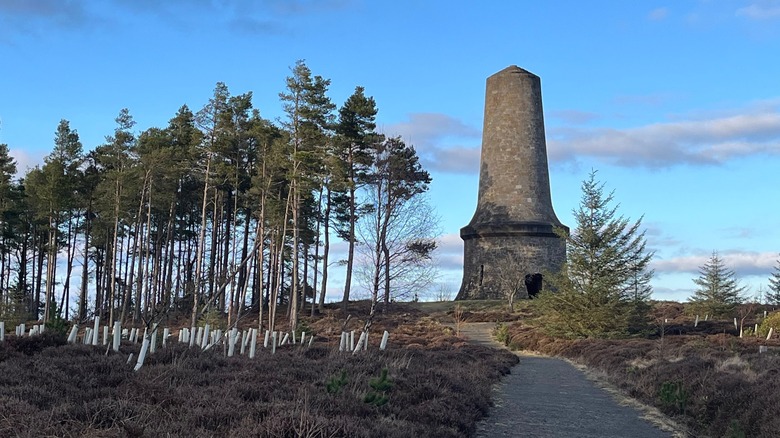
Situated atop Black Hill is a lighthouse-shaped stone tower known as the Tyndall Bruce Monument. The monument was constructed in 1855 and dedicated to Onesiphorus Tyndall Bruce by his wife, Lady Margaret Tyndall Bruce. The hilltop monument can be seen from quite a distance away. While there, visitors can also check out other historical landmarks like the Temple of Decision. This temple was constructed at the whim of the Tyndall-Bruce family based on the designs of Greek temples, much like those found at the scenic abandoned ruins in the once-thriving city of Ephesus.