
This US State's Slang Is The Hardest In America To Understand
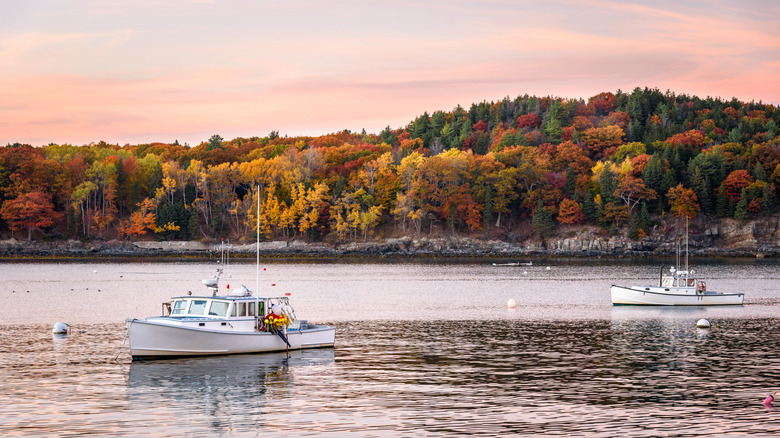
Don't glob around, put your larrigans on so we can go tipping downeast. Did you catch that? If not, you're hardly the only person who's stumped by Maine slang. While every state has its own collection of expressions that make sense to locals but leaves out-of-towners at a loss, Maine was found to have the most difficult slang to understand, according to a Preply study.
Travelers exploring Maine's rugged coast may encounter local slang unlike anything they've heard before. That's part of what makes travel interesting, though. Regional slang preserves local history and identity, lending places their distinctive charm. As you hunt for the best lobster rolls in Maine, be sure to brush up on your slang vocabulary to avoid mishaps — otherwise, you might mistake "tipping" for handing out money.
In the study, online tutoring platform Preply surveyed over 1,000 U.S. residents and asked them to define slang terms representing all 50 states. Preply kept track of how often people guessed the meaning of each slang term incorrectly. Maine garnered an 88.18% average of incorrect answers, confusing more study participants than any other state. One Maine term got singled out as particularly misleading. The phrase "right out straight," which means being extremely busy in Mainer parlance, was the second-most misunderstood term of all those tested.
Maine slang terms to learn before you visit
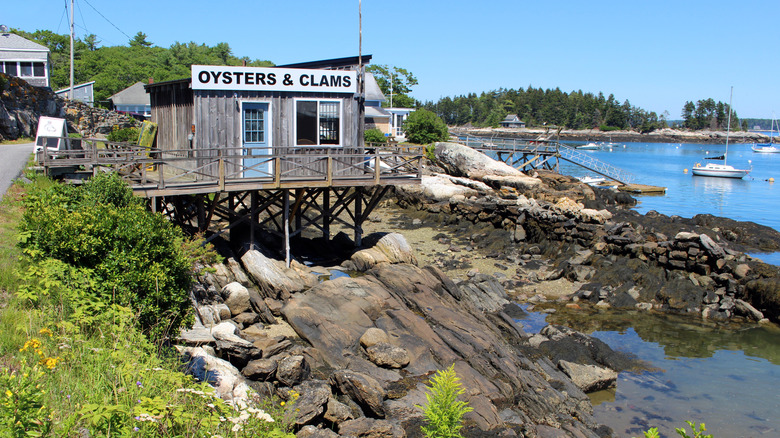
Much of Maine's slang has ties to its local traditions and geography, which can be helpful to know for navigating the state as a visitor. For example, the most common tree species in Maine is balsam fir, and around the holiday season, Mainers collect the tips of fir branches to make wreaths. Hence, the term "tipping" means to harvest the branch tips, particularly for making wreaths. If you're going tipping, you might put on your "larrigans" — a type of high, moccasin-style boot traditionally worn by lumbermen and other people who work in the woods.
If you're roaming around Maine, a few local expressions might help you along the way. "Downeast" is a literal example. Historically, it comes from 18th-century navigation, when sailors would travel downwind toward Maine's eastern ports. Today, it refers to eastern Maine's coastline, which is useful to know if you're headed to downeast Bar Harbor, one of America's most affordable destinations with endless lobster. If someone asks if you're a "flatlander" or "from away," they're asking if you're from somewhere outside of Maine. One Maine transplant wrote in The Bangor Daily News that being called "from away" casts you as an outsider, but it's not necessarily hostile.
Some terms that can be just as useful as directions are food vocabulary. "Chowdah" is the local pronunciation of chowder, something Maine is renowned for. If you're headed to Acadia National Park, be sure to try the clam chowder at nearby Islesford Dock Restaurant, the inspation for the Krusty Krab. "Ployes" are thin, buckwheat-based pancakes that stem from Maine's French-Acadian heritage, per Visit Maine. Once you've had your fill of chowdah and ployes, you might "glob around," or quite simply, chill out – the perfect sign-off to a weekend in Maine.