
The Worst City For Traffic In North America Isn't LA Or New York City
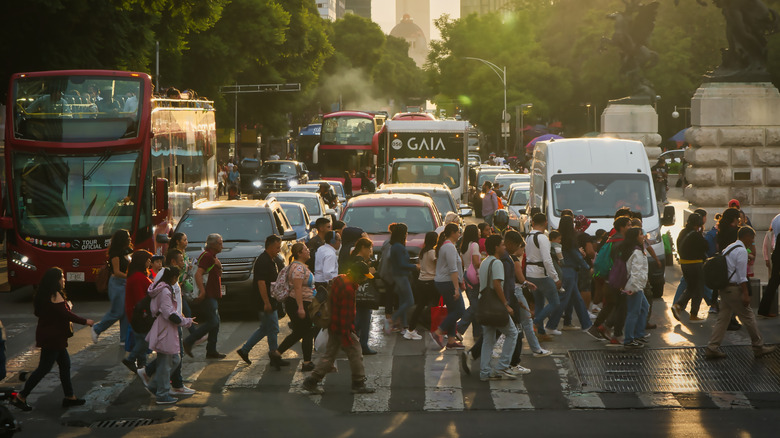
If you've ever had the displeasure of driving through New York or Los Angeles, you'll be aware these cities are notorious for bad traffic. Whether it's the bleating taxicabs, fits of road rage, and logjammed bridges of Manhattan or LA's glacial rush-hour traffic and interminable lines on the 405, neither city is much fun to drive in. But to find the city in North America with the worst traffic of the lot, head south of the border and into the Mexican capital of Mexico City.
According to the 2025 Traffic Index, compiled by Dutch navigation and location tech company TomTom, no city in North America — nor anywhere else in the world — has traffic as bad as Mexico City's. As part of its analysis, TomTom assessed traffic indicators in hundreds of cities across the world. These included: average congestion, average speed, average distance traveled in 15 minutes, time lost during rush hour per year, and highway trip ratio. Mexico City's congestion level — how much slower traffic moves on congested roads compared to when the roads are clear — is 75.9%, compared to 59.8% in LA and 48.8% in New York, the third and seventh ranked cities in North America, respectively.
Mexico City drivers also lose an average of 184 hours per year to rush hour traffic — more than a full week's worth — and it takes them, on average, 15 minutes to cover just under 2.7 miles. But the traffic also poses a greater risk than tardiness or mind-numbing boredom. According to Mexico Business News, there were 111 traffic-related deaths reported in Mexico City in the first quarter of 2025 alone, with motorcyclists being the most vulnerable group. Although the Mexican capital is suffering from overtourism, the dreadful traffic is an equally valid reason to say goodbye to Mexico City vacations in 2026.
Why is Mexico City's traffic so bad?
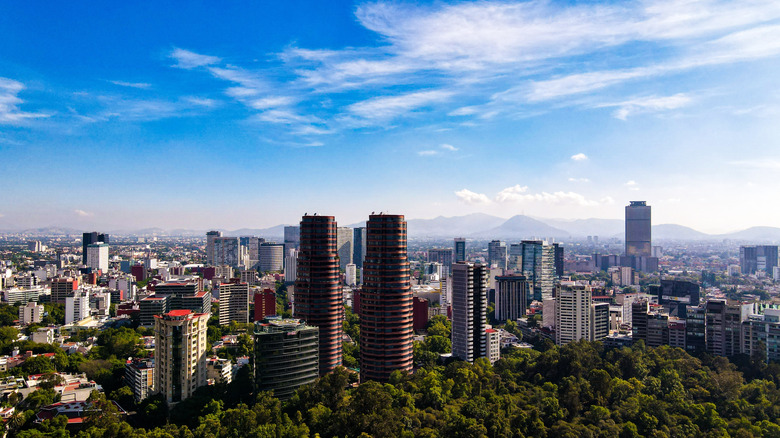
Having the world's worst traffic is, in a perverse way, quite an achievement. As El Jalapeño, the satirical news vertical of Mexico News Daily, wrote: "The news was met with enthusiastic horn-honking across the Viaducto, where commuters celebrated by advancing three meters over the course of forty-five minutes." Mexico City's newfound status also means its traffic is even worse than densely populated Indian cities like Mumbai and Bengaluru, never mind New York and LA. In Bengaluru, known as the "Silicon Valley of India," traffic jams can even take place in gated residential communities. So how has Mexico City made its way to the top of the traffic congestion pile?
As one of the world's most populated cities, with 17.7 million inhabitants, and a steady stream of tourists and business travelers, it's no surprise Mexico City's road networks come under strain. Because the city sprawls for more than 570 square miles across the ancient Tenochtitlán lake basin, it has left many residents far from their workplace, in areas not well connected to the rest of the city by public transport. This, alongside increasing wealth in Mexico, has coincided with a significant rise in the number of vehicles in Mexico's metropolitan areas.
That being said, there are ways to avoid traffic in Mexico City. The Metrobús, a network of seven lines connecting popular corners of the city, is a great (and expedient) way to get around — the buses travel in their own exclusive lanes. Furthermore, while it isn't yet one of the most bike-friendly cities in the world, there's a growing cycling culture in Mexico City. The city has introduced 250 miles of bike lanes and closes some major vehicle thoroughfares every Sunday, reserving them for two-wheeled traffic.