
10 Most Bike-Friendly Cities Around The World For Easy, Stress-Free Travel
Nothing quite beats exploring a city by bike: no packed subway cars, no waiting for buses, no hailing taxis in the rain — just open lanes and the freedom to stop whenever something catches your eye. However, the experience isn't always easy and stress-free. Poor or absent bike lane infrastructure, heavy traffic and aggressive drivers, extreme heat and pollution, hilly terrain, bike theft, confusing rental systems, unsafe neighborhoods... the list of potential pitfalls is endless.
The world's best cycling cities have invested heavily in making exactly these experiences a thing of the past. To find those that have cracked it, we turned to the Copenhagenize Index — the gold standard for bicycle-friendly city ranking. But its top-ranked cities are all European. While this is understandable, given that Europe has many outstanding cycling destinations and is streets ahead in cycling culture and infrastructure, our list tries to go further.
Using the index as a base, we identified standout cycling cities from other continents, too. We weighed up the quality and uniqueness of their riding experiences, how accessible and stress-free they are for visitors, and how much travel appeal each of them holds. While this still leaves us with a list of mostly European cities, there are other locales to entice intrepid bikers. These 10 bicycle-friendly cities across the world are ones that cyclists everywhere might want to add to their bucket lists.
Copenhagen, Denmark
More bikes than cars. That's not a slogan; it's a fact of life in Copenhagen. More than half of the city's residents cycle, and the infrastructure matches the culture. In fact, there are few cities around the world that invest in cycling on a scale that the Danish capital does. There's an ever-growing network of cycle superhighways stretching across greater Copenhagen, and riding them is a lifestyle choice, not a tourist novelty — although that doesn't mean visitors can't get in on the action. In fact, Rick Steves calls Copenhagen "the best of any" city for bike tours.
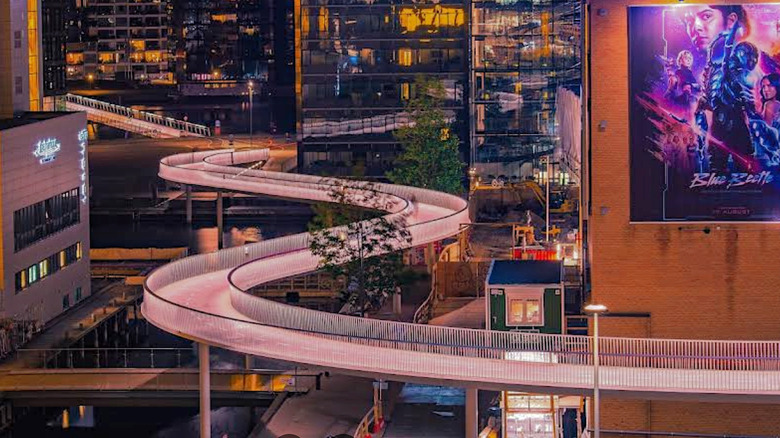
The Harbour Circle is the ride to start with. It runs for 8 miles along the water's edge, with the waterfront stretching out on one side and the city rising on the other. At one point, the route takes you onto the Cykelslangen, or Bicycle Snake, a dedicated cycling bridge that curves in S-shapes above the harbor on slim pillars. A loop route also takes you over other bridges. The Inner Harbour Bridge, Dronning Louise's Bridge, Lille Langebro, and the Circle Bridge together form a harbor tour unlike anywhere else in the world.
Next, you might like to take in some of the city's stunning architecture. The BIG Bike Tour is an iconic one to follow. It takes in the works of the Bjarke Ingels Group across almost 14 miles of the city. You'll pass Superkilen, a colorful urban park in Nørrebro, an unexpected rooftop ski slope at Copenhill, and a cluster of futuristic residential towers in Vesterbro. If you're ready to leave the city behind, there's a route for you, too. The Six Forgotten Giants trail heads 19 miles out into the suburban forests and meadows, where six enormous wooden sculptures built by artist Thomas Dambo await among the trees.
Amsterdam, the Netherlands
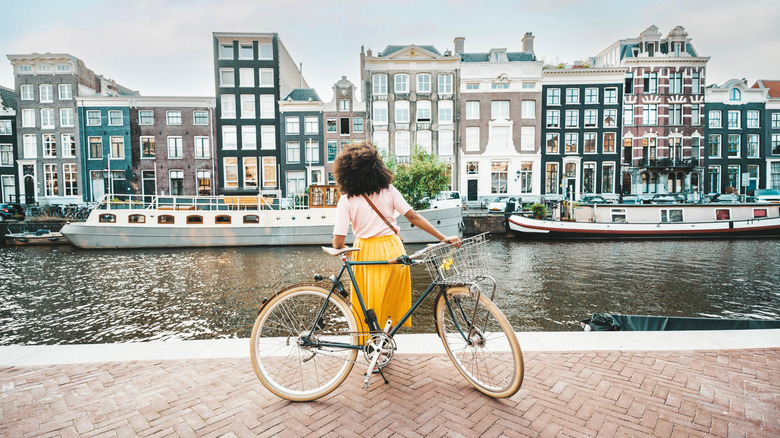
Copenhagen might have more bikes than cars, but Amsterdam has more bikes than people. Over a million of them weave, duck, and dart through almost 500 miles of dedicated cycle lanes threading between the city's canals and narrow streets. But Amsterdam wasn't always built for cyclists. It took a spate of cycling deaths throughout the '60s and '70s before the city was redesigned from the ground up. The paths people cycle on today are the direct result of that, and the pace is a lot slower than you might expect. It's flat and unhurried; you can easily wind your way past elegant canal houses, street markets, and the countless cafés — and the pace can be slow enough that you'll arrive at wherever you're going without breaking a sweat.
The 20-mile Waterway Route traces the network of canals that has shaped Amsterdam. It finishes at a converted shipyard known for its independent art spaces and cafés by the water's edge. The 11.2-mile Canals and 9 Straatjes route takes in the quieter side of the city. You'll find independent shops and local cafés lining Jordaan's narrow streets, while Vondelpark, Amsterdam's largest green area, sits at the end and is a particularly pleasing stop in summer thanks to its free open-air concerts.
In spring, the Tulip Route connects Amsterdam, Haarlem, and Leiden through vast, color-drenched fields of tulips, daffodils, and hyacinths. But the most extraordinary Amsterdam cycling moment comes at the world-famous Rijksmuseum. This is where you'll find a dedicated cycling passage running through the base of the famous building, allowing cyclists to look directly into the museum's inner courtyard. It dates as far back as 1885 and was fought for and retained when the national museum was undergoing restoration that lasted a decade.
Utrecht, the Netherlands
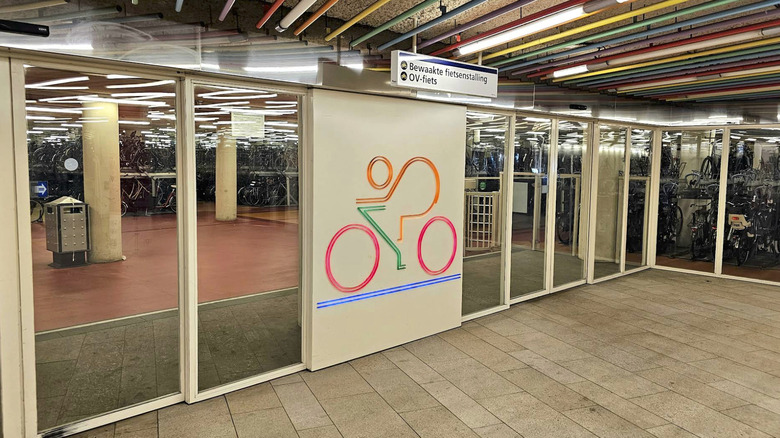
Every city on this list has excellent cycling facilities, but Utrecht has something no other has — the world's largest bike garage. It's built directly underneath the city's central train station and has an incredible 13,500 spaces. That's 3,900 more than Tokyo's Kasai Station, the previous record holder. It's no ordinary car park with bike racks, either. Above ground, a steel roof of 49 honeycomb foil cushions draws daylight down into the underground levels. Each level has its own floor manager, and you'll also find workshops and bike rentals available. And it's just as well the city has such a garage, as around one in three residents get on a bike every day. That's about 125,000 people pedaling and braking their way around the streets of this moderately sized city.
Both locals and tourists can use an extensive network of maintained bike paths that lead to many of Utrecht's attractions. Among them is the Oudegracht, which cuts through the heart of the city past the medieval Dom Tower, the tallest church spire in the Netherlands. It then takes you to Stadsbuitengracht, a defensive moat dating back to the 12th century, whose banks have been given over to parks perfect for a picnic stop. Further afield, a 14-mile route links Utrecht and Amersfoort. It passes by 10 towering sculptures of over 21 feet created by artist Boris Tellegen.
Montréal, Canada
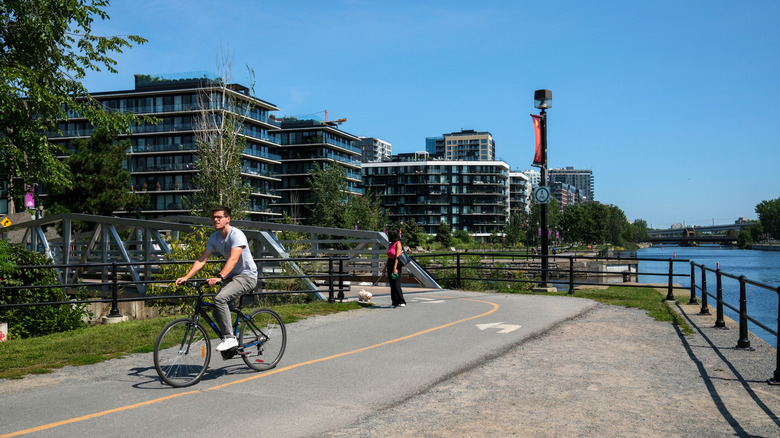
Montréal is another city where cycling is simply a part of everyday life. In fact, it is often regarded as North America's most bike-friendly city. Visitors looking to ride around town will find the protected bike lanes and logical street grid easy to navigate, and riding tends to feel unhurried, blending instead into the rhythm of the city. Cyclists are a constant presence. This is true even well into the evening, and it's easy for visitors to join in. Options such as the BIXI bike-share system provide quick and convenient access throughout the city. It works as a simple pay-and-ride system. Just unlock a bike via the BIXI app or station kiosk, cycle at your leisure, and return it to any station when you're done.
There are several popular routes to ride. The Lachine Canal route is an easy 25-mile round-trip along the city's famous waterway. The scenic path passes through lively neighborhoods, historic canal sites like the Old Port area, and parks and gardens such as the Jardin des Sculptures de Lachine, an open-air sculpture garden found in Parc René-Lévesque. There are also local markets and picnic-stop opportunities complementing the urban landscapes. The Bike Link is another relaxing route to take, albeit a bit longer at almost 40 miles. It crosses major bridges like Jacques-Cartier and Champlain, giving elevated views over the city and river. It's part of Quebec's Route Verte network, a province-wide system of almost 3,355 miles covering 18 touristic regions, 390 communities, and seven national parks.
Helsinki, Finland
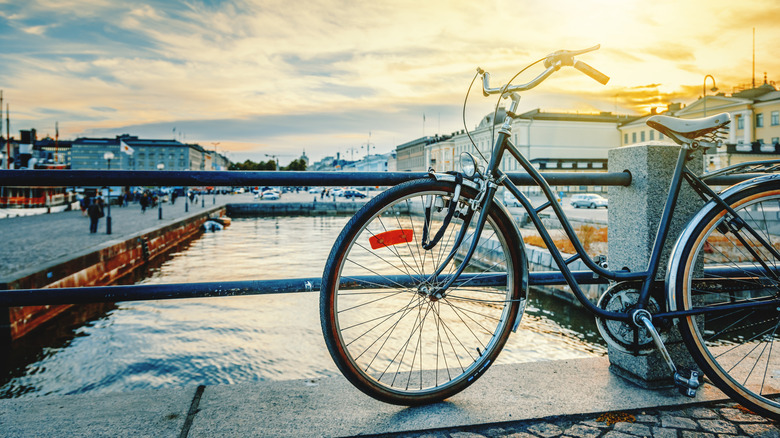
Finland must be considered a December travel bucket list destination. Who wouldn't want to visit Father Christmas in Lapland, stand in awe under the Northern Lights, ride husky- or reindeer-pulled sleds through Arctic forests, or even have a go on a snowmobile? You might be pleased to know that your likely entry point, Helsinki, also caters to cyclists in winter. All the city's cycling routes are maintained and cleared of snow, and the city has opened a 722-foot-long underground tunnel beneath the Central Railway Station. This makes it much easier for cyclists to navigate between the east and west of the city center. The 930 miles of cycling paths are also pretty impressive, and they have helped establish the Finnish capital as a major cycling city.
It's not all Lycra, sunglasses, and oversized helmets, either — people tend to cycle at their own pace, wearing everyday clothing. For tourists, the City Bikes service offers thousands of bicycles across hundreds of stations, although it only operates during the warmer months of April to October. If it is the colder months when you plan to visit, you'll need to hire one from specialized rental shops. The city includes several traffic-free routes to explore. Among them is a cycle path around Töölö Bay, where you can explore Finnish culture and architecture, including the pastel-pink Nordic Classicism modern art venue, Kunsthalle Helsinki. Töölönlahti Bay is a wonderful place to stop for a coffee and people watch, or you can take an extended break to warm up in the Rowing Stadium's floating sauna.
Taipei, Taiwan
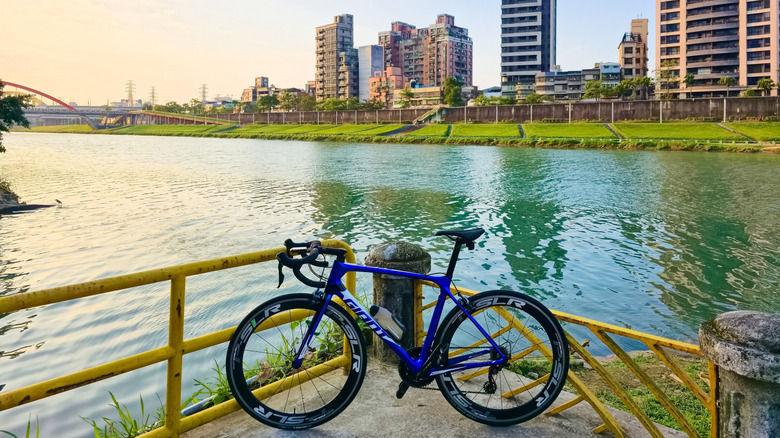
When you think of cycling in Asia, you might be put off by the chaos of the streets in cities like Bangkok or Ho Chi Minh City. However, if Asia is on your travel plans as a cyclist, you might be interested to learn that, despite the scooter-heavy streets, Taipei is a safe space for you. Cycle lanes are often available. They are present on many major urban roads, while the scooter lanes are usually wide enough for cyclists to safely ride alongside when there isn't a bicycle lane. Additionally, the drivers of Taipei are accustomed to sharing the road with smaller vehicles and bikes. It's easy for tourists to find rentals in Taipei, too. Fully equipped touring bikes are available, while you can also find standard road and recreational options. The city's bike-share system, YouBike, is efficient and easy to use.
However, if you tire of the roads or don't want to cycle them, Taipei's river system, the Tamsui River, and its four primary rivers and tributaries are relaxing places for cyclists. The Tamsui Riverside Cultural Cycling Route is a long car-free corridor of parks and neighborhoods. The route is a hub for cultural and historical landmarks, including Dihua Street, celebrated for its blend of Qing-era architecture and the Xia-Hai City God and Confucian temples. At the Jingmei Riverside Family Cycling Area, you'll find the Taipei Zoo, with its famous giant panda house. Then there's the Shuangxi Riverside Residential Green Route. This well-maintained cycling path runs along the Shuang River with mountain, university, and residential areas offering a peaceful urban escape.
Vienna, Austria
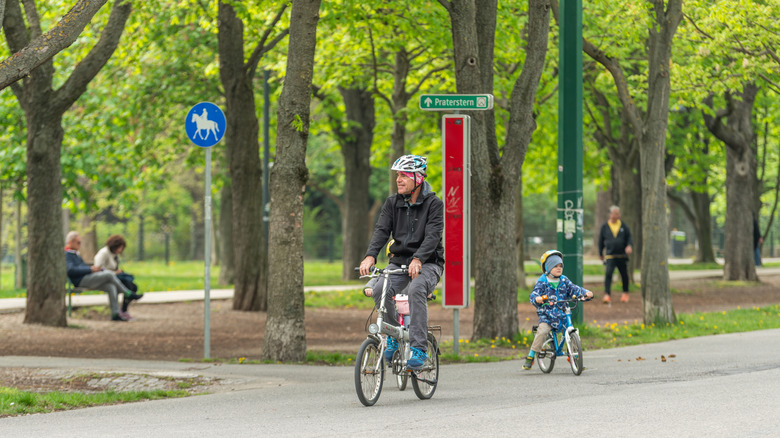
The urban landscape in Vienna is frequently punctuated by bright red and white pillars, the unmistakable markers of the WienMobil network. This bike share system offers 3,000 bikes utilizing 7-gear smart technology across all 23 districts in the Austrian capital. 185 fixed stations ensure the bikes are accessible to everyone. All it takes is a simple registration process, a QR scan to unlock, and a payment that works out at less than $2 per hour. And that's not all you get. In order to keep your travels easy and effortless, the WienMobil app serves as a digital compass and provides downloadable map packs and guided tours so you don't miss a moment of this stunning city.
Start with a journey through Vienna's history. The Ringstrasse offers a 3.4-mile loop around the city's architectural center. The circuit takes you past the grand and imposing Neo-Renaissance State Opera, the sweeping Baroque architecture of the Imperial Palace (one of the biggest in the world), and the neoclassical masterpiece that is the Austrian Parliament Building. For a quieter experience, the 8-mile Wiental path is an almost car-free route. It passes the Baroque grandeur of the Schönbrunn Palace and Otto Wagner's iconic rail architecture.
If you're looking to trade the buildings for a bit of greenery, a shaded run through a car-free urban forest is on offer at Prater Main Avenue, or "Prater Hauptallee." The 2.8-mile-long path will take you by the city's historic Giant Ferris Wheel. Riding it is actually a rite of passage in Vienna, so if you suffer from vertigo, you might want to sneak by this 213-foot icon. The trail ends at the Lusthaus, a historic summerhouse that now functions as a popular restaurant.
Buenos Aires, Argentina
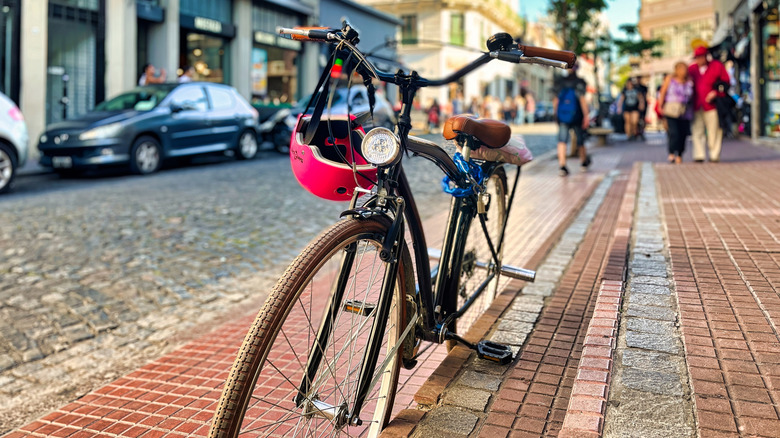
When cyclists surrender themselves to the affordable South American gem with creative vibes that is Buenos Aires, almost every corner of the sprawling city delivers new discoveries. From rhythm-filled streets to tranquil green horizons, its 166-mile network of dedicated cycle lanes will take you on an odyssey of color and history you'll never forget. Access to the BA Ecobici rideshare network is through the Tembici app — but as a foreigner, you'll need to register for a paid pass. Rides are limited to 60 minutes on weekdays and two hours on weekends. For a longer ride, simply return the bike to any terminal across the city, wait a few minutes, then rent it (or another) again. It is a bit of an inconvenience, but Buenos Aires shouldn't be missed for such a minor complication.
There are so many fascinating neighborhoods to cycle in this city. A good route starts in La Boca, where you'll witness the chromatic collision of Caminito's blue and yellow facades pulsing with the raw energy of its immigrant history. Pedal onward to San Telmo and attempt to negotiate the city's narrowest street. You might also like to take a selfie next to a statue of Mafalda, the iconic Argentinian comic strip character who went on to become a worldwide phenomenon. You can leave the skyscrapers and streets behind at the 890-acre Costanera Sur Ecological Reserve. It's the city's biggest green lung and a renowned birdwatching destination. Finally, you can visit Recoleta, where you can witness the 65-foot stainless steel Floralis Genérica. Its massive blossom of curved mirrored petals reflects the surrounding greenery of the French-inspired parklands and looks beautiful at sunset.
Wellington, New Zealand
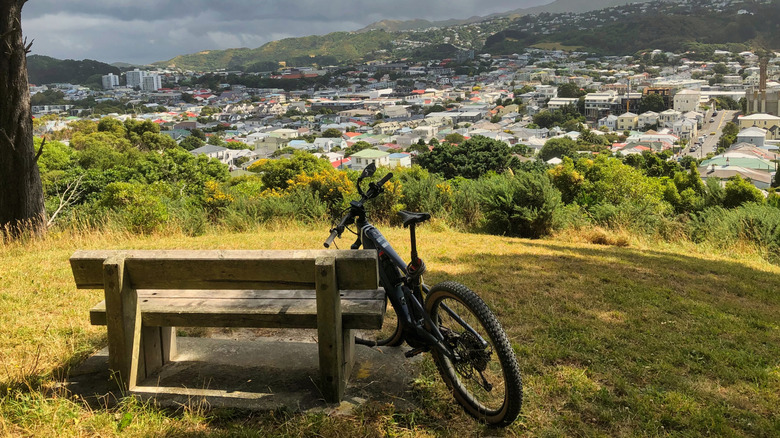
The cycling scene in Wellington is a mix of rugged coastal paths and steep hill ridges, with casual city cycling along flat paths as an alternative for those hoping to enjoy a more relaxing day out on two wheels. The Great Harbour Way (Te Aranui o Pōneke) serves as the main route. It covers about 43.5 miles along the city's harbor edge, with the 2026 opening of the Te Ara Tupua section finally connecting the last major gap in this 20-year project. Cyclists can now ride for miles without having to deal with traffic, taking in urban views while simultaneously enjoying the waterside.
Getting around the city center is easy if you use the shared e-bikes provided by companies like Lime and Flamingo. You are allowed to ride them on all roads, in dedicated bike lanes, and on shared pathways, but local rental stores offer mountain bikes for tougher trails. The Skyline Walkway, for example, is a high-altitude path for walkers and cyclists just on the edge of the city. It offers challenging terrain between Mount Kaukau and Mākara Peak, the latter of which offers the community-built Mākara Peak Mountain Bike Park. It is 618 acres of forested space for mountain bikers, just 4.3 miles from the city center. For those seeking an endurance challenge, the 75.8-mile Remutaka Cycle Trail traverses historic railway tunnels and wild coastlines just a half-hour drive from the city.
Portland, USA
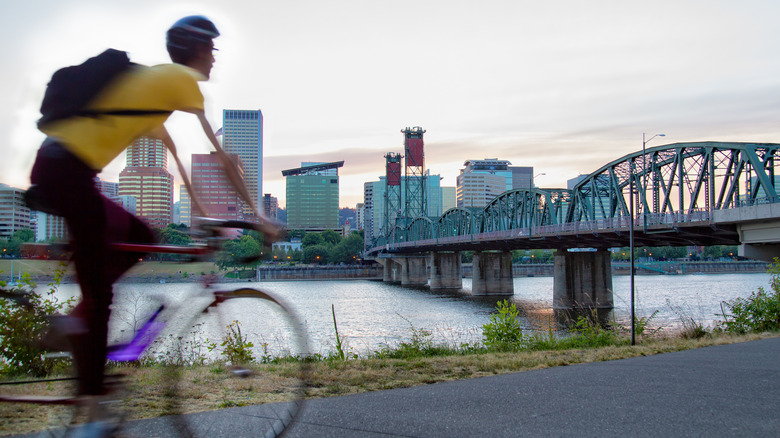
With flat, well-connected streets, you'll rarely feel out of place on two wheels in Portland, Oregon. A whopping 400 miles of bikeways weave throughout the urban fabric here, and much of that network runs along neighborhood greenways, which are residential streets designed to give cyclists priority over cars. Safety is firmly stitched into the cycling infrastructure of Portland. You'll find green bike boxes at major intersections that position cyclists ahead of and in clear view of motorists, and they are permitted to turn right when the light is red. To make things even easier, seamless transit integration means you can take your bike on light rail and buses when your legs need a rest.
As a tourist, getting your hands on a bike is a simple process. The city's Biketown system offers 3,000 orange e-bikes at the ready across 240 stations. Local rental shops and Adaptive Biketown, a specialized program dedicated to increasing bicycle access for individuals with disabilities, stock specialized gear like tandems and children's trailers. This ensures the city's streets are accessible to all — and once you have your bike, there's plenty to see.
The Eastbank Esplanade delivers sweeping river views while you ride, and the Springwater Corridor rolls along on flat, traffic-free paths through wildlife refuges that feel a world away from downtown. If you'd rather tackle something more strenuous, urban circuits wind up toward Mount Tabor Park, a popular city park built on an extinct volcano, which is blissfully car-free on Wednesdays. All this hasn't gone unrecognized, either. In fact, in a 2025 study, Portland earned itself a number one ranking for cyclists for stunning routes and bike-savvy design in the U.S.