
4 Vietnamese Restaurant Rules American Tourists Break Within The First 10 Minutes
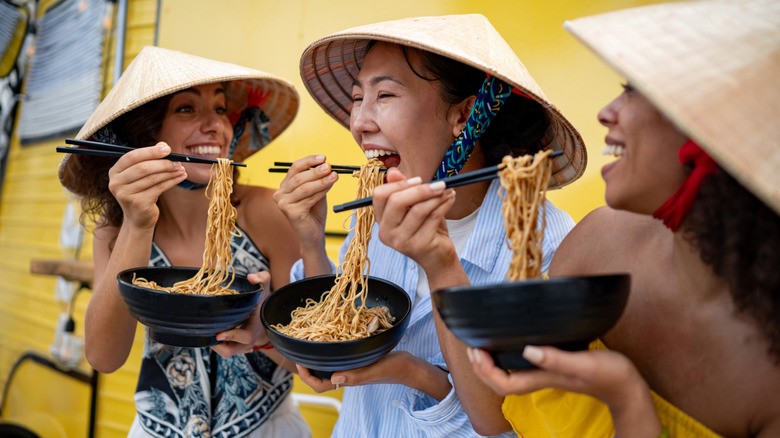
There's nothing more stimulating than diving headfirst into a new culture, and what better way to do so than by sampling the local cuisine? Food is a window into a country's culture. And if you're a hungry explorer — literally and figuratively — you'll find opportunities to try it everywhere, from food tours to influencer-recommended restaurants and street food markets. But eating like a local takes more than curiosity, as it also means adapting to the unspoken rules of ritual and etiquette, something travelers tend to overlook.
Vietnam is no exception. With an eating culture anchored in balanced flavor and gathering around shared plates, Vietnamese dining naturally comes with its own unofficial rulebook, spanning how you order, when the food arrives, how you handle chopsticks, and the condiments to reach for. To the uninitiated, this nuanced approach to dining has Americans breaking local-only rules within the first 10 minutes of a meal.
Worried about committing a culinary faux pas? Don't be — most slip-ups won't land you in hot water. But as in every culture, a bit of insight beforehand goes a long way: it shows respect for a cuisine that's central to the country's identity. So before digging into that enticing spread, here's what works — and what doesn't — when eating out in Vietnam.
Ordering only for yourself
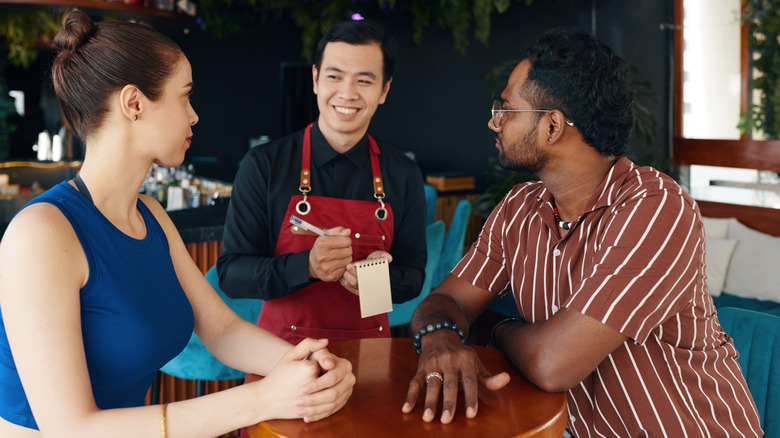
Having a meal with a group on a night out in Vietnam? Newcomers to the country's restaurant scene will need to recalibrate their ordering habits, because dining in Vietnam is somewhat of a group sport. Here, you aren't always just ordering for yourself. Dishes are often shared across the table, a custom that spans centuries and finds its clearest expression in Vietnam's cái mâm: a round family tray at the center of a table that holds dishes meant for every diner to reach into, so that everyone gets a taste of everything.
This food-sharing concept may catch the unwitting tourist by surprise. In many Western societies, ordering at a restaurant means picking your own plate from the menu. Karen Wu, an associate professor of of psychology at California State University who grew up with family-style meals, described the awkwardness of this individual style of dining. In a Psychology Today article, she recalled how eating out with friends meant everyone ordering and paying for their own entrées — "nothing less, nothing more," Wu wrote.
Vietnam's meal-sharing custom does more than fill a table: it makes us more attuned to our fellow diners and how our own portion stacks up against everyone else's. But let's not go overboard — not every plate of food that lands on the table is up for grabs. Vietnamese menus are a mix of individual and shared plates, striking a balance between communal eating and bowls meant to be seasoned to each person's specific tastes. Appetizers are usually ordered for the entire table, but dishes like pho, dressed with herbs and complemented by dipping sauces, are a one-person job.
Expecting every dish to arrive at once
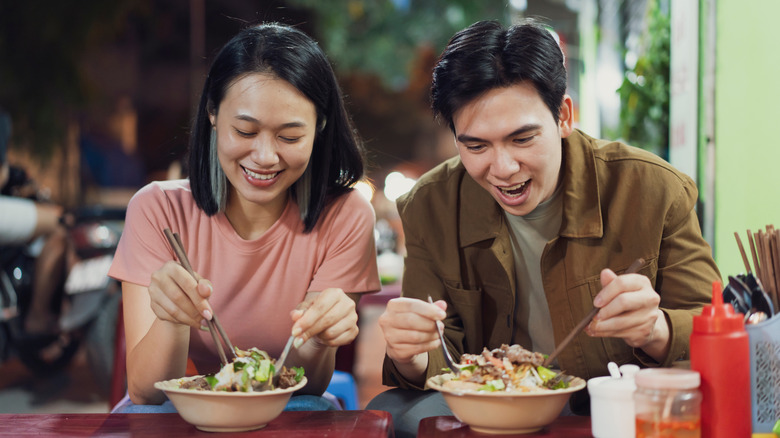
As one of the best global destinations with an affordable street food scene, Vietnam naturally ignites the urge to try everything at once. But a little patience goes a long way in Vietnamese restaurants. Typically, the kitchen sends out each dish the moment it's ready, whether or not the rest of your table's order is done. Dishes may not hit the table at the same time, so don't be surprised if your appetizers appear alongside someone else's entrée.
This takes a bit of adjustment for diners used to Western restaurants, where food is often served at the same time. One Redditor on r/Vietnam recalled their European friends' refusal to eat until everyone was served, a courtesy that gets lost in translation. Other commenters attributed the timing to space and equipment constraints, especially in smaller eateries.
Similarly, American food service equipment company Henny Penny has noted that Asian restaurant kitchens tend to be smaller and rely on fewer, more versatile pieces of equipment to get the job done. So if your food hasn't come out yet, just relax — chances are it's still being prepared. And if it does hit the table before everyone else's, no one would take it against you if you start eating ahead of them.
Going too light or too heavy with the condiments
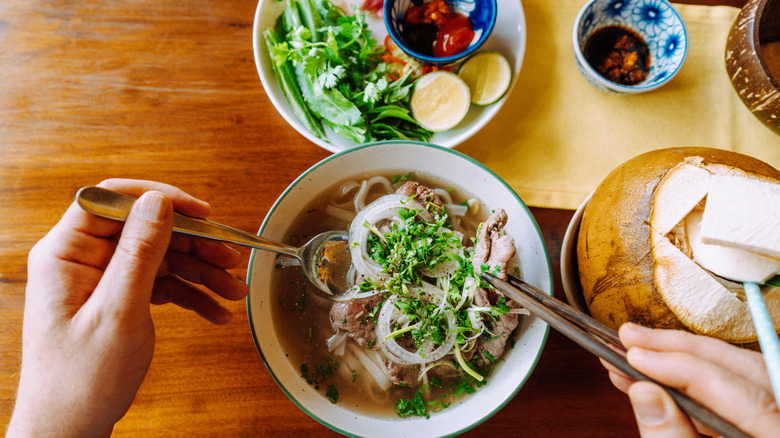
Whether you're having a home-cooked meal at an authentic rural farmstay or eating at a street food stall, a Vietnamese dish isn't complete without condiments and garnishes. For first-timers, these accompaniments can be intimidating, what with a lineup that runs from dipping sauces to a selection of toppings like scallions, bean sprouts, limes, and cilantro. Within minutes of the food arriving, American diners tend to make one of two mistakes: not daring to use enough of them, or going overboard.
Described by chef Jimmy Ly of New York City's Madame Vo as "nostalgia, love and warmth in a bowl," pho is a classic example of balanced flavors. It's also a dish rookie foodies unintentionally drown in sauce or garnish. In a Michelin Guide article, Vietnamese chefs tend to agree on one rule: taste before you season. This lets you "catch the soul of [the broth] before anything else," according to CieL's chef and owner Viet Hong Le. Peter Cuong Franklin of Anan Saigon also advises adding the herbs gradually as you eat. Once you've tasted the broth, feel free to experiment with the rest of the condiments, whether by mixing in sauces or adding a squeeze of lime or chili for an extra kick.
Eating cha giò? Don't scrimp on the lettuce, mint, or basil leaves that are served with these fried Vietnamese egg rolls. Wrap the greens around the roll before dipping them into the accompanying sauce. Remember, each Vietnamese dish has its own balance of flavors, so get a feel for what makes each dish tick, then let your taste buds take it from there.
Breaking chopsticks etiquette
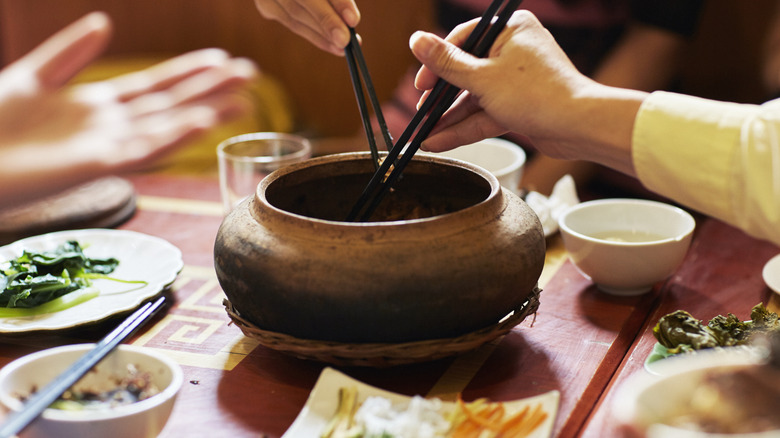
Improper use of chopsticks is, unfortunately, among the common Vietnamese etiquette rules American tourists break while on vacation. Tourists not well-versed in chopstick etiquette can unknowingly offend fellow diners with seemingly innocuous gestures. These could include sticking chopsticks vertically into a bowl of rice — a taboo act in many cultures — or laying them down in an X, believed in Vietnam to usher in bad luck.
Much of chopstick etiquette boils down to table manners we already know. Just as you wouldn't wave a fork at someone or bang your utensils on the table, it's considered poor form to chew on you chopsticks or tap them against tableware. Spearing your food with them or pointing them at others is frowned upon as well.
Other rules are specific to sharing food with chopsticks. For hygiene's sake, don't use the pair you eat with to take food from a shared dish or pass food directly to someone else's chopsticks. What if there aren't any serving utensils for the shared dishes? Turn your chopsticks around and use the clean ends instead.