
5 Vietnamese Etiquette Rules American Tourists Break Within The First Day Of Visiting
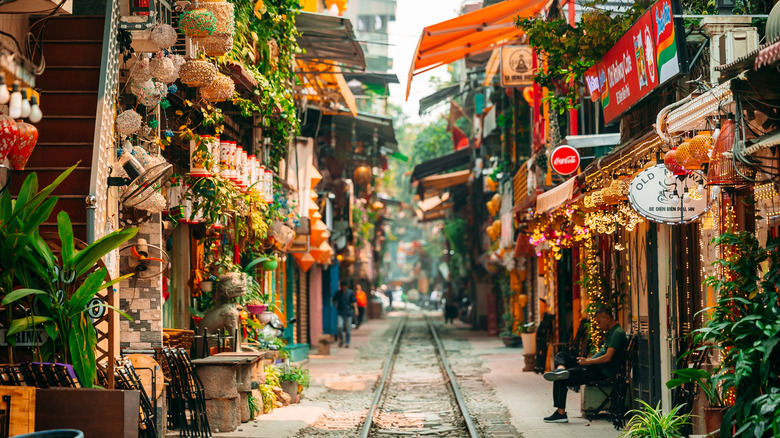
It isn't uncommon in any country to see foreign tourists with that signature wide-eyed look, camera clicking away at everything from the street lamp to the local man at a grocery store. In our awe at seeing new places, we often don't realize that our behavior is offensive or crass. Many tourists move through a new country with no idea of the numerous unspoken rules they've broken, blissfully lost in that "new location" travel euphoria. For American tourists, one country in which unintentional faux pas are incredibly common is Vietnam.
Many travelers today do make a genuine effort to learn about the place they visit. However, the stark differences between American culture and Vietnamese culture mean even well-intentioned tourists can fall afoul of Vietnam's unspoken social norms. American culture typically promotes a more casual vibe and a social fabric built around breaking down barriers between people. In contrast, Vietnamese culture often strictly upholds barriers related to age and social status because it's seen as a more respectful way to interact with people. For example, an American's idea of a friendly interaction between an older and a younger person might include casual conversation, jokes, and a buddy-buddy vibe, but in Vietnam, elders are treated with respect and deference.
To find the most common etiquette faux pas Americans commit on vacation in Vietnam, we scoured the internet for forum discussions and articles on the topic, then compiled a list of the rules most likely to trip up American travelers. We also prioritized rules that could genuinely offend someone if broken, while leaving out the ones that even those in Vietnam don't take quite so seriously. If you're planning to visit Vietnam, it's good to keep these unspoken rules in mind so you don't unintentionally offend the country hosting you.
Not dressing for the location
Clothing rules in more traditional countries often catch Americans off guard. Vietnamese clothing norms generally lean towards the more conservative, so many outfits that might seem perfectly normal for the occasion in the U.S. could get you side-eyed in Vietnam.
Bikinis or revealing swimsuits are acceptable in Vietnam's more touristy beaches, hot tubs, pools, etc., but they might earn you weird looks at lesser-known beaches in smaller towns. One-piece swimsuits or swim dresses without any revealing cutouts are okay at any beach. Outside the sand or water, you'll be expected to cover up with a sarong or robe, even in tourist areas right beside the beach. Popular tourist spots like Danang or Hanoi are more familiar with tourists and Western clothing, so sleeveless tops, shorts, and mid-length skirts are fine. In smaller towns and villages, you may have to opt for more modest clothing, like full pants, shirts with sleeves, or longer dresses.
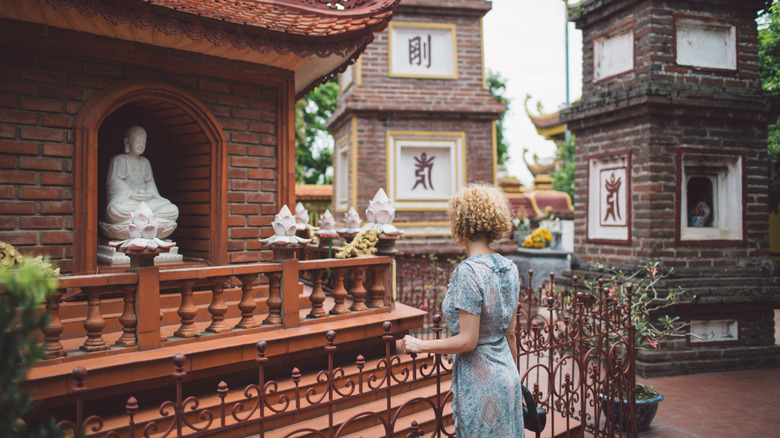
The rules get even stricter if you're visiting temples or other important religious structures. Men and women are expected to cover their shoulders and knees, wear clothes with a more conservative neckline, and wear long, loose pants. In fact, skin-tight clothing is frowned upon in most parts of Vietnam, so leave the leggings and athleisure behind. However, many have pointed out that Vietnam isn't particularly harsh against tourists who are unaware of these norms. For example, Vietnam Tourism points out that some of the more highly visited temples will have loaner clothes — sarongs or robes — that tourists can borrow if their attire isn't temple-appropriate. However, small-town temples will not have the same resources. As long as you avoid these common clothing mistakes during Asian vacations, you're good to go.
Taking pictures of people without permission
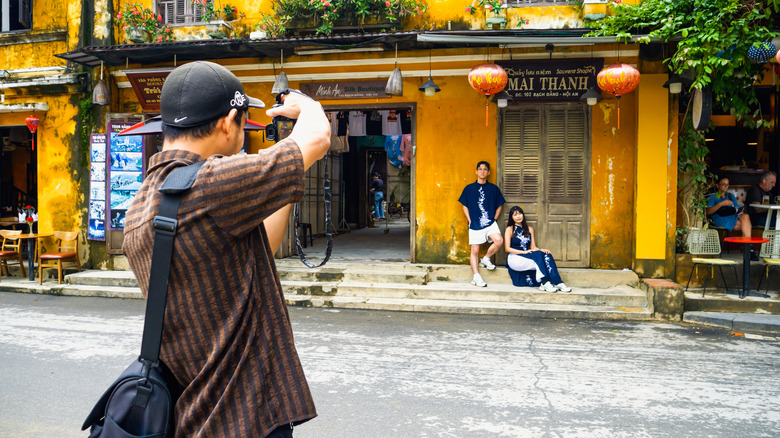
Vietnam is often touted for its delicious street food and cultural heritage, but many people also visit Vietnam because it's a street photographer's paradise. Photographers can find veritable goldmines in the bustling markets of Hanoi, Vietnam's affordable and culture-rich capital city, or head to the under-the-radar cultural gem of Hue for ancient structures and traditional architecture. However, in the frenzy to capture the perfect shot, one may unintentionally commit one of the most common tourist faux pas: photographing people without permission.
Legally, there is nothing prohibiting photography in Vietnamese public spaces for personal use, even if your shots include other people. However, photography etiquette is a whole different matter. Some locations may not allow photography or the use of flashes for cultural reasons (temples) or security reasons (military areas and government buildings). Vietnam is also home to multiple ethnic and cultural groups, many of whom have their own rules on photography. In tourist-friendly areas, you may be asked to pay a token amount to the person being photographed, usually between 20,000 and 50,000 VND ($0.80 to $2), per Vietnam Tourism.
Wide shots with multiple people at markets, streets, or festivals don't require any permission, but you will have to get consent for individual close-ups. The easiest way to determine if you can photograph someone is to ask. Simple non-verbal cues like pointing to your camera and smiling or giving a thumbs-up are enough to get your question across. If you get a "no" head shake, they raise their hand to cover the camera's view, or they turn away, don't take their picture. If they respond with a smile or a nod, click away. A Reddit discussion also jokingly points out that Vietnamese people are much more likely to take pictures of you.
Sticking chopsticks upright in a bowl of rice
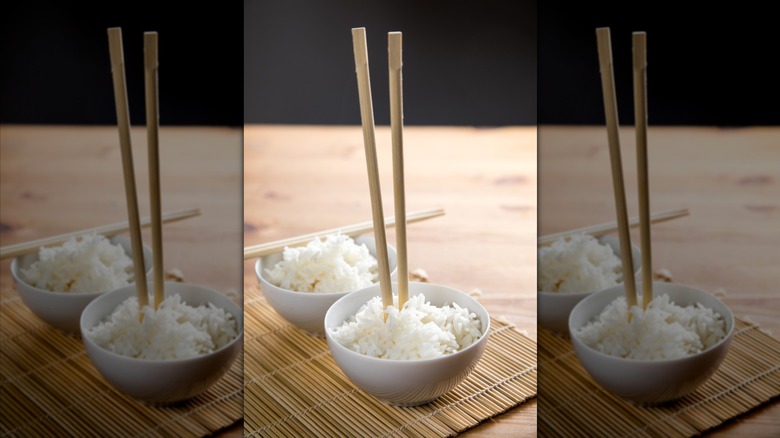
Vietnam offers a vast range of dining options for travelers, from the street food staples of Ho Chi Minh City to high-society, fine dining restaurants to rural farmstays with authentic, mouthwatering homemade food. As you eat your way through the country, it's easy to get lost in the delicious meals and forget that Vietnam has its own dining etiquette. One of the most important rules in Vietnam's food culture is to never, ever, stick your chopsticks upright in a bowl of rice.
But why? For American tourists, this may seem like an odd thing to fixate on, but the reason is that this image has a strong association with Vietnamese funeral rites, in which incense sticks are placed upright in an incense bowl. Even without the smell or smoke of the incense sticks, the image of chopsticks in this position is enough to draw parallels. A discussion on Quora shows that this association is so strong that even other religious groups in Vietnam — who don't follow the same funeral rites — will avoid placing their chopsticks in this position, and that serving someone a bowl of rice with the chopsticks upright is essentially the same as saying "you're dead." In some superstitions, this chopstick position is considered a bad omen.
Luckily, there's a very simple fix. Some restaurants may give you a chopstick rest — a small tabletop accessory to keep your chopsticks off the table — but it's more common to lay your chopsticks flat across the rim of the bowl. Don't leave them on the table, as that's (understandably) considered unhygienic.
Losing your temper or raising your voice in public
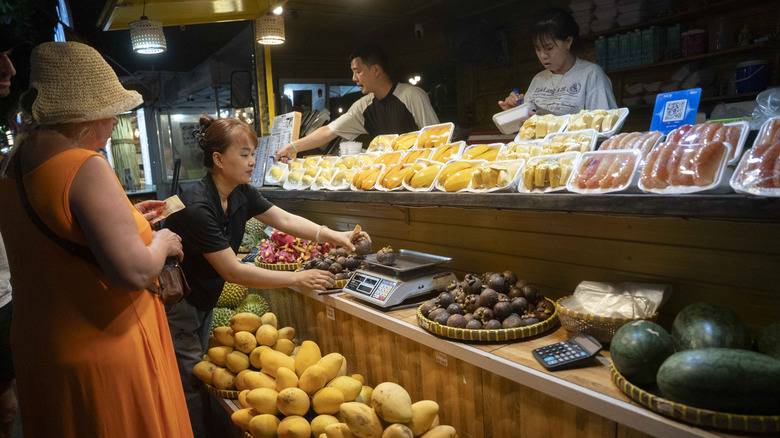
If you've been to Vietnam or watched videos of it, you may have noticed that Vietnamese people almost always seem calm and collected. That's on purpose. Vietnam has a highly collectivist culture, in which one person's mistake can stigmatize their entire social circle. In Vietnam, "saving face" is extremely important, which is why they'll rarely get obviously angry or confrontational. For Americans, the concept of going "full Karen" on someone is pretty common and is even considered acceptable in cases where someone is trying to scam you or putting you in danger. Not in Vietnam, though.
Did your food take a long time to reach your table? Did someone else get served before you, even though they sat after you? Is a store owner obviously charging you far more because he knows you're a tourist? Doesn't matter. If you get confrontational and start yelling, you'll be the one considered rude and uncouth. According to an expat on Viator, this standard applies even in serious situations, like traffic cops or visa officials demanding bribes.
So, if you're not supposed to lose your cool ever, how do you stand up for yourself? According to Vietnam Tourism, you should stay polite and dignified when complaining or standing up for yourself. Instead of yelling or complaining in front of others, see if you can pull someone aside and explain the problem away from the crowd. Frame it as a general inconvenience rather than a problem with them — like asking them to check on the air conditioner instead of saying "your air conditioner isn't working." Use your pleases, thank yous, and smiles liberally, as that signals to them that you're trying to diffuse the situation and aren't looking for a fight.
Not taking shoes off in temples or homes
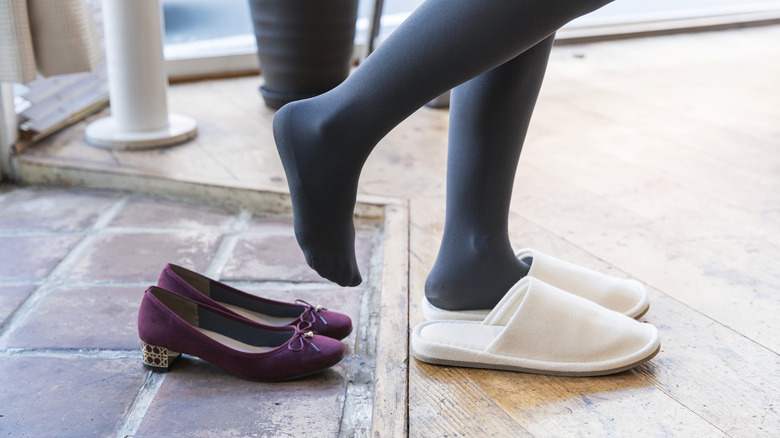
Although TV shows and movies make it seem like all Americans wear their shoes inside their homes, research disproves that theory. In a CBS News survey, only 37% of the respondents said they prefer to keep their shoes on inside the house, while just under two-thirds of the respondents expressed a preference for a shoes-off home. However, almost 76% said that while they may remove their shoes at home, they wouldn't require their guests to do the same. This is where American social norms differ from Vietnamese norms, because people in Vietnam absolutely expect all guests to remove their shoes when entering the house.
Culturally, this expectation of removing shoes at the door is almost universal across Asia. Wearing your "outside" shoes inside the house is considered unhygienic because it tracks dirt and bacteria from outside all over the house. Removing your shoes outside also indicates respect for the household you're entering — it proves that you're considerate of their space. In many Vietnamese homestays, houses, and offices, you may find special indoor slippers provided for guests who don't want to walk barefoot. However, if you aren't given indoor slippers, you can always keep your socks on instead.
Even temples that are open to the public will often ask you to remove your shoes at the entrance, although you can keep your socks on. Here, the practice has more to do with respect and purity than actual hygiene. The practice of removing shoes at temples harkens back to centuries-old traditions that equate walking barefoot in front of idols with humility and respect for the divine. If you're looking for more do's and don'ts, explore this list of things to know before visiting Vietnam.