
Under Two Hours From Munich Is A Scenic Town With Mountain Trails, Quaint Shops, And Classic German Charm
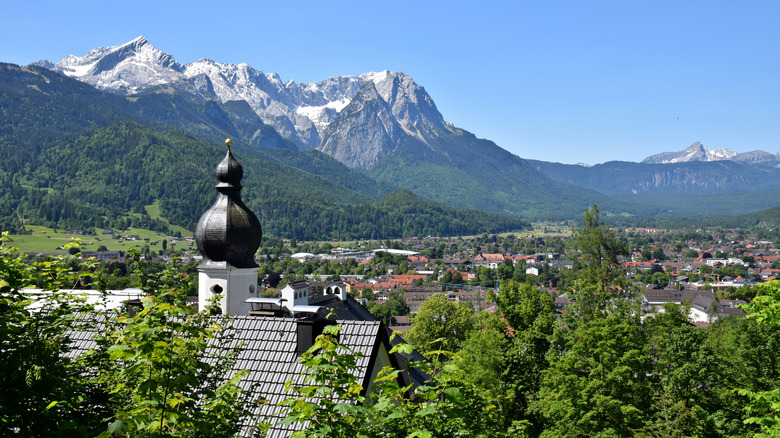
Look up. See that colossal mountain scarring the horizon with its knife-edge ridges and sinewy sides? That's only the Zugspitze, the highest peak in the whole of Germany! Look ahead. There's that alluring old town center, replete with its cute cobbled streets fringed by fresco-covered buildings, beer halls, and oh-so-old churches. Meanwhile, snow-dusted peaks and flower-filled fields swirl all around. Welcome to Garmisch-Partenkirchen, folks.
This ski-mad mountain town — which has Olympic pedigree going back to the 1936 Winter Games, no less — is now considered one of the country's Alpine wonderlands. It offers an enchanting center that's packed with gingerbread architecture and a back garden of sublime Bavarian backcountry. So the moment you're done hopping the beer halls and shopping streets, you can venture out to hike amid sheer-sided gorges, glittering lakes, or up soaring ridges that spill across the Austria-German border.
But the town has yet another ace up its sleeve: Garmisch-Partenkirchen is pretty dang easy to get to. It sits in the lap of the mountains just southwest of the lively gem of a city that is Munich. You can drive between the two in a mere 1.25 hours using the direct route on Autobahn 95. Munich's big international airport, which has many arrivals from the U.S. and other European cities alike, is only a touch farther away, so it's possible to go from runway to Alps in just over 1.5 hours.
A chocolate box of a center in Garmisch-Partenkirchen
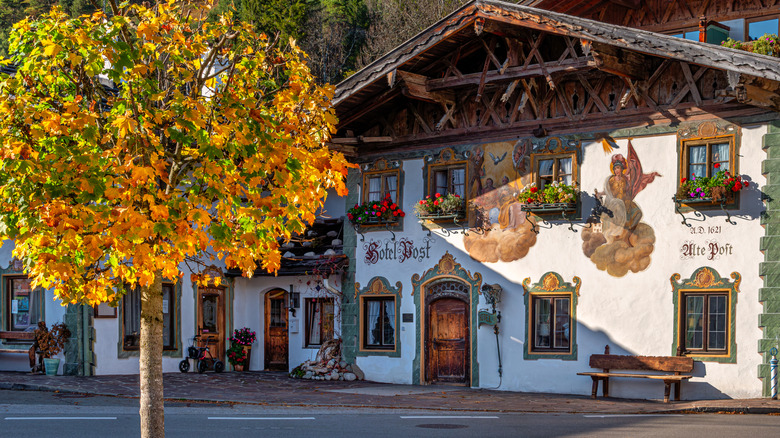
Of the same mold as Germany's other big-name Alpine escapes, such as the famous mountain resort of Berchtesgaden, Garmisch-Partenkirchen is steeped in history and heritage. Step into its old-school core and you'll find yourself lost in a real Bavarian chocolate box — think beer halls that slosh with frothy steins, buildings painted with traditional mural art, and cobbled streets aplenty. No need for public transport or a car, either; the whole town is walkable from tip to toe.
As the two-part name implies, these were once separate towns. Garmisch and Partenkirchen were only melded together in the run-up to the 1936 Olympics. Today, it's Partenkirchen that has a reputation for hosting the most enchanting streets and sights. Most notably, it's cut through by the Ludwigstrasse, an L-shaped thoroughfare that takes about 10 minutes to stroll from end to end. Do that, and you'll be inundated by pretty local buildings decorated with filigreed balconies and delicate painting work.
Ludwigstrasse is also a shopping haven. Drop into Stoff und Knopf to get hand-sewn cushions in the shape of the Zugspitze mountain. Let your nose guide you to the local outlet of the Schönegger Käse-Alm, where they stock locally made cheeses and Bavarian sausage. Or, plan your visit for the festive Christkindlmarkt. It follows the same vibe as all those other spectacular German Christmas markets, bringing a bazaar of crafts and culinary delights to town for much of December.
True Bavarian adventures around Garmisch-Partenkirchen
While Garmisch-Partenkirchen remains famed across Germany for its winter sports (there are nearly 25 miles of marked ski runs spread across a trio of mountains on the south side of town), it's also a fine option for hikers when there's no snow on the ground. The numbers speak for themselves: A web of nearly 190 miles of walking paths beckons in the surrounding region here, while AllTrails lists over 100 individual hiking routes in and around town!
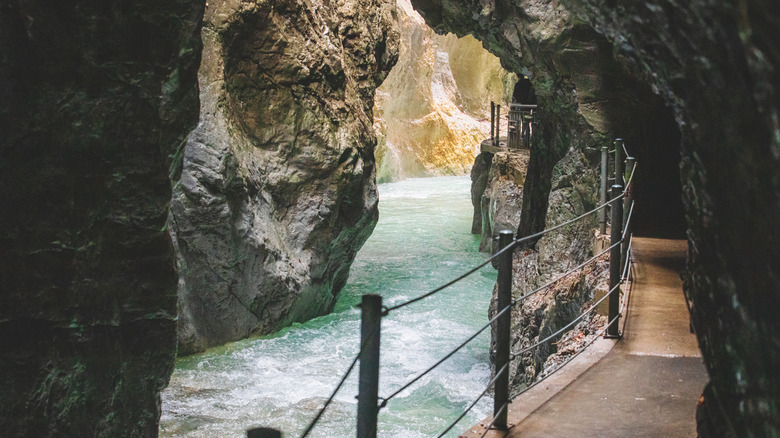
The top-ranked of the lot? That honor goes to the Partnachklamm Gorge Trail, a 5.2-mile adventure through a mailbox-narrow cleft in the Alps that has rock-ribbed walls soaring more than 260 feet above you at some points. It begins on open road but quickly shifts to a narrow ledge that clutches the side of a rushing river. The route sees quite a bit of traffic come the peak of summer, while winter can transform the whole thing into a show of dramatic icicles and frozen waterfalls.
It's also possible to hike to the very summit of Germany from here. Aim your sights at the Zugspitze, which, at 9,717 feet tall, is the highest point in the country. It rises directly to the southwest of the town center, and can be climbed in either two days or a single hardcore day, though be warned that it involves some gnarly scrambling and assisted sections, so it isn't for the faint of heart. The easier alternative would be to take the cable car that leaves from Eibsee, just down the valley. It whisks you straight to the top, where there are glacier views and even a restaurant!