
My 5 Favorite Spots On Hawaii's Big Island To Show Out-Of-Towners
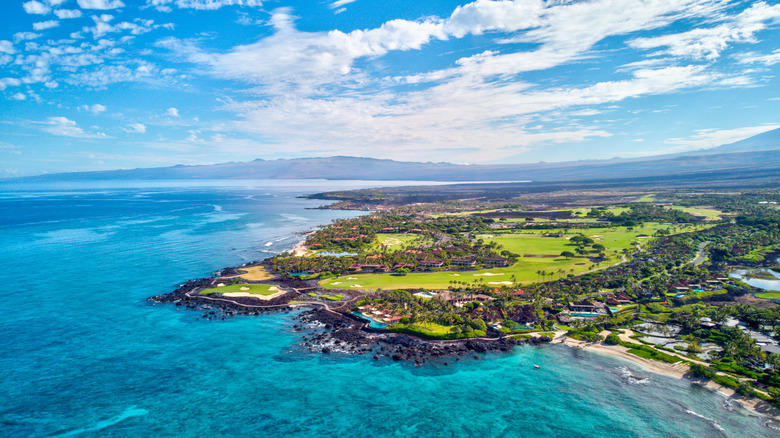
Paradise comes in many forms in Hawaii. From the glimmering turquoise of the Pacific to dense rainforest and some of the tallest and largest mountains on the planet, the archipelago is idyllic for outdoor lovers. While many tropics-seekers dream of visiting Maui, O'ahu, and Kauai, the largest of the Hawaiian Islands is often overlooked. Known more widely as the "Big Island," the Island of Hawaii has a fitting nickname, as all of Hawaii's other landmasses could fit within its 4,028 square miles. It's also the baby of the chain, at just 800,000 years old. And the Big Island happens to be my home.
Growing up on O'ahu, we would visit other islands, and I remember being astonished at the diversity. Some islands seem like endless swaths of green that end at the glimmering blue. Other parts remind me of my other childhood home, Nevada, with dry, arid expanses. Many are a mixture of climates and ecosystems, which is part of their appeal, like the Big Island. And that ecological diversity, along with the Island of Hawaii's people and deeply rooted culture, is why I moved here many years ago.
When friends and family come from out of town, I revel in showing them the island's steep, verdant cliffs and steaming volcanoes. Their faces are priceless when seeing dolphins, whales, and sea turtles in the ocean. Eyes widen with awe at the picturesque waterfalls coursing down sheer bluffs and the rainforests boasting human-sized ferns and vibrant exotic flowers. Here are some of my favorite places to show visitors.
Pololū Valley
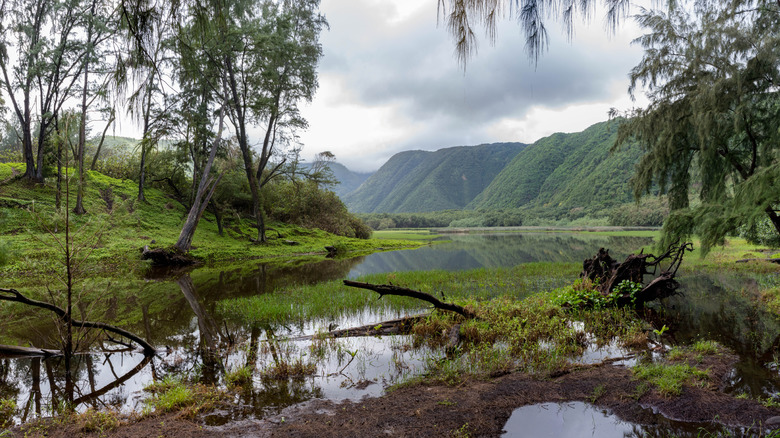
Among the most stunning sights on the Big Island are the seven valleys of Kohala Mountain on its northern side. While not as dramatically sculpted as the cliffs on Kauai, Hawaii's oldest island, these are lush faces chiseled by waterfalls, wind, and waves along Kohala, a dormant volcano. Gorgeous Pololū Valley is the northernmost of the seven that culminate in the epically beautiful Waipi'o Valley to the south. However, Waipi'o can only be seen from its topside lookout point or with a tour company approved to travel the valley road. But you can hike into Pololū Valley.
After traveling about 55 miles from the Kona International Airport (KOA) to the Pololū lookout, reach the valley floor and its black-sand beach in about 25 minutes on foot. It's a fairly easy, albeit steep, trek that is to be avoided when raining. When clear, I've seen people hike it barefoot, though I wouldn't recommend it. But that illustrates the difficulty level well.
A trail guides you down the cliff face approximately 350 feet, spanning about a mile roundtrip, with spots to take pictures of the valleys below and beyond. Hiking Pololū is best done early in the day when crowds and weather are least likely to interrupt your enjoyment. Parking is also extremely limited, so listen to the attending docents who are there to help. Also, find a restroom before you go, perhaps in the town of Kapaau before winding down the road to Pololū, as there are no facilities on site.
Hawaii Volcanoes National Park
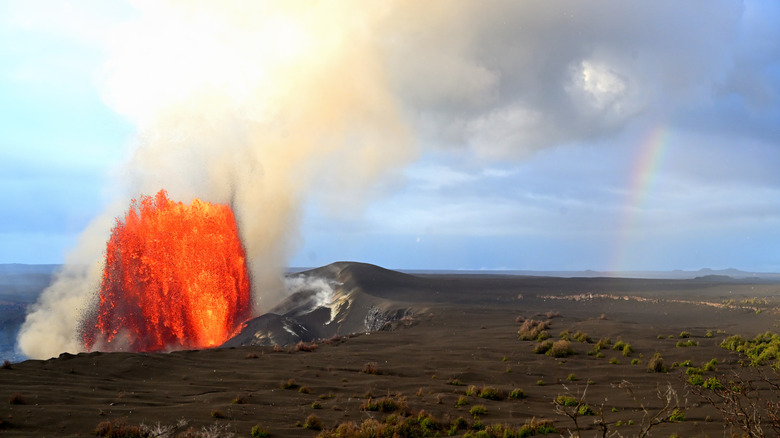
Not many places on the planet give visitors the opportunity to get up close to an active volcano — which, frankly, sounds like a good thing. One exception is Hawaii Volcanoes National Park, where Madame Pele, Hawaii's volcano goddess, puts on a regular show. At times, Kilauea, one of the park's two active volcanoes, spouts molten lava over 1,000 feet in the air. And it's a once-in-a-lifetime thing to behold.
Established in 1916, Hawaii Volcanoes National Park encompasses 523 square miles of the island, just under the size of the entire island of O'ahu. From sea level to the 13,680-foot summit of Mauna Loa, the park's various landscapes can keep visitors entertained for days. Here, you can travel through ancient lava tubes, hike across a lava field or through a protected rainforest, and see centuries-old petroglyphs.
Passing by steam vents here illustrates how active these volcanoes still are on occasions when lava isn't present. Nearby, hike the slopes of Earth's largest active volcano, Mauna Loa, then stay overnight at the historic Volcano House, a property amidst the park's environs that dates back to 1846. Visitors are almost always awe-struck here, lava fountains or not.
ʻAkaka Falls
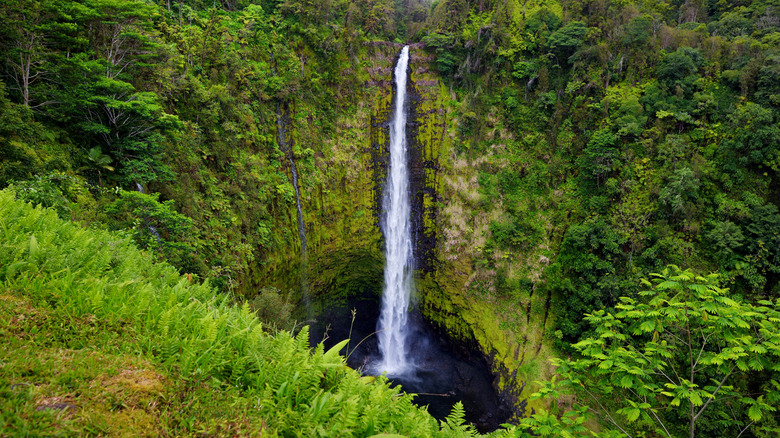
One of the most gorgeous waterfalls in Hawaii is hidden in the rainforest just outside of Hilo on the island's jungly eastern side. ʻAkaka Falls is 442 feet high with a 100-foot neighbor, Kahuna Falls. While you can't get near either, the view of both cascading down the cliff faces through dense vegetation is wondrous to observe.
ʻAkaka Falls State Park is about 15 miles north of Hilo and can be accessed for a small fee. Ample parking and restrooms are available here. Once inside the park, meander down the paved trail across streams and through the rainforest, spotting enormous ferns and bamboo, wild orchids, and ginger plants, along with Hawaii's sacred native ʻōhiʻa lehua trees. The loop trail is only about 0.5 miles and is easy for most ability levels. It can be done in less than an hour; however, the lush, blooming flora often lures photographers for far longer.
Waialea Beach
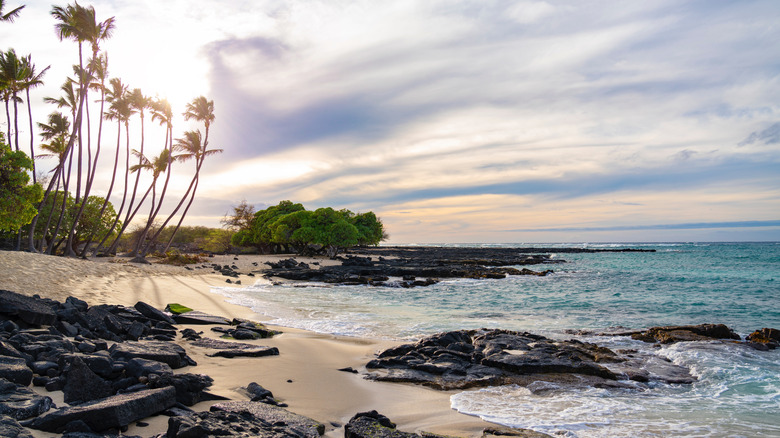
My friends may get mad at me for this one, but it's a place I take every guest because it's simply my favorite beach on the island. Waialea Beach, locally known as Beach 69 for the mile marker it used to be found by, also happens to be a protected Marine Life Conservation District and an idyllic place to snorkel. Tucked along the iconic Kohala Coast about 25 miles north of the Ellison Onizuka Kona International Airport, Waialea is shaded by longstanding kiawe and palm trees from which colorful birds flit while looking for meals.
Waialea is accessed via a short dirt road a little beyond the entrance of the breathtaking Hāpuna Beach — consistently ranked in the world's top 10 – that isn't too taxing on cars. Unlike the exposed stretch of sugar sand found at Hāpuna, you can find shady coves in which to set up your towels and coolers. Then, strap your snorkel and fins on and head to the abundant rocky outcrops that fish adore just offshore.
During whale season (which typically peaks between January and March), watch spouts, breaches, and tail slaps from the sands here. The likelihood of seeing sea turtles at Waialea is fairly high, too. I've even swum with manta rays dancing in the depths, from a safe, respectful distance, of course.
Puʻuhonua o Hōnaunau National Historical Park
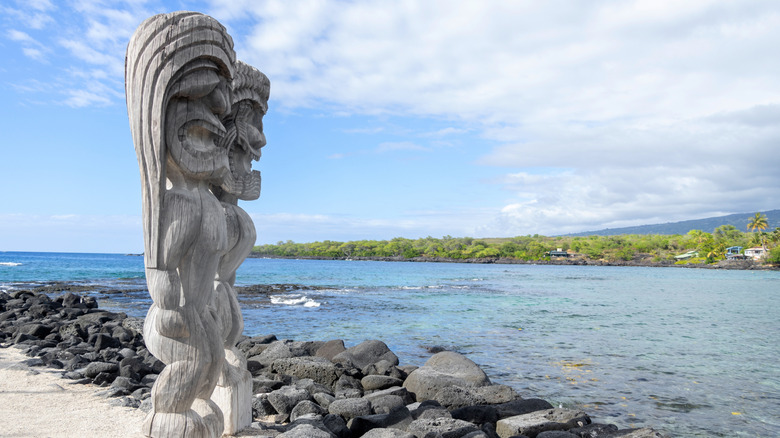
Whether my guests are history buffs or not, I love bringing them to Puʻuhonua o Hōnaunau National Historical Park, also known as the "City of Refuge." It's a visually remarkable site with quite a storied past. About 30 miles (or an hour's drive) from the airport, this sacred space served as a sanctuary for lawbreakers hundreds of years ago, if they could make it there.
Find archaeological treasures such as fish hooks on display, while statues — not original but accurately recreated — of the akua (gods) Kāne and Kanaloa stand guard on shore. A hallowed heiau (temple), Hale o Keawe, stands on the site of the former royal mausoleum surrounded by more carved wooden statues. Endemic plants that were used by long-passed generations to build their homes and weapons grow here. Rustling palm fronds and lapping waves act as the soundtrack to a day of exploration.