
5 Paris Metro Rules American Tourists Break Within The First 10 Minutes
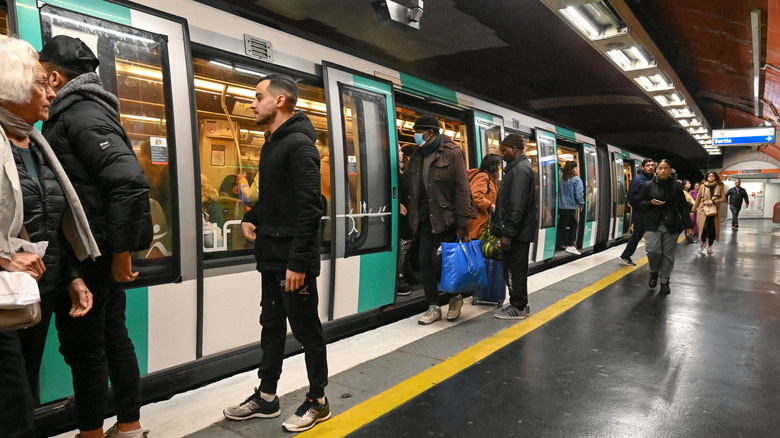
To most travelers, getting around Paris means crossing a sweeping patchwork of Instagram-worthy cobblestone streets, dreamy bridges connecting the Left Bank to the Right Bank, and glitzy avenues like the Champs-Élysées. But no Parisian experience is complete without heading underground. To really get around the city, Parisians and tourists alike go down the stairs, through the turnstiles, and into the iconic Paris Metro, which has been shuttling passengers from one end of the city to the other since its inauguration in 1900.
Forget the dreamy streets above ground — the Paris Metro offers a glimpse of real Parisian life. The tile-lined corridors and train platforms see millions of commuters each day. For context, Line 14, the Metro's busiest, carries about 820,000 passengers every weekday. This dizzying maze of corridors, exits, and transfers quietly tests the patience of every unwitting American tourist who dares to ride it — especially at rush hour.
I've lived in Paris on and off for over two decades, so take it from a frequent Metro rider who's survived soul-crushing rush-hour commutes and boozy late-night trains: locals walk with purpose, and hesitant tourists are their roadblocks. The Paris Metro operates on its own set of rules, and American visitors tend to break them within ten minutes of stepping through the turnstiles, making them easy to spot. The best way to shake off the tourist tell? Get familiar with the Metro rules, from the ticket gate to your seat until you exit the station. Your crash course in riding like a local starts here.
Keep your Metro pass with you at all times
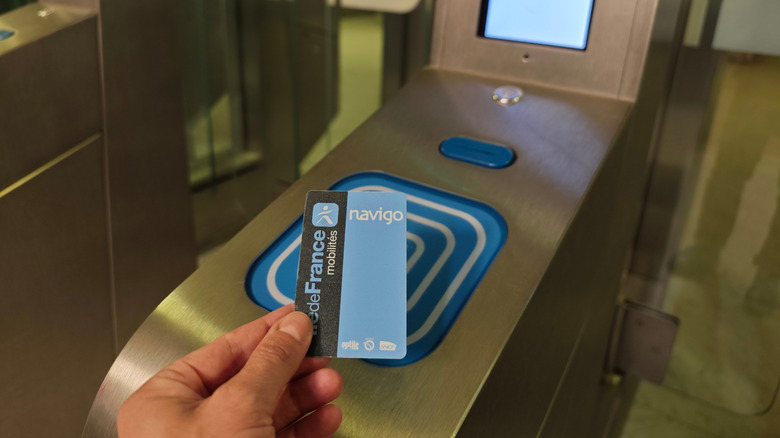
If there's one habit to adopt on the Paris Metro, it's to tap your pass at the turnstile and keep it on you until you've left the station. It's second nature to local commuters, but in the first few minutes inside a busy, unfamiliar station, it's easy for American tourists to be caught off guard. So what exactly can go wrong?
Plenty, as it turns out. During rush hour, a wave of commuters can sweep you through an open gate before you've had the chance to tap your pass. A finicky card reader could fail to register your tap without you noticing. You might also misplace or lose your pass — it happens to the best of us — especially in a moment of distraction on a crowded train. Or you could have bought the wrong type of ticket altogether, like a Bus-Tram ticket or a reduced-fare ticket you aren't eligible for.
These mistakes can cost you a painful €70 fine on the spot, as of this writing. I can't count the number of times I've passed confused tourists pantomiming their explanations to the French ticket inspectors who randomly patrol the Metro's train cars and corridors for commuters with unvalidated or missing tickets. If you feel you were unjustly fined, however, the French government's public service website says you can contest it by sending a registered letter to the transport operator if you failed to present your ticket "without intent to defraud."
Don't wait for the Metro doors to open on their own
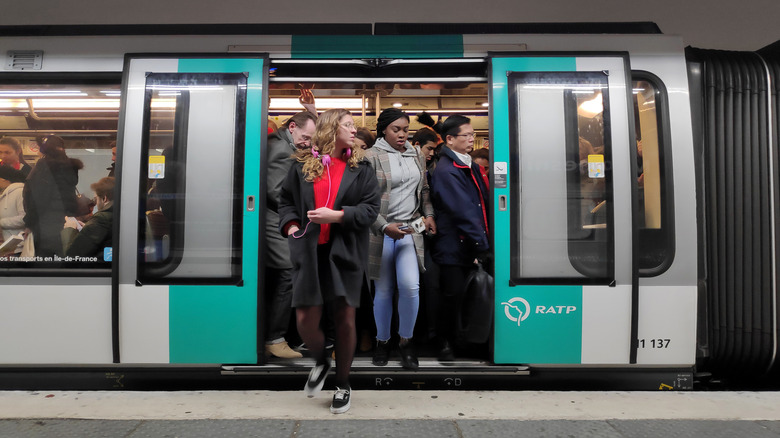
Unless you're riding Lines 1, 4, or 14 — three of Paris's 16 Metro lines that are fully automated — don't expect the Metro doors to open on their own. That job falls to whoever is standing closest to them. It's an unfamiliar concept for first-time tourists, so here's the drill: on older trains, you'll either have to lift a lever or push a button to open the door.
Even if it isn't your stop, opening the door for others is basic Metro etiquette, especially in a packed car. As the train slows to a stop, you may hear "La porte, s'il vous plaît" from fellow passengers about to get off. If you're next to the door, that's your cue to open it. Travel guru Rick Steves advises briefly stepping onto the platform to let people off and on. Personally, I try to slip deeper into the car as soon as the crowds thin out to clear the doorway for others.
Politeness has its limits, though. While the doors need to be opened by hand, keep in mind that they close automatically. And those Metro doors are heavy, so an attempt to hold them open for someone else can cause an injury, an accident, or delays. European subway systems are, after all, famously efficient — there's always another train only minutes away.
Don't stay put on the folding chair in a full train
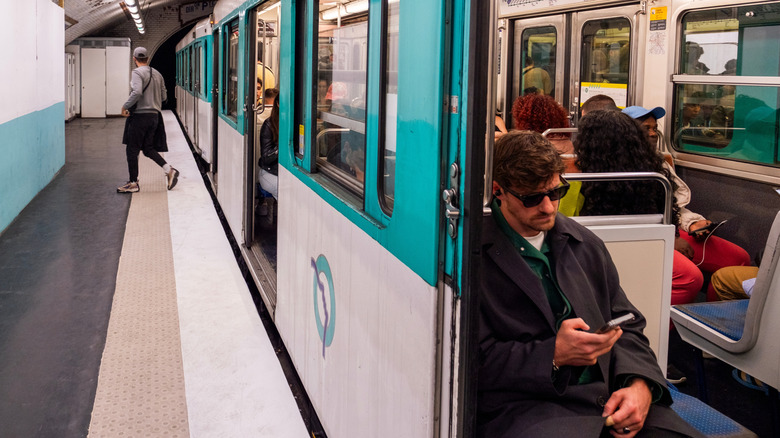
Every friend or family member who visits me is charmed by the humble strapontins, the fold-out seats positioned by the Metro doors. What most tourists fail to realize is that these cool little seats aren't meant to be used during rush hour. Once the crowds pack into the Metro, the strapontin should be folded away to give fellow passengers more space. In fact, in 2018, French public radio network ICI reported plans to remove some strapontins from Line 13 due to the line's massive influx of passengers at rush hour.
Take my word for it: you don't want to be the tourist still sitting on a strapontin as commuters start piling into the carriage. I've watched tourists perched on strapontins endure pointed glares and exasperated sighs from Parisian commuters — passive aggression is an art form here — while remaining blissfully unaware of the Metro faux pas they're committing.
Staying put on one of these seats can also leave you getting knocked about. "You're not only taking up too much space, but you're putting yourself at risk of getting whacked in the head by the backpacks or, worse, people getting on or off," shared one Redditor. That said, strapontins aren't completely off-limits. Feel free to use them during off-peak hours or when the crowds start to thin out.
Think twice before hauling bulky luggage
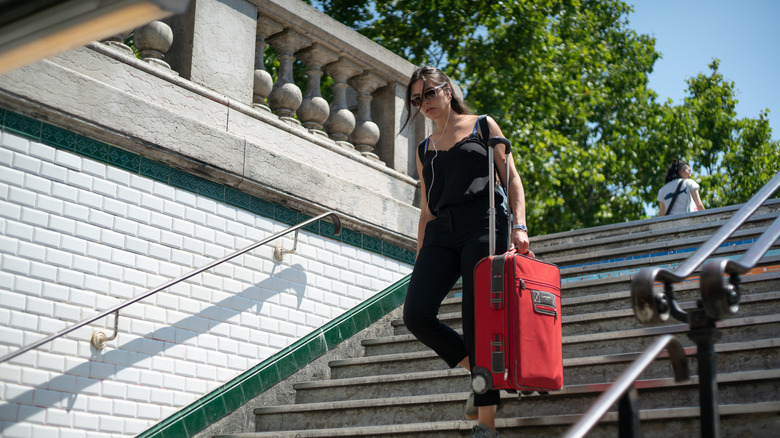
One of the best things about traveling to Paris is the convenience of getting to the city center from the airport, whether you're hopping on the RER B from Charles de Gaulle Airport or taking the recently extended Line 14 from Orly Airport. But trouble starts brewing once you switch from the roomy trains that serve airport travelers to the older Metro lines.
Unreasonable luggage restrictions on the Metro sparked a brief scandal and social media backlash in 2025 before the rule was eventually retracted. The verdict is in: luggage is permitted on the Metro. Having dragged two heavy suitcases through the labyrinthine Châtelet–Les Halles station at rush hour, I can say with conviction that accessibility isn't the Paris Metro's strongest suit, so prepare for a mental and physical workout. Narrow turnstiles, seemingly endless stairs, and a jet-lagged tourist hauling suitcases through the corridors are a recipe for disaster, and the irritable locals behind them know it.
The workaround? Plan ahead. Consult Bonjour RATP's transport accessibility information to see if the station nearest your hotel is equipped with an elevator or an escalator — or ideally both. If you can, avoid traveling during rush hour, which, according to RATP, runs from 7:30 to 9:30 a.m. and 4:30 to 7:30 p.m. And while there are many reasons why tourists visiting Paris might want to avoid taxis — they can be expensive, and Paris traffic can lengthen the journey — you may want to reconsider this option if you're traveling with several suitcases.
Avoid zoning out in the middle of the crowd

Tourists often make the mistake of letting their guard down in the Metro, especially after a tiring day of sightseeing around Paris. A moment of inattention can leave you with a stolen wallet or passport, a forgotten bag, or a traffic jam of annoyed commuters behind you on the escalators or stairs. As enchanting as it is, Paris unfortunately ranks among the world's tourist destinations where you should be extra cautious of pickpocketing, especially in the Metro. Pickpocketing has become so common that the U.S. Embassy and Consulates in France have a dedicated page covering everything from filing police reports to common ATM scams.
Riding the Metro also calls for common sense. Keep your belongings close, consider wearing a money belt, and never scroll on your phone by the doors, where it can easily be snatched as they slide shut. Now that's a painful lesson I've learned firsthand. Twice.
Then there's another kind of inattention tourists are guilty of: a lack of situational awareness. Seasoned Metro commuters move like well-oiled machines, and any disruption to their flow from the train to the exit can earn you a dreaded eye-roll. Don't be the tourist who stops dead in their tracks on the platform or at the top of the stairs to consult a map. Instead, step aside toward the platform or corridor walls, where you'll often find neighborhood maps with the exits marked.