
Under 2 Hours From Branson Is Missouri's Ozark Mountain Escape With Trails And Ethereal Views
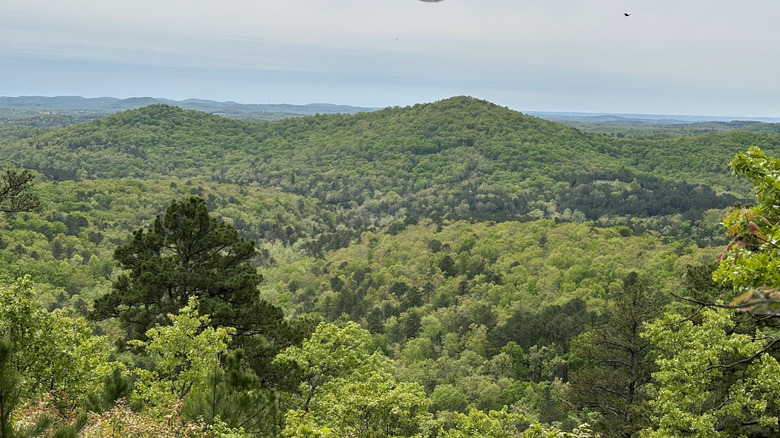
Branson may be synonymous with live shows and family attractions, but if you drive east into the Missouri Ozarks, you'll find that the undeveloped landscape itself is a draw for nature lovers and hikers alike. Less than two hours away from Branson, Caney Mountain Conservation Area spreads across nearly 7,900 acres north of Gainesville. Here, high ridges, deep hollows, rocky glades, and old forests create some of southern Missouri's most dramatic scenery. The Missouri Department of Conservation describes the terrain as among "the roughest" in a range of hills left behind by an ancient elevated plateau.
The drive itself shows why the area is worth the detour. From roads within Caney Mountain, visitors have stunning views of surrounding formations like Morrison Knob, Tater Cave Mountain, High Rock Mountain, and Bear Cave Mountain, among others. The peaks belong to the Gainesville monadnock group, a collection of distinctive rock hills dotting the Ozark horizon. The designated 1,330-acre Caney Mountain Natural Area also protects some of the area's native flora and fauna, like the state's black gum tree, which is known for its eye-catching color changes that arrive well before fall foliage season.
Panoramic views await hikers willing to trek up peaks like High Rock Mountain. Those views are especially memorable, because the surrounding habitats keep changing — from old forests filled with ancient oaks (some more than 200 years old, according to the state's conservation department) to dolomite glades (or "balds"), fields of wildflowers, caves, and springs. Caney Mountain has been singled out by visitors for its breathtaking views, and the Ozarks are a hot spot for a fall vacation, when changing color spreads across the ridges in the distance. Visitors should bring a map and plan to spend several hours taking in the scenery and local biodiversity. Caney Mountain is large and undeveloped, so the experience is all about wandering through undisturbed nature.
Short nature trails and rugged routes reveal different sides of the mountains
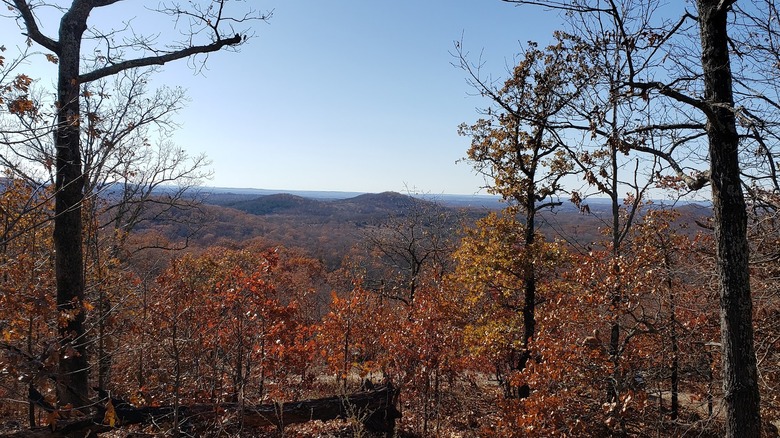
Caney Mountain offers two main trails to explore that will appeal to hikers of different skill levels. For an easy trek, follow the Long Bald Nature Trail, a half-mile loop that crosses through open glades. These dry, rocky clearings are characteristic of the region and offer a visual contrast to the deeper forests in other parts of the conservation area. The Spout Spring Trail gives visitors a different experience. The roughly two-mile (out and back) route follows Caney Creek through a valley filled with old oak and black gum trees and ferns framing the water's edge. Birdwatchers may catch glimpses of local species like ovenbirds and wood thrushes flitting around the treetops.
For more mileage, 6.5 miles of gravel road closed to vehicles invite hikers, mountain bikers, and horseback riders. The Missouri Department of Conservation recommends carrying a map and compass if you intend to explore beyond the designated trails. More experienced hikers can also plan to scale High Rock Mountain. Its summit rises about 400 feet above Caney Creek, with views across the valley and the surrounding glades.
However, you don't need to be an avid hiker to appreciate what Caney Mountain Conservation Area has to offer. Several overlooks can be reached by car using area roads, making it possible to combine short walks with scenic stops. One Google reviewer said they visited with someone who had knee issues, adding, "We were able to drive through and park where we wanted to explore for very stress-free, gorgeous views." The variety is what makes the area memorable. In one outing, you can move from a sunny glade into a shaded creek valley by foot or car and even climb toward an open ridge for expansive views of the Ozark hills.
Caney Mountain offers a conservation legacy and views of rare wildlife
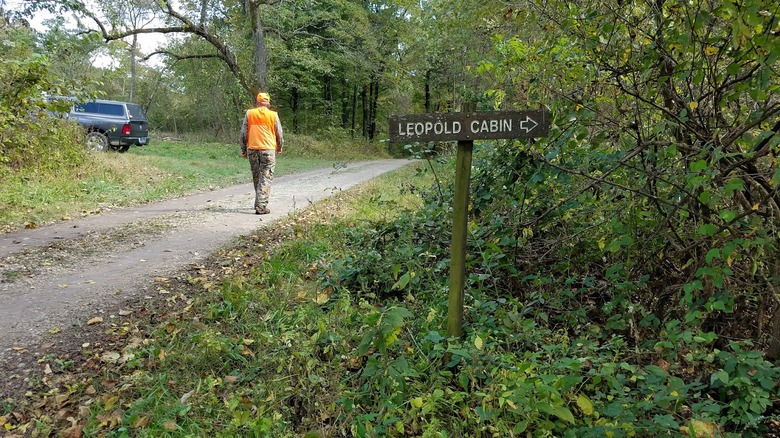
Missouri's conservation areas are great for scenic trails and wildlife watching, and Caney Mountain is no different. It's particularly notable for its history of protecting wildlife during a difficult period for Missouri's turkey population. By the early 20th century, the state's number of eastern wild turkeys had plummeted. But in 1940, the hills around Caney Creek were used as a turkey refuge, led by conservationist A. Starker Leopold's wildlife management plan. As part of the plan, deer were also released the same year into the refuge. That work eventually helped restore both wild turkeys and white-tailed deer numbers around the state. Populations bounced back so well that parts of Caney Mountain are now open seasonally for deer, squirrel, and turkey hunting. History buffs can even visit Leopold's log cabin, which is just a short drive from the parking area.
For non-hunters, wildlife watching is also a big draw for Caney Mountain. White-tailed deer, squirrels, rabbits, and wild turkeys live throughout the landscape, and the surrounding glades have also seen rarer residents. Hikers can keep their eyes peeled for creatures like the eastern collared lizard (look, don't touch!), Bachman's sparrow, and the endangered Caney Mountain crayfish. Fall brings some of the most colorful views, while spring adds wildflowers (like the native Ozark spiderwort) and bustling bird activity.
For anyone wanting more than a day trip, there are a few designated areas that allow primitive camping. However, Caney Mountain is also used for hunting, with special rules in parts of the property, so check current Missouri Department of Conservation regulations before hiking or camping during hunting seasons. And, after a day spent admiring nature, travelers can easily head roughly two hours northwest to explore Springfield, "Queen City of the Ozarks," a mountain charmer brimming with big flavors and quirky vibes.