
The World's Most Attractive City Isn't Rome Or Paris
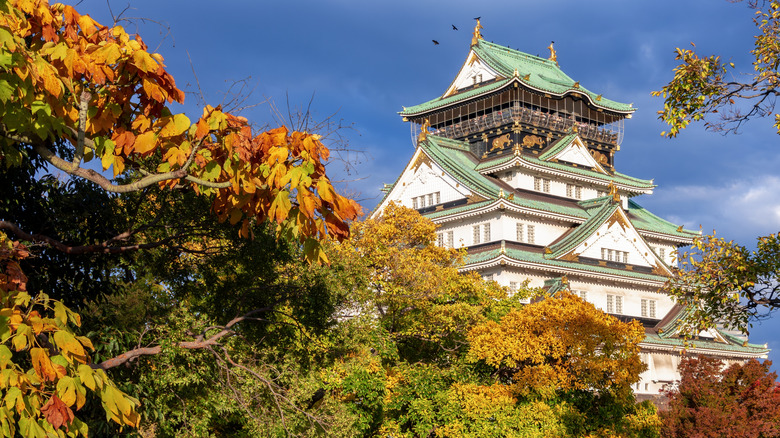
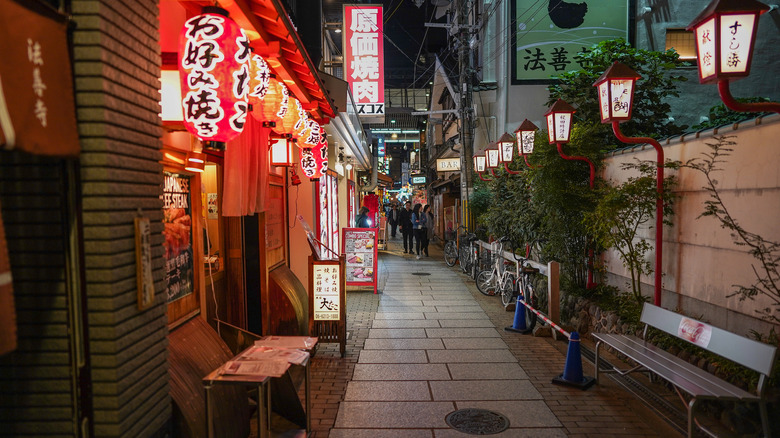
A beautiful city offers one of travel's simplest pleasures: wandering with wide-eyed curiosity and no reason to hurry. Think "attractive city," and you might picture the ancient ruins of Rome or the romantic, Haussmannian boulevards of Paris. But according to a 2026 ranking by Yanolja Research, Osaka outranked both of these famous European cities in the attractiveness department. A port city on Japan's main island of Honshu, Osaka is a medley of waterfront promenades, neon lights, and lanes filled with street food. Visitors can walk along the Dotonbori Canal to see the bright displays that tower above the crowds, then duck into the narrow, lantern-strung Hozenji Yokocho Alley. Look out towards the city from Osaka Castle, or ramble through the surrounding park in spring for its cherry blossom spectacle.
To rank the world's most attractive cities, Yanolja Research — a Korean tourism research institute — created its Yanolja Attractiveness Index with Purdue University and Kyung Hee University based on how travelers perceive cities. The study analyzed social media posts related to 261 cities globally. It then used AI to classify the sentiments of the posts to find out how people felt about each city. The positive ratio was measured against buzz volume and weighed across four categories: urban aesthetics and natural scenery (30%), culture and history (30%), experiential tourism content (30%), and hospitality (10%).
All in all, Osaka had the highest attractiveness ranking. Paris and Rome came in fifth and seventh place, respectively. Kyoto landed in second place, and New York City in third. According to the report, Osaka's biggest strengths lie in its experiential content and hospitality, encompassing things like shopping, nightlife, accommodations, and the city's famously exuberant food culture. For travelers, the variety and vibrance of Osaka means there's rarely a dull moment.
Linger in Osaka's attractive hotspots
If you want to experience the best of Osaka's attractiveness, an obvious place to start is the majestic Osaka Castle. With its tiered white and gold keep rising above stone walls, the castle is an embodiment of beauty. One of the best times to visit Japan is in spring, between late March and early April, when the castle park bursts into a sea of pink cherry blossoms. In other parts of Osaka, "attractiveness" takes on a slightly different meaning. As we know from the Yanolja report, a city's appeal isn't defined by architecture and nature alone, but also the feelings it evokes in those who visit.
The attractiveness of Osaka's Dotonbori Canal, for example, lies in its broad sensory atmosphere: neon signs reflected in the water, crowds spilling across bridges, restaurant smells drifting into the streets, and music pouring out of bars. Running through Dotonbori is a river crossed by 10 bridges, where you can pause to take in the spectacle of glowing billboards and over-the-top displays, including crab, octopus, and dragon sculptures.
Just a few steps from Dotonbori Canal, Hozenji Yokocho Alley is almost the opposite experience. The cobblestone alleyway is just around 10 feet wide, with rows of muted red lanterns lighting the way. Small bars and long-established restaurants are tucked along either side, serving everything from traditional kappo dining to deep-friend kushikatsu skewers. It's an ideal place to experience what makes Osaka "Japan's kitchen" for foodies.
Explore Osaka's lesser-known beauty
If you head outside of Osaka's glittering commercial core, you will discover some special neighborhoods that are attractive in their own right. Under a 20-minute walk from the central hub of Umeda, Nakazakicho has the atmosphere of old Osaka, with narrow streets and tightly-packed buildings that, unlike much of Osaka, were not damaged during World War II. Travel blogger Geeky Explorer writes, "Here you can find a more local side of Osaka without Glico Mans and tourist groups with matching luggage tags." Wander among its weathered machiya facades and pop into the cafés and galleries for a taste of local life.
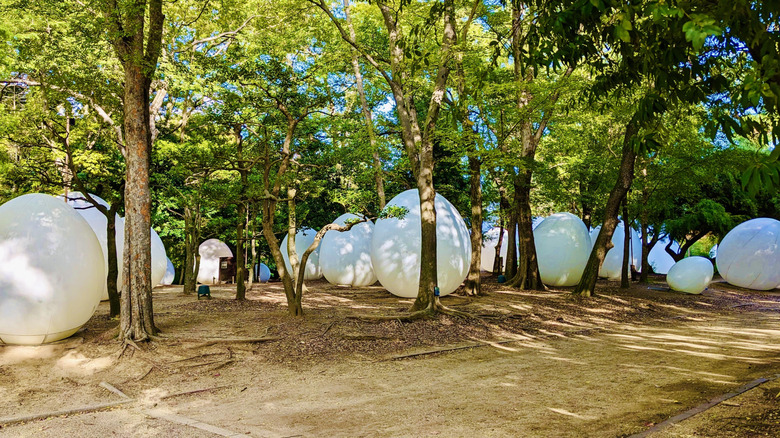
Even farther from Osaka's center — about 40 minutes by metro from Umeda — Nagai is another interesting neighborhood to check out for a greener side of the city. Travel blogger Knycx Journeying highlights Nagai as a "serene escape," with "lush landscapes veiling its paths." At its heart is Nagai Park, with a botanical garden that wraps around a pond. After dark, the teamLab Botanical Garden Osaka transforms the garden into an outdoor installation of glowing forms and rippling colors, using light and sound to give the grounds a mystical ambiance.
For those planning to visit several of Japan's major cities in one trip, Osaka is around 30 minutes from Kyoto by train. Visitors can also fly in directly to Osaka's Kansai International Airport, an architectural marvel and one of the world's most beautiful airports.