
5 Moroccan Cafe Rules American Tourists Break Within The First 10 Minutes
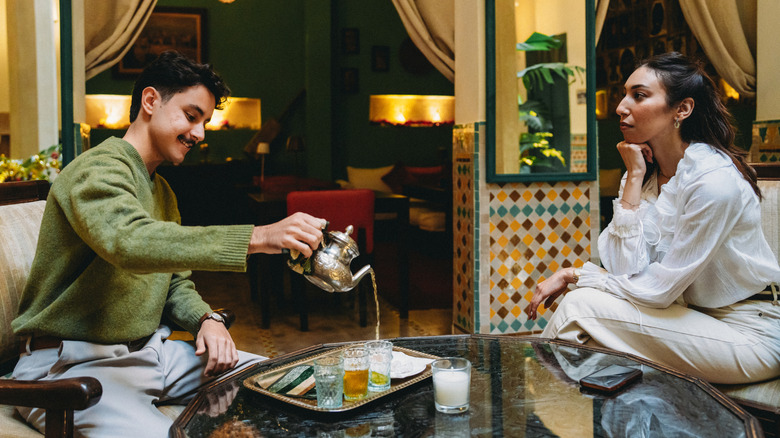
Morocco is a country filled with rich cultural traditions that stretch as far back as a millennium, and this is noticeable as soon as you enter its open-air museum of streets. As you wander, you'll see imperial palaces, tall, intricate, and colorful mosque minarets, bustling street vendors selling freshly squeezed orange juice, along with maze-like streets winding throughout its chaotic — yet functional — medinas. As a tourist, there are many rules and cultural norms that can be found in Morocco, and even within its cafes, there are rules that American tourists break within the first 10 minutes of entering.
Imagine spending an afternoon wandering through the tightly woven blue streets of Chefchaouen, taking in the ornate doors that line your path at every turn. You peek your head into a few open corridors, catching glimpses of handcrafted, colorful carpets woven by artisans from the Atlas Mountains. As your stomach begins to rumble and you start searching for a cafe to duck into, you eventually stumble upon one filled with locals chatting and gossiping the afternoon away. As you step inside, the server approaches with a warm, "Salam alikoum," before offering you a piping hot glass of mint tea. You firmly, yet politely, reply, "No, thank you," never realizing that you've just broken one of the cafe rules Americans tend to break when visiting a Moroccan cafe.
While turning down an offer of mint tea may seem innocent enough, in Moroccan culture, offering mint tea is a traditional way of welcoming visitors and is deeply ingrained in everyday Moroccan hospitality. Saying no, or refusing the tea, may come across as rude or inconsiderate. Whether you're attempting to visit a cafe and order a very Americanized extra-large latte with a pump of vanilla syrup, expecting most cafes to remain open during Ramadan, or arriving during the call to prayer, familiarizing yourself with a few Moroccan cafe customs can help ensure that your visit goes smoothly and without unnecessary hassle.
Assuming every cafe serves cappuccinos and lattes
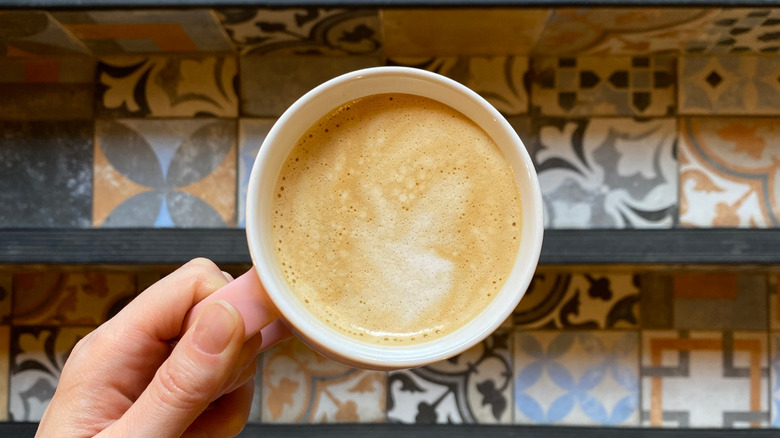
There's a familiar saying: "Do as the locals do." And while traveling in Morocco, one of the first steps toward experiencing authentic Moroccan cafe culture is breaking from your usual routine and swapping that daily frothy cappuccino for a more local coffee ritual. Much like the crucial coffee etiquette secrets to follow when in Italy, there are also rules for visiting Moroccan cafes. One such rule is assuming that every cafe in Morocco serves cappuccinos and lattes. Of course, some touristy coffee shops will have the familiar favorites for American coffee drinkers; however, visiting local cafes in the North African nation might surprise you with their slim offerings.
Most Moroccan coffee drinkers will enjoy it black (kahwa kahla in Moroccan Arabic, or café noir in French), which is typically served as an espresso shot. If you prefer a milkier coffee over the stark bitterness of a straight black brew, ordering a coffee ness ness (or nous nous) may be more to your liking. The name translates to "half-half," referring to the roughly equal balance of coffee and milk. While it's not typically listed on Moroccan cafe menus, you can still ask for one — and it tends to be especially popular among female coffee drinkers. If you normally take your coffee without sugar, keep in mind that Moroccans tend to enjoy their coffee on the sweeter side. To make sure your drink comes without added sugar, ask for it sans sucre in French, or bla soukkar, meaning "no sugar" in Moroccan Arabic.
Refusing an offering of mint tea
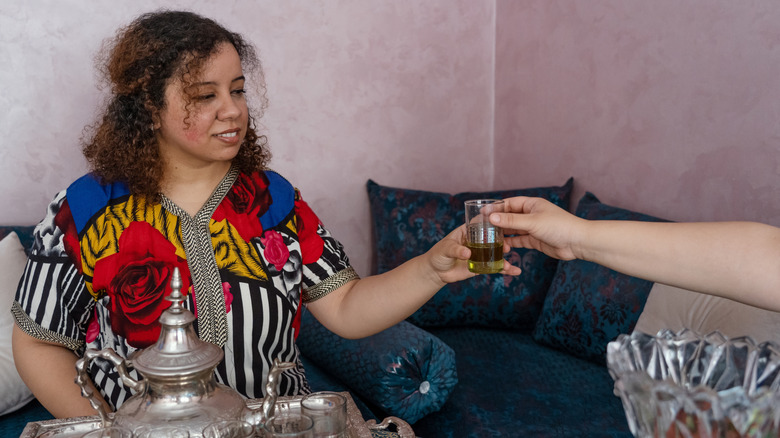
You may be familiar with Moroccan mint tea. Often seen being poured piping hot into small glass cups from staggering heights that would make even the most skilled barista slightly nervous, the drink is deeply rooted in Moroccan culture. If there's one rule to follow when visiting a Moroccan cafe as an American tourist, it's to never refuse an offering of mint tea. Even if mint isn't your cup of tea (pun indeed intended), taking just one tiny sip can save you from committing an inconsiderate error.
For American tourists, being offered something by a local while travelling may seem like a nice gesture. However, if the offer isn't wanted, a simple, yet kind refusal might seem both warranted and perfectly acceptable. Not in Morocco. The warmth and hospitality that come with offering guests something — whether in a home, restaurant, or cafe — are deeply ingrained in Moroccans, stemming from age-old traditions of welcoming and caring for visitors, like tourists. So, the next time you enter a cafe in Morocco and the server looks in your direction while pouring a glass of mint tea from impressive heights, take note that it is likely about to be offered to you and isn't just to show off their amazing pouring skills.
Not researching religious holidays or closing times
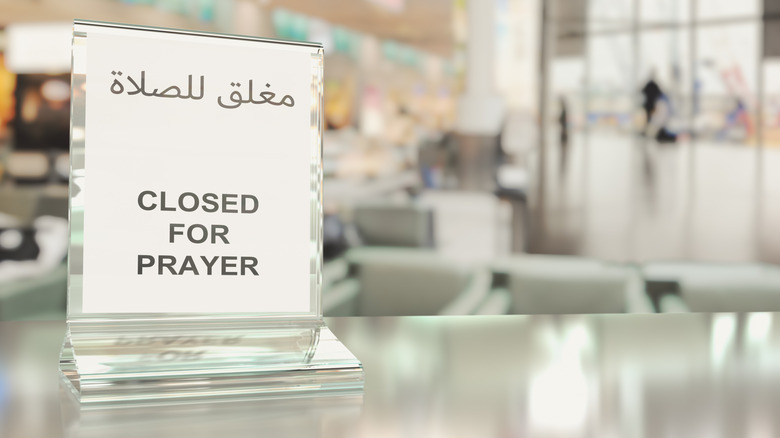
One thing American tourists often fail to realize — or research entirely — is the impact of religious holidays in predominantly Muslim countries, such as Morocco. These holidays can affect everyday routines, particularly when it comes to finding food during what Americans would consider normal eating times. For example, during Ramadan, the holiest month on the Muslim calendar, devout Muslims honor the fasting ritual from sunrise to sunset. Some hotels may continue catering to tourists by keeping their restaurants open; however, visitors are advised to eat discreetly rather than in public areas or on the streets. When iftar takes place at sunset, the streets, restaurants, cafes, and street vendors come to life as crowds begin eating well into the night. If you are unable to travel outside of Ramadan, plan ahead so that you aren't left hungry and searching for that mid-morning cafe break.
Another innocent mistake tourists might make is not being aware that, in Muslim culture, daily life is put on hold five times a day for the call to prayer. Known as adhan in Arabic, the call to prayer marks designated times for Muslims to observe their prayer ritual. While some cafes and shops may remain open during adhan, others may temporarily close to observe the prayer. When traveling to Morocco, it's best to research the approximate times of day when adhan takes place: before sunrise, early afternoon, mid-afternoon, at sunset, and at night, according to GuideMe. Knowing when these prayer times occur can help tourists plan their days accordingly, particularly when deciding when to visit cafes, shops, and other businesses.
Showing public displays of affection

Casablanca might be Morocco's biggest under-the-radar city full of art, culture, and LA vibes, but if you think PDA (public display of affection) is acceptable — think again. If you're enjoying a coffee at a chic cafe in the U.S., it's not unusual to see couples cuddling in a corner, holding hands, or sharing an affectionate kiss in public. In Morocco, however, the cultural expectations are quite different. Public displays of affection are generally considered inappropriate and can be viewed as disrespectful to local customs. For travelers, understanding and respecting these social norms is an important part of experiencing Morocco with cultural awareness.
When visiting a cafe with your significant other, it's best to keep public displays of affection to a minimum. Holding hands is generally considered acceptable, while more intimate displays, such as kissing, are typically discouraged in public spaces. Among Moroccans, greetings may sometimes include two to three kisses on one or both cheeks, particularly between family members or close friends. However, this isn't always the case. More traditionally conservative Moroccans may avoid physical contact between men and women altogether, reflecting cultural customs and religious values.
Rushing the experience of sitting in a Moroccan cafe
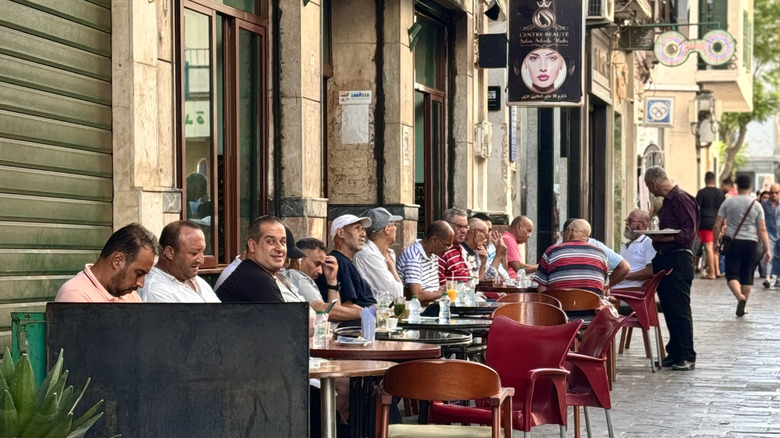
While cafe culture is typically dominated by a mostly male presence in Morocco, women — both Moroccan and foreign — are increasingly visible in these social spaces, reflecting a subtle cultural shift. What better way to take in the sights, sounds, and smells of Morocco than to find a little piece of cafe real estate, settle in, and linger the morning away with an espresso, taking it all in? For Moroccans, going to a cafe and having a coffee is more than just a caffeine fix and more about embracing a daily ritual — one that can easily stretch into a few hours. It is a place to catch up on the news, exchange a little gossip, and talk about yesterday's football match between rival teams. In the West, most Americans are accustomed to the grab-and-go mentality; in Morocco, however, the art of ordering a coffee and settling into a cafe becomes something more.
It can be a quiet form of respect for the person sitting across from you — as if by giving them your time, you are saying that their company matters, that you are genuinely interested in catching up, and that there is nowhere else you need to be just yet. In an age where everything around us seems to move at a fast pace — emails, notifications, messages, and the constant pinging of our phones — perhaps the Moroccans are onto something. Maybe there is something to be said for simply grabbing a coffee, sitting down, and allowing yourself to enjoy the atmosphere, the view, or the person sitting across from you.