
The 10 Most Dangerous Hikes In Yellowstone
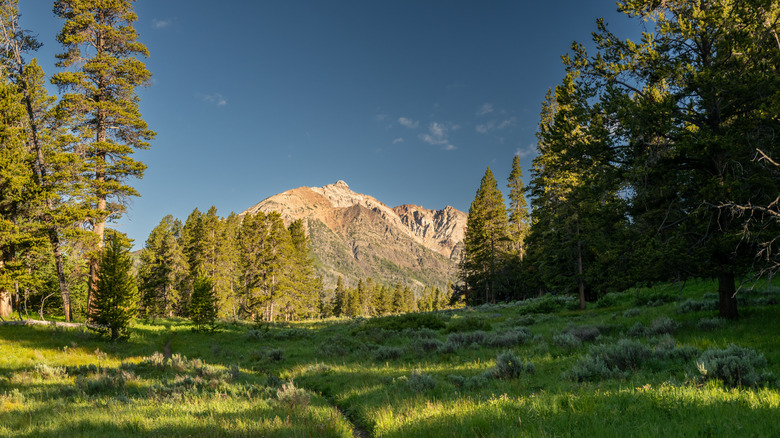
Ever since its establishment in 1872, Yellowstone National Park has been a defining representation of the American West and one of the nation's most beloved outdoor destinations. Today, the mighty peaks, vast forests, and geothermal features of Yellowstone are less daunting than they once were, thanks to the national park's visitor-friendly infrastructure, accessible features, and modern lodging options. Visitors can explore popular spots like Old Faithful, Grand Prismatic Spring, and Yellowstone Falls without straying from safe walking paths and viewing areas. Still, Yellowstone's modern infrastructure makes up a tiny fraction of the park, leaving a vast area that's still as wild — and dangerous — as it was in the 1870s. More daring hikers can venture out into these areas to explore Yellowstone's most challenging and dangerous trails.
Yellowstone's extensive trail network includes everything from short and simple nature walks to strenuous treks up the sides of mountains. On the latter end of the danger spectrum, Yellowstone's most fearsome trails run a full gauntlet of potential hazards that can cause injury (or even death) to unprepared hikers. Yellowstone's mountainous environment brings the same risk of fall injuries as other mountaineering destinations, only with the added risk of potential burns from hidden geothermal springs. Yellowstone's extended family of animal life includes populations of dangerous predators like grizzly bears, wolves, and mountain lions (to say nothing of dangers posed by bison, elk, and other park herbivores). Many dangerous Yellowstone trails are located in remote backcountry areas where help may be a long time coming if an emergency occurs. These 10 Yellowstone trails are particularly notable for their dangers and challenges, with risks that are only matched by their spectacular scenery.
Howard Eaton Trail
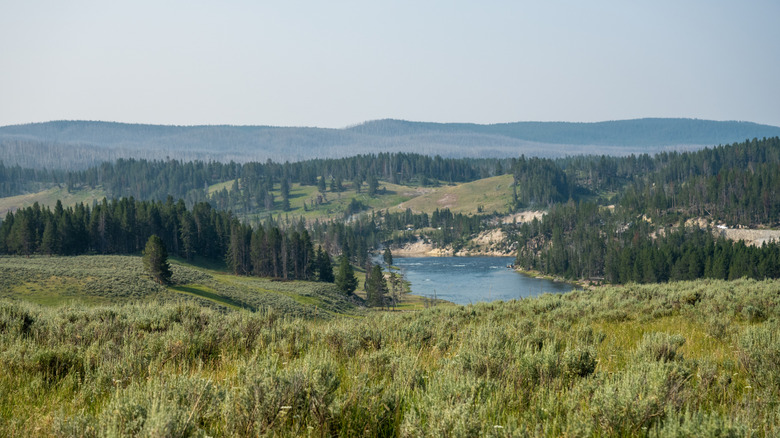
Terrain-wise, the 14-mile Howard Eaton Trail is not too bad compared to Yellowstone's daunting mountains and gorges. However, dangerous wildlife encounters are a much bigger issue. The historic Howard Eaton Trail passes through a wild backcountry between the Yellowstone River and the Hayden Valley, an area notable for large bison herds. Bison can be dangerous on their own, but the frequency of bison carcasses also draws bears, wolves, and other dangerous predators. Not that the trail's magnificent views of lakes and meadows are not worth it, but wildlife precautions (particularly bear spray) are especially important here.
Sepulcher Mountain Trail
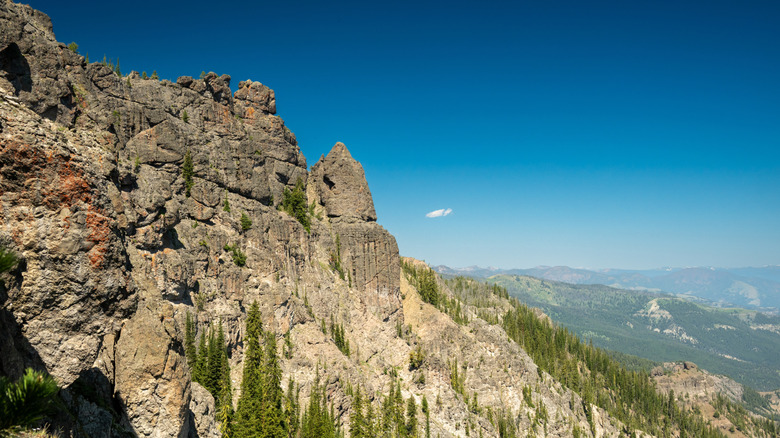
The ominously named Sepulcher Mountain Trail, ironically, begins in one of Yellowstone's most developed areas. The trailhead is located at Mammoth Hot Springs, famous for one of Yellowstone's most breathtaking overlooks. However, the Sepulcher Mountain Trail then enters a dangerous 12-mile loop through bear-filled wilderness to the summit of the nearly 10,000-foot Sepulcher Mountain. Sepulcher Mountain's grave-like volcanic formations are impressive, but the 3,400-foot summit climb and subsequent 2,300-foot descent along steep, jagged switchbacks pose real risks of injury (or death) from falls. Open areas near the summit also expose hikers to lightning strikes during sudden thunderstorms.
Hellroaring Creek Trail
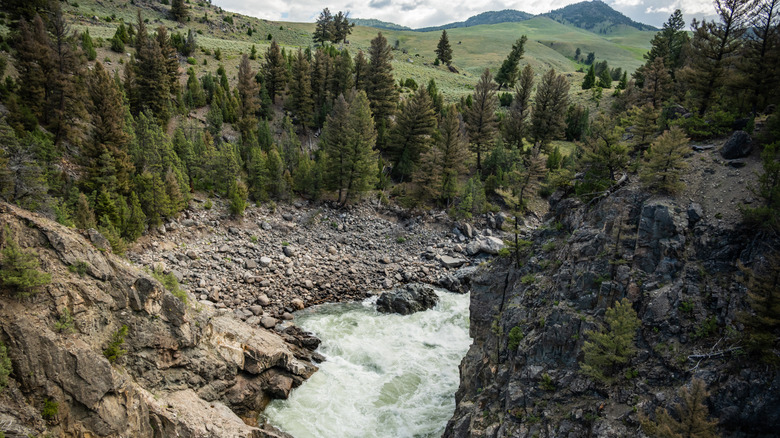
Joining the list of ominous trails with ominous names, the 14-mile Hellroaring Creek Trail begins with a daunting, steep descent towards the Yellowstone River. Before reaching the narrow suspension bridge over the waterway, the Hellroaring Creek Trail hits hikers with a dangerous plunge down several switchbacks. The initial descent drops 600 feet in 1 mile, before ascending to Buffalo Plateau and finally descending again to Hellroaring Creek. Open meadows throughout the trail, though beautiful, provide little shade, raising the risk of heat-related illness. The trail's backcountry location also means possible encounters with grizzly bears and bull elk.
Seven Mile Hole Trail
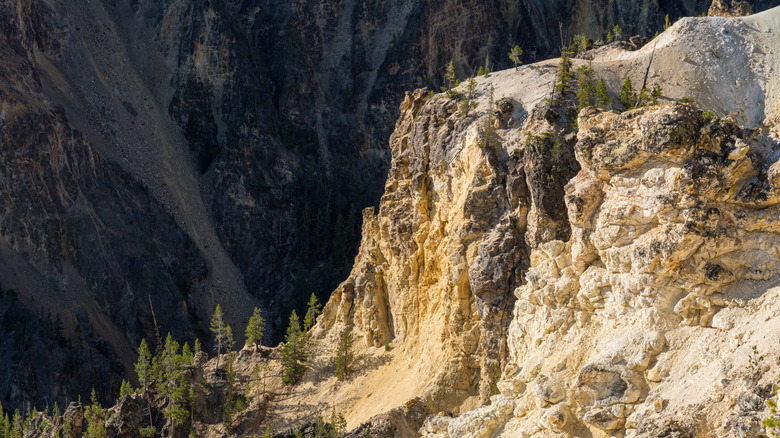
The Seven Mile Hole Trail covers virtually every Yellowstone hiking hazard. The trail, actually around 10 miles despite its name, passes a precarious canyon rim between the Glacier Boulder Trailhead (near the breathtaking Inspiration Point overlook of the Grand Canyon of the Yellowstone) and the Seven Mile Hole backcountry area. Though the views are impeccable, they come with precarious and dangerous terrain, including a section that drops 1,000 feet in just 1.5 miles. The Seven Mile Hole Trail also passes potentially hazardous geothermal hot springs that can burn hikers who get too close.
Union Falls Trail
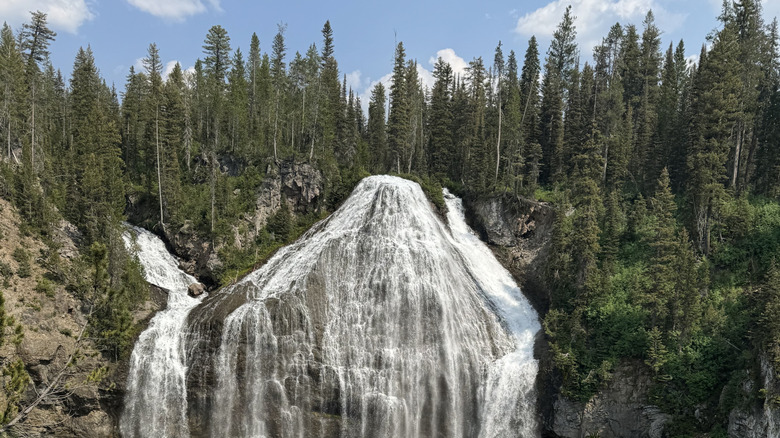
At 250 feet tall, Union Falls is Yellowstone's second-tallest perennial waterfall after Lower Yellowstone Falls. Unfortunately, getting to Union Falls is a bit more dangerous. The Union Falls Trail spans nearly 16 miles along the Mountain Ash Creek in the backcountry Bechler Region within Yellowstone's extreme southwestern corner. The trail's remote location is a danger on its own, but the route also includes multiple creek crossings (where flooding and strong currents pose a risk), rocky and slippery terrain, and dramatic elevation changes. Plus, there's the ever-present threat of bear encounters when in Yellowstone backcountry.
Dunraven Pass to Mount Washburn Trail
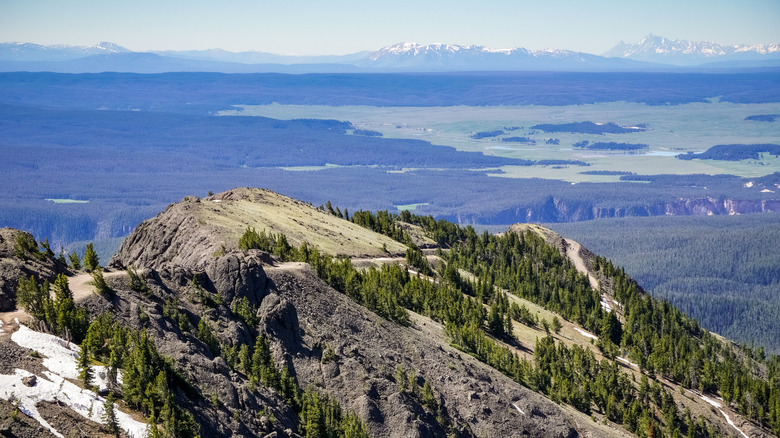
The trail from Dunraven Pass to Mount Washburn provides awe-inspiring views of mountains and the Grand Canyon of the Yellowstone, though it features all the dangers of high-altitude mountaineering. Mount Washburn is 10,219 feet high, and the summit hike involves significant elevation gain crammed into only 7 miles. Alongside the risk of falls on steep slopes (exacerbated by heavy winds) and lightning strikes, Mount Washburn is high enough to cause potential altitude sickness. Bear encounters are a major risk in the autumn, when grizzlies ascend Mount Washburn to feast on its whitebark pine nuts.
Specimen Ridge Trail
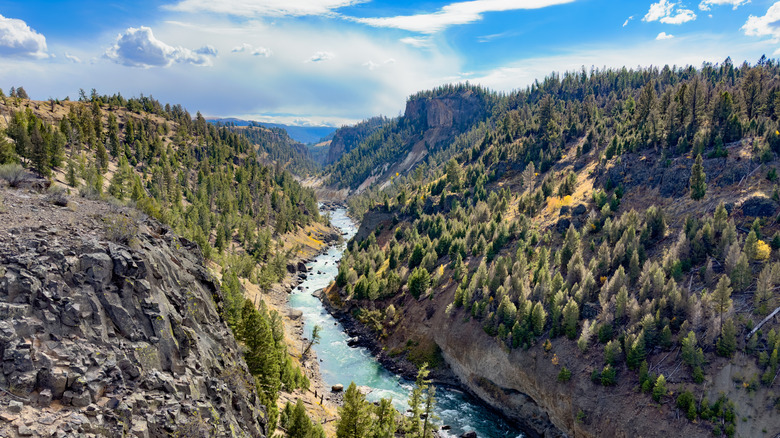
The 18-mile Specimen Ridge Trail is an arduous trek across Yellowstone's high-elevation backcountry, with nearly 4,000 feet of total elevation gain and several potentially dangerous river crossings. The route ascends the 9,600-foot Amethyst Mountain and then proceeds to Soda Butte Creek and the Lamar River Trailhead. The full hike provides exceptional views of the Lamar Valley (and a side quest to see Yellowstone's unique collection of petrified trees), but its backcountry setting and mountainous terrain raise the risk of dangerous wildlife encounters, fall injuries on rocky terrain, and exposure to the elements with limited shelter.
Sky Rim Trail
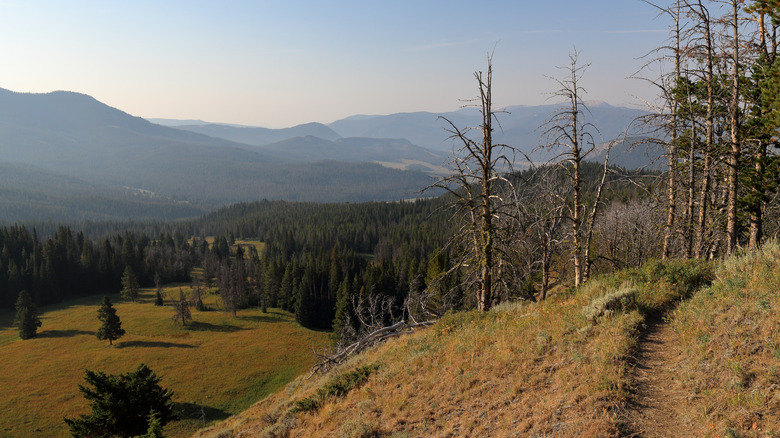
You may assume that Yellowstone's Sky Rim Trail has both panoramic views and significant elevation gain, and you'd be right on both counts. The Sky Rim Trail covers a roughly 20-mile loop across Upper Daily Creek and to the summit of the 9,851-foot high Bighorn Peak. The hike involves more than 4,000 feet of elevation gain through the high-altitude summits of Yellowstone's Gallatin Range. Much of the hike covers extremely steep and rocky terrain, with high injury risk far from immediate help. Lightning, exposure, and wildlife encounters are also major risks in the trail's mountainous backcountry.
Avalanche Peak Trail
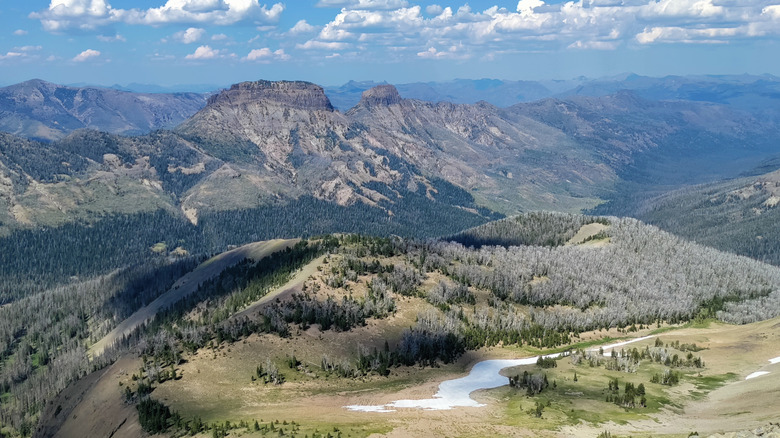
The Avalanche Peak Trail often lives up to its wintry name with a consistent snow cover into July. Even if you don't attempt the trail in snowy months, the 5-mile Avalanche Peak Trail packs quite a punch into a relatively short distance. The 10,568-foot Avalanche Peak is part of the ruggedly beautiful Absaroka Mountains (Yellowstone's "other volcanic range"). The trail involves both steep climbs (2,000 feet in 2 miles) and dangerously loose rocks. Lightning storms, high winds, falling trees, and grizzly bears are also major hazards, though the summit's sublime 360-degree views are often worth it.
Electric Peak via Bunsen Trailhead
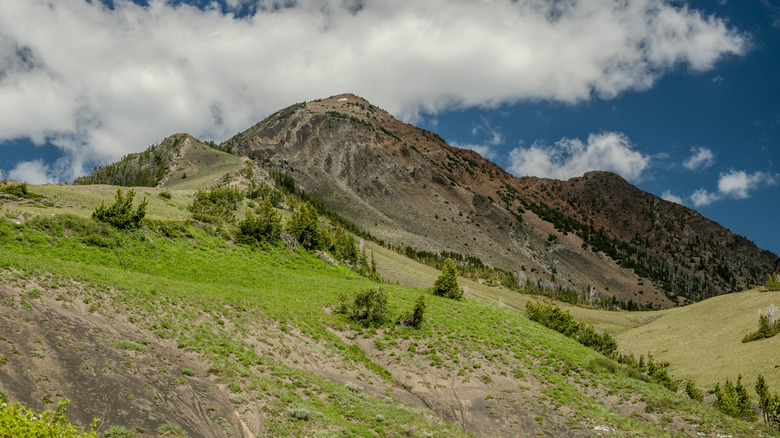
According to AllTrails, Electric Peak via the Bunsen Trailhead is Yellowstone's most strenuous hike. The nearly 20-mile trek ascends to the daunting summit of the 10,969-foot high Electric Peak, with portions requiring more technical (and dangerous) traversing of loose rocks and boulders. Electric Peak's name stems from its fearsome thunderstorms, which made quite an impression on the 1872 expedition that named it. Add the omnipresent threat of grizzly bears, and you get maybe the park's most dangerous trail. Fortunately, Electric Peak's views match its hazards, with marvelous 360-degree shots of 100 miles of Yellowstone scenery from the top.