
Goodbye Lake Tahoe, So Long Big Bear: This High-Elevation Lake Is An Alpine Gem With Clear Waters And Fishing
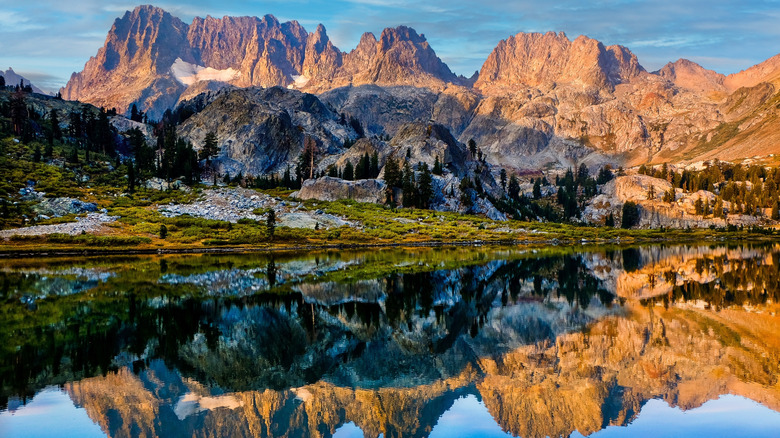
Heading into the high elevations of the Eastern Sierra, you often feel as if you've been dropped into a vast, jaggedly chiseled sculpture that's an eternal work in progress for Mother Nature. Eons of glacial movement, wind, and snow runoff have carved some of the most dramatic landscapes found not just in the U.S., but across the entire globe. With wandering eyes resting on jaw-dropping vistas at every angle, it's positively magical.
Ediza Lake is among the more awe-inspiring areas found here, tucked into the Ritter Range 9,272 feet above sea level. That's thousands of feet higher than California's widely visited Big Bear Lake, which rests at just 6,759 feet, and America's largest alpine lake, Tahoe, at around 6,223 feet. Nearly 10,000 feet high and reachable only by a challenging hike, Ediza Lake is breathtaking in more ways than one. Its remoteness contributes to the pristine waters in varying shades of turquoise so clear you can see fish swimming.
Speaking of fish, anglers will appreciate the multiple species found here. Hikers and nature lovers are often captivated by views of the colossal, 13,149-foot Mt. Ritter, first ascended by John Muir in 1872. Neighboring the tallest mountain in the Ritter Range are the craggy peaks of the Minarets and Banner Peak, often reflected in the lake. However, the kind of beauty found here requires some exertion to experience.
Fish on from high altitudes
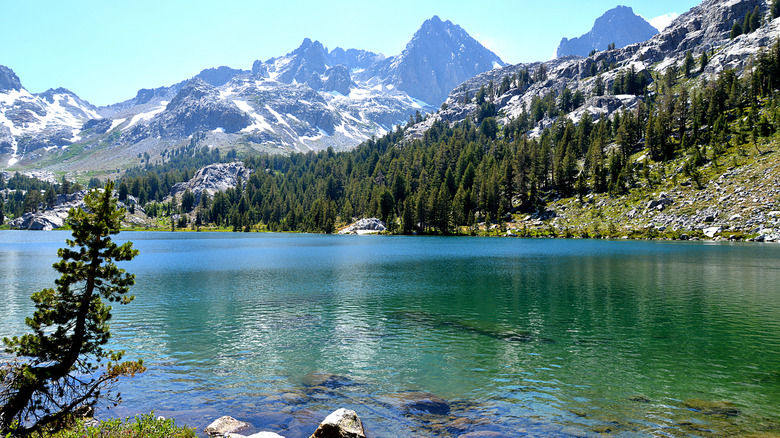
This region so inspired iconic photographer Ansel Adams that the backcountry area Ediza Lake is found in bears his name. It's California's underrated wilderness with dramatic mountain views and myriad alpine lakes such as Ediza. From the Shadow Creek Trailhead in Agnew Meadows just outside of Mammoth Lakes, it's just over 13 miles roundtrip to hike to Ediza Lake with an elevation gain of around 1,225 feet. Along the way, you'll pass cascading waterfalls, cross streams, and trek around Shadow Lake along a portion of the John Muir Trail.
Once Ediza is within sight, you can set up camp on the western or northern shores and revel in the surreal scenery for days. A permit is required to camp. After settling in, catching dinner is part of the fun. Dropping a line into Ediza's snowmelt-fed waters may result in a kokanee salmon, mountain whitefish, or a variety of trout, including rainbow, brook, brown, and golden. Most luck is found in the morning and evening hours. Fishing is permitted year-round, although at such a high elevation, the road to the trailhead is closed in winter.
Getting to Ediza Lake, a remote alpine oasis
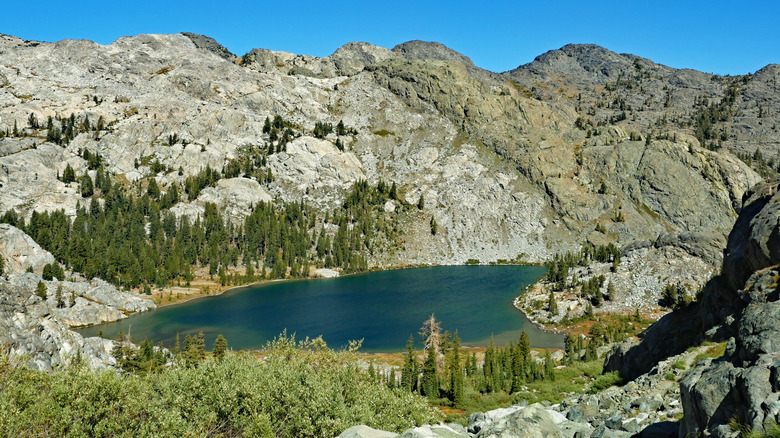
Ediza Lake's glacially carved landscape and snowmelt-fed waters are mirror- or window-like, depending on the time of day. Sometimes tufts of clouds and the surrounding peaks are reflected in its 26 acres of surface area. Other times you can see to the bottom. The Eastern Sierra's lakes, scattered among lofty elevations, are harsh environments for many species to survive in, which lends to their clarity, as does the prevalent granite that acts as a water filter.
One Google Maps reviewer said, "Incredibly beautiful backcountry lake with a very easy approach. The complete 360 view of the minarets is truly spectacular." To get there, take a stretch of "California's most scenic drive" through the Sierra Nevadas, the Eastern Sierra Scenic Byway. Driving from the Reno-Tahoe International Airport (RNO), it's just over three hours to reach the Mammoth Mountain Main Lodge, where you take a shuttle to the trailhead.
Before heading out to Ediza Lake, you may want to take in the underrated monument that's basically a mini Yosemite, Devils Postpile. The trail begins nearby, and the staggeringly symmetrical basalt columns are something incredible to behold. For more eye candy, take the 2.5-mile trail to picturesque Rainbow Falls and warm up your legs before the journey to Ediza Lake.