
Forget Yosemite National Park, Visit California's Underrated Wilderness With Dramatic Mountain Views And Trails
Yosemite National Park is among the most visited national parks in the United States, drawing in excess of 4 million people annually. Visitors are drawn to Yosemite for its iconic geological features, miles of trails, and stunning natural scenery. Although the majority of its land is designated as wilderness, Yosemite is not only highly visited, it's also fairly well developed, with a vast array of amenities, developed campgrounds, multiple lodges, and hundreds of miles of paved roads and pathways. An entire town is even located within the park. So, it may not be the best choice if you are looking to immerse yourself in an undisturbed natural setting. If you are looking for dramatic mountain views, rugged terrain, undeveloped trails, and the ability to enjoy it in solitude, forget Yosemite and visit the Ansel Adams Wilderness instead.
Named after the famed landscape photographer who inspired many people to visit Yosemite, the Ansel Adams Wilderness is 232,000 acres connected to Yosemite. It spreads across two national forests and a national monument. The majority of the AAW is located within Sierra National Forest, while about a third is in Inyo National Forest, one of the best places to see fall foliage in California. A small section is part of the Devil's Postpile National Monument.
Even though it is located right next door to California's most visited national park, it is somewhat easy to overlook the Ansel Adams Wilderness, because it is adjacent to the more famous Yosemite. AAW is underrated due to its lack of amenities, and that you have to hike in. Those who do make the effort to enter the AAW, however, are rewarded with dramatic views and a true wilderness experience.
Dramatic mountain views define the Ansel Adams Wilderness
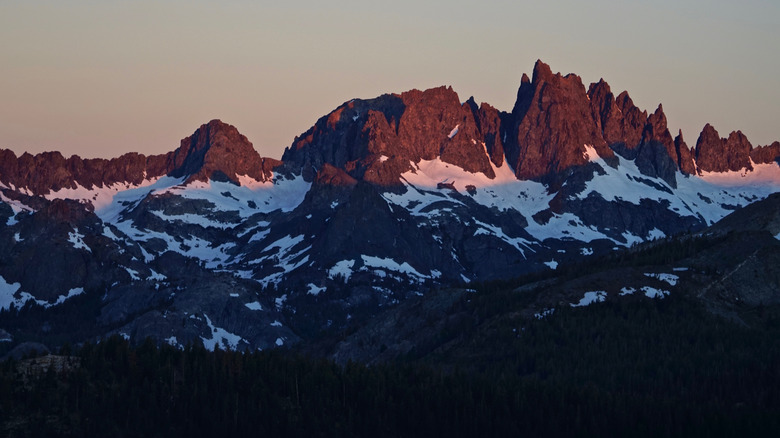
Ansel Adams spent much of his career capturing images of mountains. Many of those were within Yosemite, including his famous photos of Half Dome, one of the world's most iconic natural wonders. Although the mountains within his namesake wilderness aren't quite as well-known as those Adams photographed in Yosemite, they are every bit as tall – or taller – and just as rugged. In fact, the AAW is largely defined by numerous impressive peaks. Mt. Ritter, which rises to 13,157 feet, is the tallest. Arguably, the most rugged and dramatic is a set of towering spires along the Ritter Range known as the Minarets. This formation is so significant that the area was initially named the Minarets Wilderness.
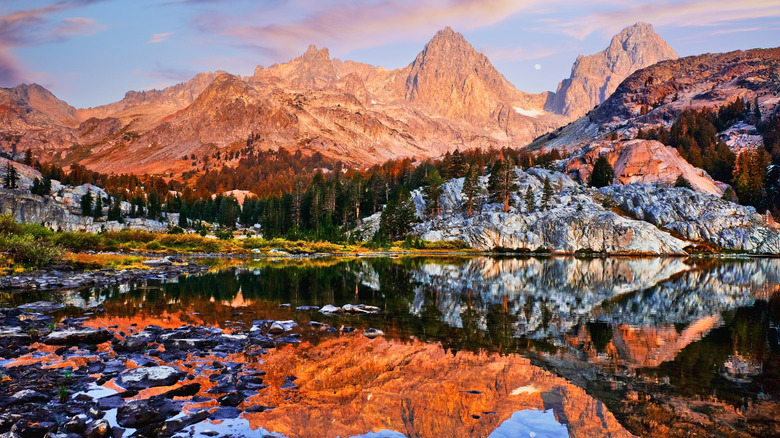
As stunning as the mountains are to view on their own, the surrounding landscape takes the scenery to the next level. The wilderness straddles the centerline of the Sierra Nevada Mountains, with a portion falling on both the east and west sides of the range. This location, coupled with a nearly 10,000-foot change in elevation, provides the AAW with an incredible array of natural features and a diverse ecosystem. Alpine lakes serve as reflecting pools for the surrounding mountains, while meadows provide intermittent flat land areas. There are also several glaciers along the Ritter Range.
There are also a number of creeks and streams within the Ansel Adams Wilderness, including the San Joaquin River headwaters. The Middle Fork of the San Joaquin River spills out of the wilderness in dramatic fashion, tumbling over a 100-foot cliff to form Rainbow Falls at Devil's Postpile Monument. The Postpile, the outer edge of the AAW, is a dramatic geological formation in its own right, making this underrated monument basically a mini-Yosemite.
Trails are abundant in Ansel Adams Wilderness
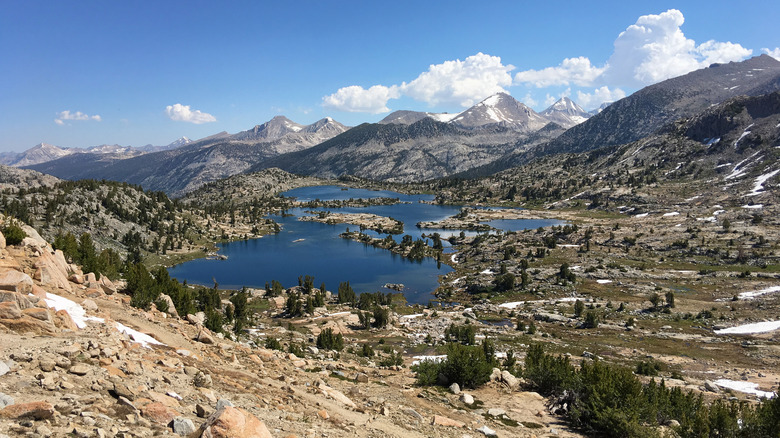
More than 350 miles of trails run throughout the Ansel Adams Wilderness. Most notably, portions of both the John Muir and Pacific Crest trails cut across the wilderness. Those two trails, along with a handful of others, provide options for both day and overnight hikers. These trails are not just a means for touring the wilderness and taking in the scenery; they are also the way to enter the AAW, as there are no roads. In fact, the tract of contiguous wilderness areas, including the AAW and John Muir Wilderness, is among the largest areas of roadless land in the Lower 48.
With that in mind, what search crews know about hiking in Yosemite also applies to the AAW, which is to do your research and be prepared before hitting these remote wilderness trails. To that end, the best time to visit is summer through early autumn, as the area is typically snowbound in winter. There is also an enforced, year-long trailhead quota, so be sure to check availability, get the required permits, and make reservations on Recreation.gov.
Picking a trail typically depends on what you want to see and the direction you are entering. There are a number of trailheads on either side of the AAW. Among the most utilized is the Agnew Meadows Trailhead. Located 9 miles from the town of Mammoth Lakes on the east side of the wilderness, this trailhead offers access to the Pacific Crest, River, Shadow Lake, and High trails. On the other side, one popular entry point is the John Muir Trail, which starts in Yosemite. While Mammoth Lakes is the closest town to the wilderness, the nearest major airport is a little over 2 hours away in Fresno.