
5 Vespa Rules American Tourists Break In Italy Within The First 10 Minutes
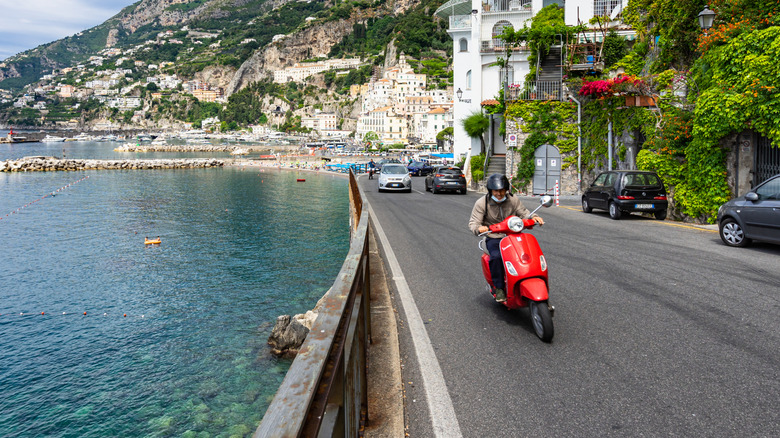
There are few better ways to feel like you're starring in a romantic Italian movie than buzzing down a narrow coastal road on a Vespa, jetting past cypress trees and pastel houses with church bells somewhere in the distance. The little scooter is a cherished companion for getting around Italy's tight alleyways, while doubling as a stylish set of wheels to cruise from the city into the countryside and back. Something the movies tend to leave out of the Vespa fantasy, though, is traffic laws.
Yes, before you start channeling Audrey Hepburn in "Roman Holiday," there are a few legal caveats to consider. It's all too likely for American tourists to run afoul of Italian traffic laws without even realizing they're breaking them. Did you know, for example, that some of Italy's historic city centers are restricted to traffic (and riding a Vespa into one can land you a surprisingly big fine)? Other rules might mean you're parking on the wrong street or riding with a license that doesn't actually cover the scooter you've rented. Like eating in Italy — which has its own suite of etiquette rules — it's a good idea to read up on Vespa riding regulations (regulations that apply to any motorized scooter, for that matter) before you rev off into the Tuscan sunset.
Have an International Driving Permit
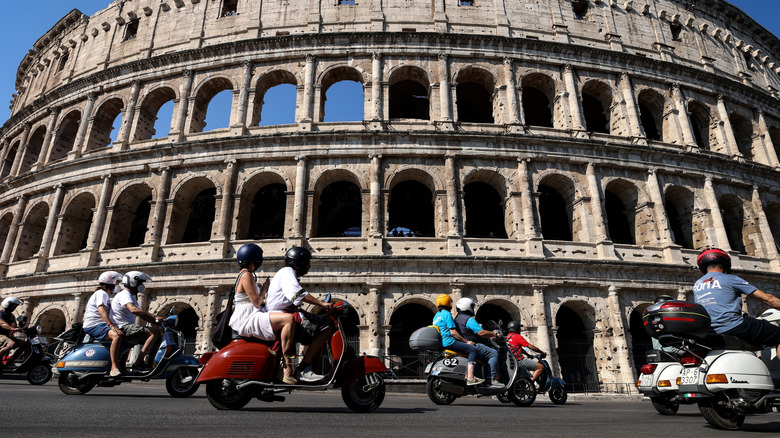
For American travelers who have a U.S. driver's license, the International Driving Permit (IDP) is a piece of vacation paperwork that's easy to overlook, especially if a rental company doesn't ask for it. But Automobile Club d'Italia (ACI) says drivers with licenses outside the EU or EEA must carry their valid national license along with either an IDP or an official Italian translation. Rick Steves instructs Americans to have an IDP for renting a car in Europe, but the rule applies to scooters and Vespas, too. On the Rick Steves Travel Forum, a traveler warned that they were stopped by the police and received a fine for €280 for not having an international license.
That forum post was in 2018 — as of this writing, Italy's Highway Code states that driving without the required IDP or official Italian translation carries a fine that ranges from €408 to €1,634. The simplest way an American traveler can avoid the fine is to obtain an IDP before leaving the U.S. You can get one through the American Automobile Association (AAA) or the American Automobile Touring Alliance (AATA), both of which have online applications. Remember that once you have your IDP, you still also need to carry your valid U.S. driver's license with it.
Don't drive into a Zona a Traffico Limitato
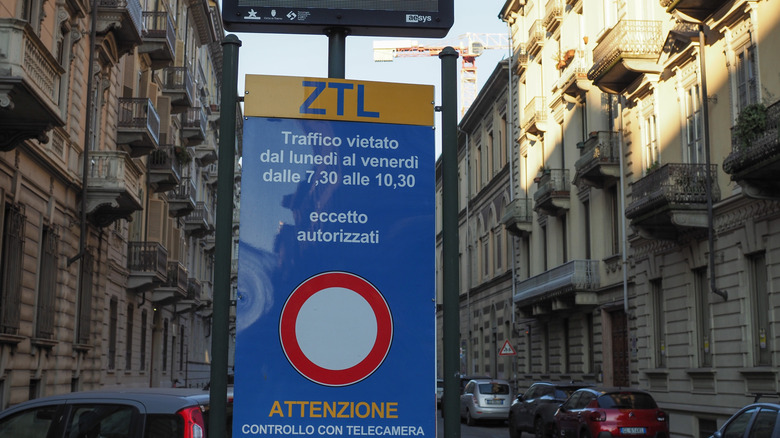
ZTL is an important acronym you'll want to know while traveling around Italy. It stands for "Zona a Traffico Limitato" ("Limited Traffic Zone"), and a crucial driving rule in Italy is to avoid driving into one. Often, ZTLs are in historic centers of Italian cities, where access is limited to authorized vehicles during certain hours to keep the area's buildings and atmosphere intact. They're typically outfitted with automatic cameras at entry points, rather than being closed off with physical barriers, so it's easy to drive into one illegally without knowing if you're not familiar with the signage. Cameras scan the license plates that pass and check if they're authorized; if you enter when the restriction is active without authorization, you might get a fine of €83 to €332, according to the ACI as of this writing.
You shouldn't assume that a scooter is exempt from the rule against vehicles in a ZTL. That said, there isn't a blanket national rule against scooters in ZTLs, so it can vary from city to city or even between zones within a city. In Rome, for example, mopeds are allowed in all ZTLs except for one, per Roma Servizi per la Mobilità: Tridente, the historic area around Piazza del Popolo. One zone you were able to ride into at one time might not have the same access rules when you visit again. In Milan's Quadrilatero della Moda, for example, a ban on mopeds is set to kick in in 2028. Anytime you're riding in a city, look for signs that say "Zona Traffico Limitato" or simply "ZTL" and read the smaller panels underneath it, which may show a motorcycle symbol to indicate that Vespas and other motor scooters are exempt.
Wear a properly fastened helmet
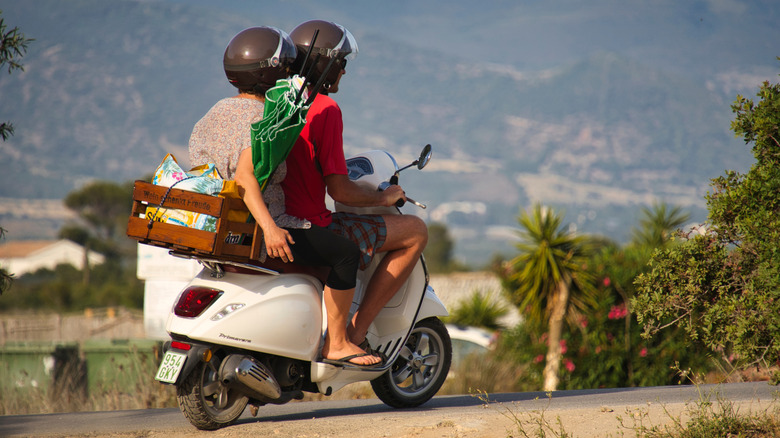
When you're driving a motor scooter around Italy, having a helmet strapped to the back of the scooter simply isn't going to cut it. Italy's Highway Code requires both the driver and any passenger to wear an approved protective helmet and keep it properly fastened while you're moving. Violating the helmet requirement carries a €83 to €332 fine, as of this writing, and the scooter can be confiscated for up to 60 days.
The straightforward way to avoid the fine is to put on your helmet before you start moving, fasten its chin strap securely, and keep it fastened for the entire ride. Vespa and other scooter rentals in Italy typically come with a valid rental helmet. If you're bringing your own helmet from the U.S., make sure it's EU type-approved — according to the United States Army Garrison Italy, approved helmets have an "E" mark, and no half-shell helmets are allowed.
Make sure your license covers the motor size
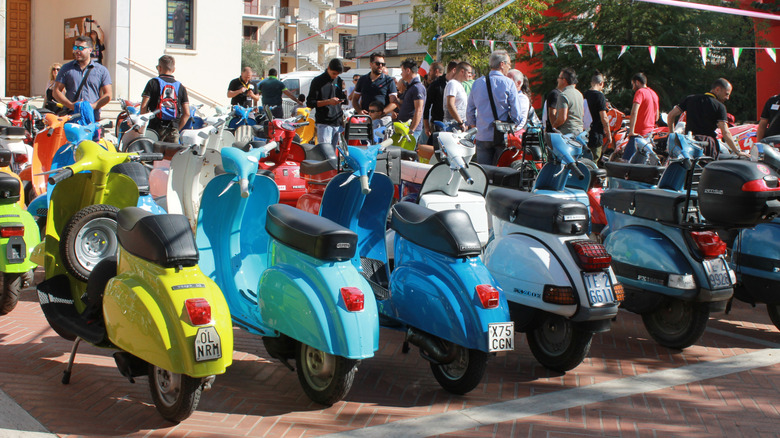
Having a valid license doesn't mean you can ride just any Vespa around Italy. Italy classifies two-wheeled vehicles into a few different license categories, depending on their motor capacity and speed. Vespa models come in the full gamut of motor sizes. A GTS 125, for example, will have a 125cc motor while a GTS 300 has a 278cc motor, about the capacity of a small cruiser. Across the U.S., a motorcycle license is required for 150cc engines and up, according to Vespa Store USA.
Riding a vehicle for which you don't have the corresponding license category can bring a fine in the thousands of euros, according to the ACI. To avoid accidentally getting hit with a hefty fine, find out the scooter's motor power and speed before booking it. If you're not licensed to drive a motorcycle in the U.S., stick to renting a Vespa that has a smaller engine. If you do have a motorcycle endorsement, this will also get translated with your IDP, allowing you to ride larger motor scooters.
Don't treat sidewalks and pedestrian areas as shortcuts
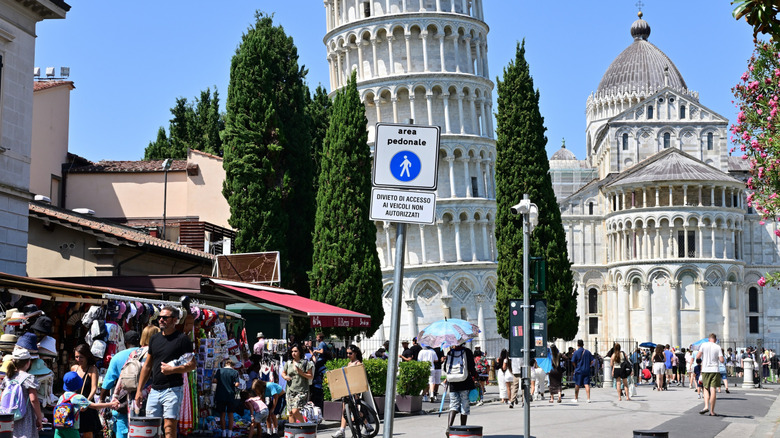
In Italy, a Vespa may be nimble enough to squeeze through an alley (indeed, that's one of the Vespa's perks), but that doesn't mean it can squeeze onto the sidewalk when traffic gets annoying. Italian road rules require that you stay on the designated roadway and don't drive into pedestrian areas, which the ACI defines as anywhere closed to vehicle traffic. So, just because a broad pedestrian plaza or shopping street looks like a convenient shortcut doesn't mean you can ride through. In fact, you can get fined up to several hundred euros. City police officers, sometimes called "vigili urbani," do keep tabs on the use of scooters in pedestrian areas. During one crackdown in Bari in 2026, for example, 15 road-code violations were issued for riders going into pedestrian areas and ZTLs, per the Polizia di Stato.
If you see a sign with "area pedonale," that means you're going into a pedestrian zone and shouldn't ride past it. If you're trying to reach a shop, hotel, or restaurant on a pedestrian street, you'll have to park in a designated motor vehicle space outside the zone and walk the rest of the way. It's also worth keeping in mind that you can't park your Vespa on the sidewalk or in a cycle path — doing so can land you another fine.