
5 Disadvantages Of Getting Global Entry
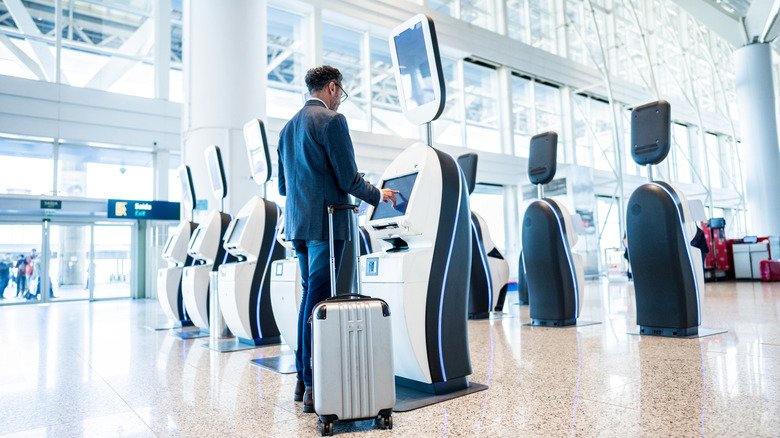
If you've flown internationally, perhaps you know the feeling: You land at your destination after an eternity of travel and all you want is to arrive at your accommodation, refreshed and ready to rest or explore. But instead, just ahead, is an interminable line — and another 45 minutes of waiting. In 2008, U.S. Customs and Border Protection (CBP) started offering a solution to this problem in the form of Global Entry. One of CBP's Trusted Traveler Programs, it allows pre-approved, low-risk travelers from the U.S. — and citizens of select countries — to breeze through customs.
Nearly 13 million people are enrolled in Global Entry as of 2025. CBP offers it at around 80 airports, including international ones in Canada, Ireland, and the Bahamas. With updated facial recognition technology and a separate line, it cuts down the waiting time at U.S. customs significantly. You don't have to fill out the usual paperwork or necessarily even have someone look at your passport to confirm your identity (although, as with any passenger, there's always the possibility of being selected for additional examination).
For those who often travel internationally, Global Entry has been a gift from the gods that alleviates some of the most annoying processes of travel. Because it includes TSA PreCheck, Global Entry status means that you can use a shorter queue when you go through security for domestic flights and you don't have to take off your shoes or take out liquids and laptops. Sounds too good to be true, right? Well, for certain people, it is, as there are many disadvantages to getting approved for this program. Some question whether Global Entry is a worthwhile buy, as it requires going through a long, in-person vetting process, and there are ethical concerns around privacy and surveillance, among other issues.
The high cost
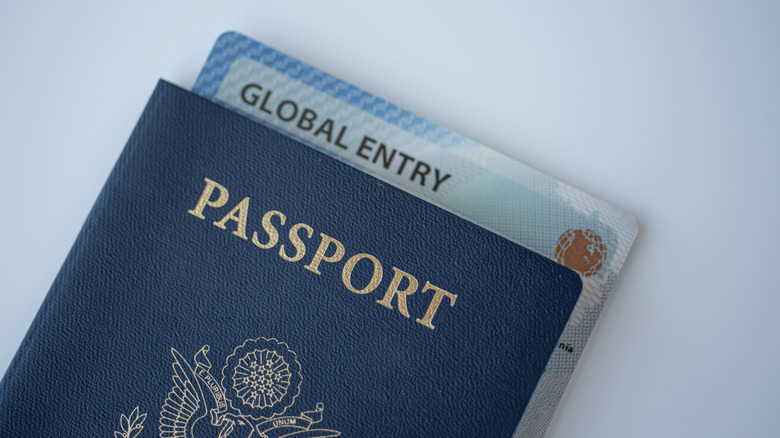
For some, a huge drawback of Global Entry is the cost. As of this writing, it's $120 for five years. That five-year clock begins on your birthday after receiving your card. However, if you apply to renew it before it expires but don't get it approved before then, you can keep using it for 24 months after expiry while awaiting renewal.
While Global Entry does include TSA PreCheck, those who are already enrolled can't simply switch to Global Entry. You'll have to do the whole application and pay the fee in full. Because the fee is non-refundable, even if your application gets denied, paying $120 can feel like a gamble for some travelers — and certain circumstances can even lead to a later revocation. Furthermore, if there are other adults in your household that you often travel with, they would each have to get their own memberships to use Global Entry lines. For a large family, the price of multiple applications can be exorbitant.
Luckily, there are ways to mitigate this cost. First, consider if Global Entry is the best option for you. If you mostly travel domestically, TSA PreCheck may be more worth it, as it's a cheaper option (starting at $76.75 for five years). As well, several credit card companies reimburse the Global Entry fee if you use their card to pay for it. Plus, the program is free for children under 18 (who can enroll with permission from a legal guardian). If you decide to go ahead with a Global Entry application, make sure you don't miss your in-person interview because there's a possibility that you might need to restart the entire process and pay the application fee again — or at least wait a long time for the next available appointment.
It's a complicated process to get Global Entry
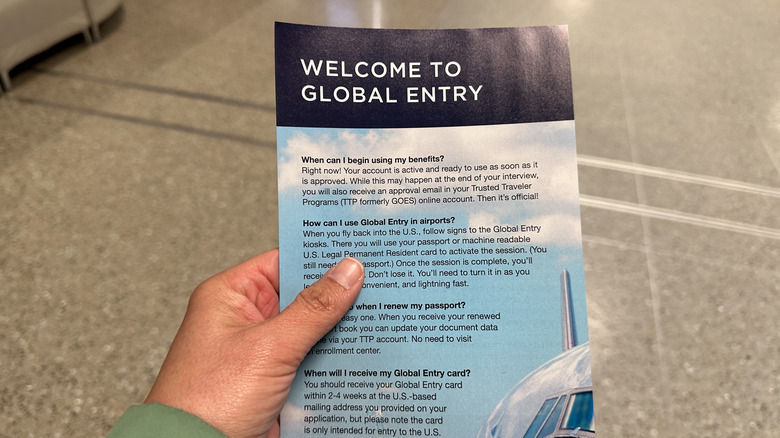
Applying for Global Entry involves several tedious bureaucratic steps, which is why some may be put off from trying to get it. Once you pay the fee, submit your application, and get conditional approval, you then have to schedule an in-person interview at an enrollment center, typically in an airport or government building.
For the interview, you'll have to go to the center of your choice with a valid passport and permanent resident card (if applicable), along with a second form of ID like a driver's license. You'll also need a proof-of-residency document, like a utility bill, showing your current address. Unfortunately, this interview isn't necessarily something you'll only do once. If you renew your Global Entry, you could be asked to do another interview, and parents or legal guardians of minors will have to accompany them to their interviews, which are scheduled individually.
During the interview, which usually takes less than 15 minutes, you'll be asked about your travel history and criminal record. If you have multiple passports or a complicated travel history, be prepared to explain it. Don't lie or fudge details, since that can disqualify you. Additional factors that will likely deem you ineligible for Global Entry include customs violations, pending criminal charges, and active investigations, among others. If any of these apply to you, it's still best to be honest because these reasons aren't guarantees that your application won't be approved. However, for some, it may feel too risky to go through this whole process only to be denied because of potential issues with their background check.
The processing time is long
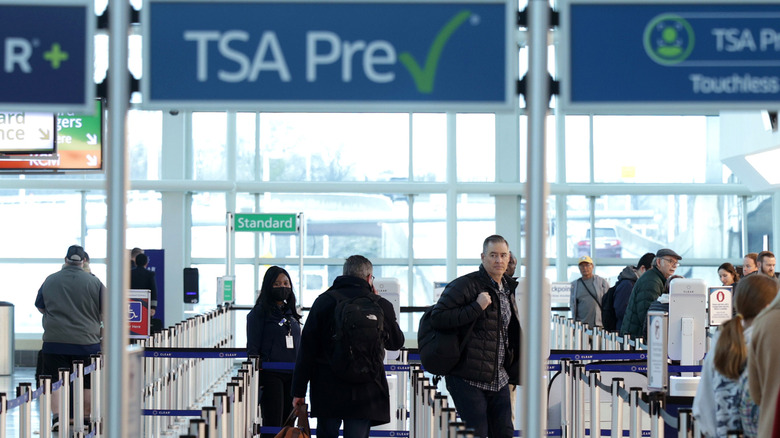
Another major disadvantage of Global Entry is how long it takes to get it. After your application has been submitted, you need to wait for conditional approval. This can be quick (two weeks) in some cases but could also take "up to 12 months or longer," according to CBP, particularly if your application needs manual reviewing. Then you have to schedule your interview, which is notoriously hard to get, varying based on the season, your location, and external factors like government shutdowns. Most people have to set it for months down the line, with some waiting as long as a year to get theirs. In fact, that wait time is one of the big differences between Global Entry and TSA PreCheck. Anything in your application that could make you ineligible will add to the processing time. Plus, if you decide that Global Entry is worth it for your family, you'll all have to do separate interviews and they won't necessarily be close together.
There are a few ways to try and speed things up. If you already have TSA PreCheck, you can apply using the expedited Global Entry process (just be sure to do it before it expires). You'll need to find and enter your Known Traveler Number on the application. In general, major hubs often have the longest waits for interviews, so try to schedule your appointment immediately upon receiving approval, ideally at a smaller center. If you're still having trouble finding a nearby date for your interview, keep checking back, as slots may open up last-minute. Alternatively, you can opt into Enrollment on Arrival, which allows you to do your interview without making an appointment if your application has been conditionally approved. It's available at certain domestic and international airports, like Aruba, Bermuda, and the United Arab Emirates. To take advantage of this option, ensure that you bring all the required documentation with you on your trip.
There are concerns about privacy
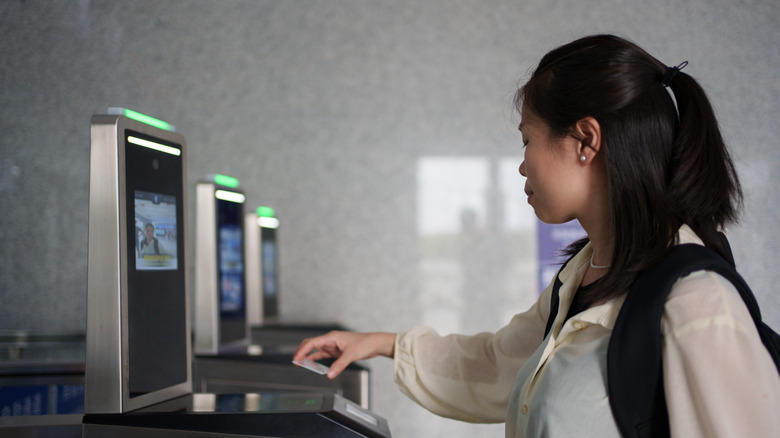
Beginning in 2018, Global Entry's automated kiosks started switching to facial recognition as part of the U.S.' move towards identity verification through biometrics, which generates data from physical characteristics like a fingerprint or face structure. The stated purpose of this, per CBP, is to enhance security and create a smoother travel experience.
The Traveler Verification Service (TVS), the cloud-based facial recognition tool CBP uses at Global Entry kiosks, matches the photo taken on the spot against pictures the government already has on file, such as the one in your passport, to confirm your identity. What happens to that photo afterward depends on your citizenship. CBP claims that it deletes kiosk photos of U.S. citizens within 12 hours, but most non-citizens' images go into a central biometric database run by the U.S. Department of Homeland Security (DHS) that can hold them for up to 75 years. According to a DHS privacy assessment, Global Entry members' enrollment photos are also kept in that database, and authorized users, including other DHS agencies, have access to it. Privacy advocates like the American Civil Liberties Union state that the lengthy retention time and broad access raise concerns about how that information could be used.
Additionally, facial recognition software has been trained using predominantly light-skinned faces, so it disproportionately affects certain groups and is more likely to inaccurately read people of color. It's understandable, then, that some may be anxious to sign up for a program that relies on this technology, which is now present in all international airports in the U.S. If these issues are concerning for you, check CBP's list of airports using biometrics before you fly. You can always opt out of using the Global Entry kiosk with facial recognition and ask a CBP officer to check your passport instead. However, only U.S. citizens — not foreign visitors — have this option available to them.
Your Global Entry membership could be revoked
Global Entry approval has always been discretionary, and membership isn't guaranteed to last. All Trusted Traveler Programs have vetting processes that vary depending on the individual applicant. Even with a criminal record, you may still be approved if you're considered a "low-risk traveler." However, CBP vets members on an ongoing basis, so after approval, you're still always at risk of having it revoked if you commit a crime or customs violation. Although losing this status was once a rare occurrence, tens of thousands have been booted out of the program since 2024, often without explanation, according to Bloomberg.
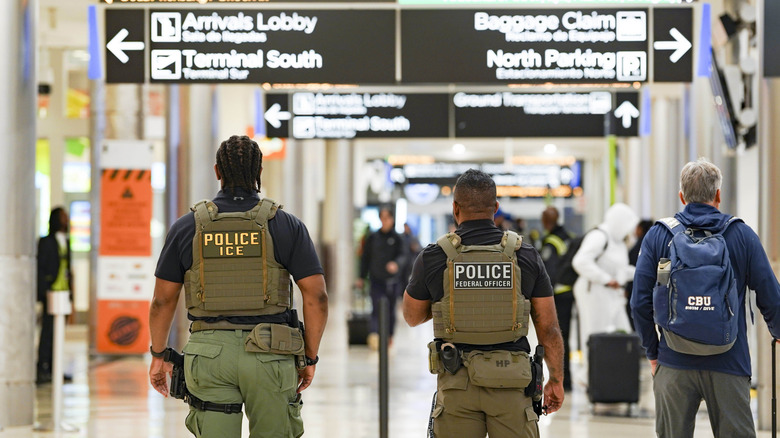
A number of people have alleged that their Global Entry memberships were revoked shortly after they were witnessed lawfully filming or observing operations carried out by the U.S. Immigration and Customs Enforcement (ICE) during the Trump administration's deportation campaign. CBP even assisted ICE during some of these operations and sent out a memo asking its field offices for "recommendations to revoke Trusted Traveler membership for U.S. citizens" (reported by HuffPost). Those who lost their memberships claim that they were not given a reason and had no prior records or legal troubles other than encounters with ICE agents. And according to a federal lawsuit, ICE (under DHS) used facial recognition software to identify some of them without making any arrests. (A CBP spokesperson responded to HuffPost, claiming that memberships "are not revoked because someone exercises their First Amendment rights.")
If your Global Entry status gets revoked for any reason, you can submit a request to the CBP ombudsman to have the decision overturned. The Government Accountability Office found that, between 2020 and 2023, 39% of reconsideration requests were approved. However, the likelihood of getting the decision reversed depends on your ability to show that it was an error to begin with, a difficult task if you weren't provided with an explanation. But still, it's worth trying so that the time you spent and fees you paid to get it aren't wasted.