
The Netherlands' Largest Artificial Lake Is An Outdoor Paradise With Charming Towns, Boating, And Coastal Vibes
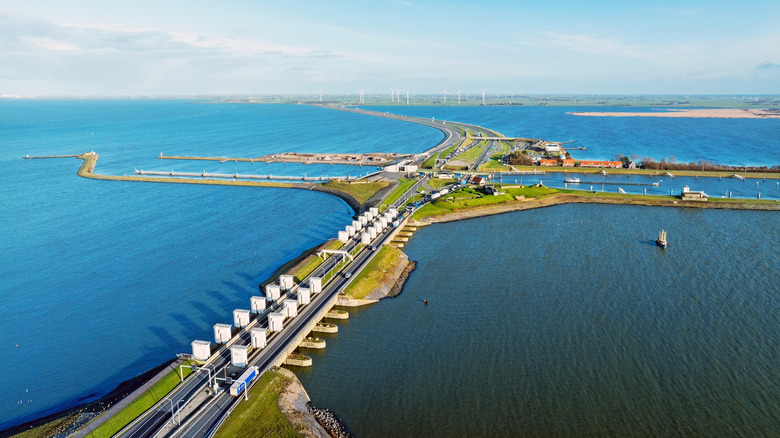
It's not unusual to come across a massive lake and immediately compare it to the vastness of the open sea. However, in the Netherlands, there's one lake where that comparison hits close to home. The IJsselmeer (pronounced eye-sell-meer) is the Netherlands' largest artificial lake, but just a hundred years ago, it was known as the Zuiderzee, an inlet of the North Sea.
The Zuiderzee was believed to have been formed and expanded by several North Sea storms between A.D. 200 and the 1200s. These storms pushed the sea inwards, and, with much of the Netherlands being below sea level, the country's very topography changed. The towns surrounding the Zuiderzee adapted to become fishing and trade ports, but they were regularly threatened by fierce storms, and plans to dam up the inlet emerged as early as the 1600s. However, it wasn't until technology caught up in the early 1900s that work began on a dike. Construction began after the devastating Zuiderzee Flood of 1916, and the new dike — called the Afsluitdijk — was finally completed in 1932. Over the years, the saltwater of the Zuiderzee was drained out, making room for new towns and communities, and allowing the IJssel River to fill the area with freshwater. The resulting lake was named the IJsselmeer and initially covered around 1,328 square miles. However, following several land reclamation projects and another dike in 1976 that split the lake into two (the IJsselmeer and Markermeer), the lake now covers around 460 square miles. It is still the largest lake in the Netherlands.
Today, the IJsselmeer is a watersports haven surrounded by a myriad of charming towns. Many of the old fishing towns on the Zuiderzee have now adapted to a new economy of trade and tourism, while retaining their fishing town charm.
Sailing, surfing, and coastal vibes on the IJsselmeer
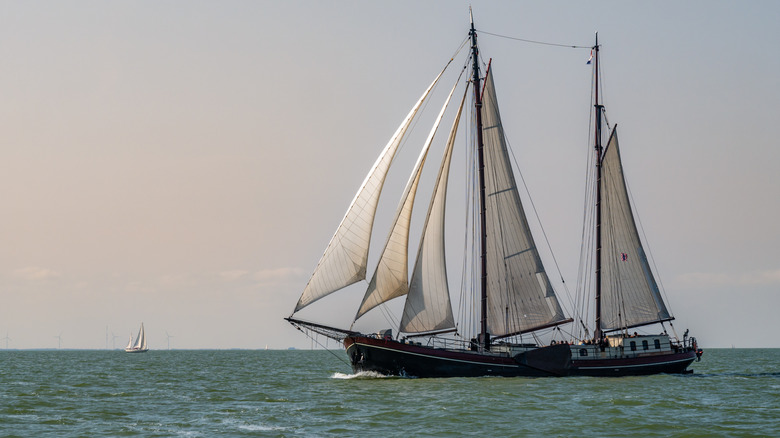
With around 290 miles of shoreline, the IJsselmeer feels less like a lake and more like the sea it once used to be, especially on windy days. However, it's no longer as tempestuous as the Zuiderzee, making it a prime spot for watersports and coastal adventures. When the wind is right, towns like Stavoren, Makkum, and Hindeloopen on the lake's eastern coast begin to resemble the best surf spots on North America's Great Lakes, with scores of people heading to the lake with their boards in tow. Makkum, especially, with its relatively shallow waters and steady winds, offers some of the best windsurfing conditions in the country for beginners.
Because the IJsselmeer is more sheltered and shallow compared to the sea, you won't find a lot of traditional surfing done here. The Afsluitdijk prevents long, rolling waves from forming and instead creates short, steep waves ideal for the "bump-and-jump" conditions for windsurfing and kitesurfing.
Because of the steady winds along the IJsselmeer, old-fashioned wind-powered sailing is particularly popular. Sailing enthusiasts typically plan days-long expeditions from town to town, although some choose to cut that time down a bit with motorboats. Using a sailboat to get around the lake is a great way to immerse yourself in the old Zuiderzee days, when sailors would tussle with the stormy sea as they made their way from one port town to another. While the IJsselmeer is nowhere near as dangerous as the Zuiderzee was, it still features strong winds and swells that can catch sailors off guard. So only people with a valid Dutch boating license can sail on the IJsselmeer, although others can opt for a guided cruise instead.
Explore IJsselmeer's charming towns
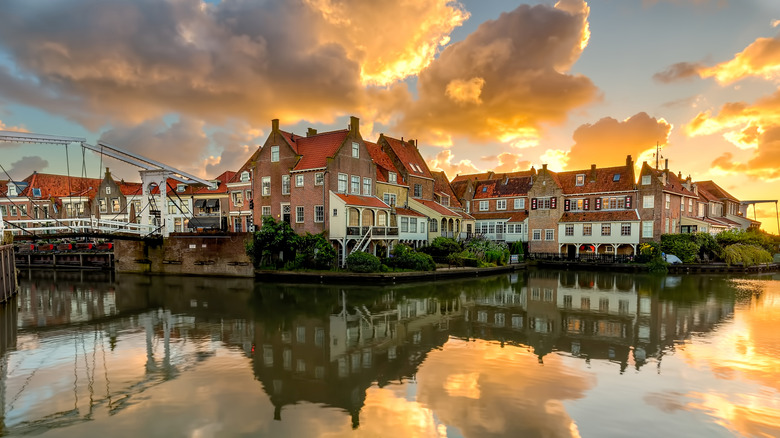
As you move through towns along the IJsselmeer, you'll notice the quintessential charm that characterizes many of the Netherlands' old port towns. Closer to the Afsluitdijk, you can explore the old-world essence of towns like Hindeloopen and Stavoren in their winding streets and centuries-old culture. Hindeloopen is famous for its distinctive paintwork, featuring swirly florals and birds on wooden furniture and other household objects. Visitors can also admire the town's traditional garments, which harken back to 17th- and 18th-century Dutch trade. Stavoren, on the other hand, is the epitome of a Dutch harbor city, surrounded on three sides by the IJsselmeer and featuring a mix of winding streets and canals, fish- and sailing-themed sculptures, and cheerfully colored buildings on the harbor.
Further inland, the town of Lelystad straddles the Houtribdijk — the dam that separates the IJsselmeer from the Markermeer. Named after Cornelis Lely, the hydraulic engineer who created the plans for the Afsluitdijk, the city balances historical attractions, like a reconstructed 17th-century merchant ship, with modern attractions like the Batavia Stad Fashion Outlet, the Netherlands' first outlet mall. Many sailing expeditions use Lelystad or the historic town of Enkhuizen on the other side of the dam as crossover points from the IJsselmeer to the Markermeer.
On the Markermeer side, not only can you visit Amsterdam, but also the smaller towns nearby that don't quite get their time in the spotlight. Markermeer takes its name from Marken, a coastal, fairytale village with old-school architecture, which is a favorite on IJsselmeer and Markermeer sailing trips. Some of the Netherlands' most historic towns, like Hoorn and Enkhuizen, are also accessible by boat and are part of what Rick Steves considers the best day trips from Amsterdam.