
Between Middlesbrough And Hull Is A Vibrant Town With Shops, A Medieval Castle, And A Nearby National Park
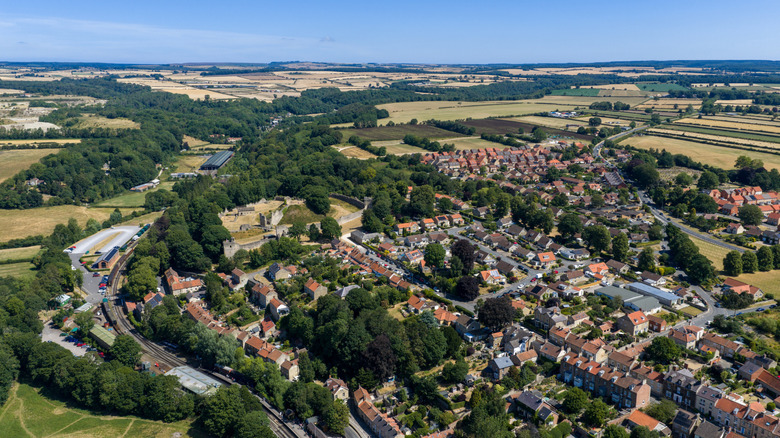
As England's largest county, Yorkshire has plenty to offer. Across its sub-regions, you can find hundreds of quintessentially English villages, spectacular nature across its three national parks, and more than 100 miles of beautiful coastline. Travelers who want to experience an authentic Northern town whilst remaining close to the great outdoors should consider the market town of Pickering. Aside from its strategic location, right on the southern border of North York Moors National Park, Pickering is also filled with history. Indeed, it is amongst the oldest settlements in the region, dating back to the Iron Age, plus it offers shopping opportunities and more.
While it is often defined by its convenient access to the Moors, Pickering is a fascinating and vibrant small town in its own right. You can spend the morning strolling the town's Victorian high street, taking in the marvels of the Art Deco-style train station serving the heritage railway, or grabbing an iced bun from Botham's Tea Room before donning your trekking gear to hike one of Yorkshire's most atmospheric landscapes.
Pickering is easy to reach from Yorkshire's major hubs, whether you're heading from coastal Hull, brimming with maritime charm, or Middlesbrough, a town with a long and fascinating railway history. Located almost exactly halfway between the two, Pickering is a bit over an hour away by car (about 40 miles) from either hub. It also makes for a relaxed day trip from York or Scarborough, two of the most popular tourist destinations in Yorkshire.
Pickering's medieval castle and small town shopping
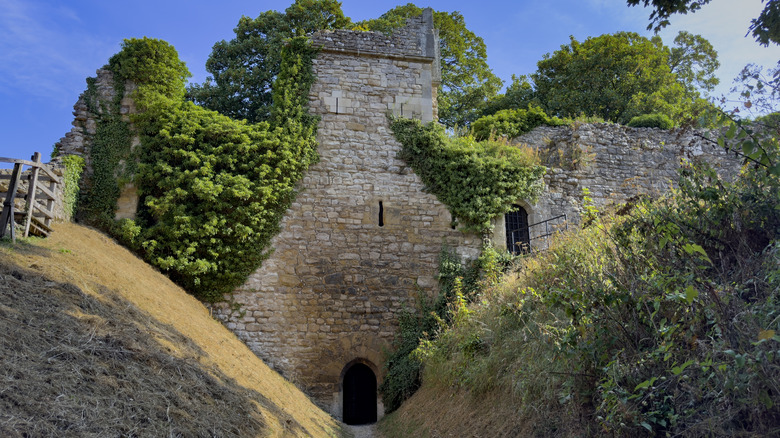
Though mostly in ruins today, Pickering Castle is an example of the many fortified structures that were pervasive in the North East of England during Norman times. If you travel further north, from Yorkshire to Northumberland, England's Northernmost county still boasts scenic landscapes and castles galore. Pickering Castle follows a classic Norman "motte and bailey" construction, meaning it features a man-made earth mound with a tower on top (the motte) and an enclosed, circular courtyard (the bailey). The castle was originally built of wood and earth, before being fortified with stone walls by King Edward II in the 1300s. The castle also played a role in the Wars of the Roses, the decades-long war of succession fought by the Houses of Lancaster and York. At the time, Pickering Castle was in the hands of a Lancaster royal, a countess related to the British Crown.
The entry ticket (less than US$10) gives visitors access to the ruins and surrounding castle grounds, enshrouded by verdant woodland. Visitors can still see the majority of the castle's curtain walls and inner towers, as well as the King's Room (the keep). The foundations of the Old Hall are still standing, and so are parts of the exterior gate and wall. A small exhibition in the castle's restored chapel has displays of medieval artifacts and weaponry.
The castle is within walking distance (about 10 minutes) of the town's high street, Market Place, where many of Pickering's independent shops and cafes are located, from womenswear Sentier Boutique to antiques seller The Beehive. If looking for a quirky gift, head to The Curious Raven, or browse the shelves at Pickering Book Tree before reserving a table for dinner at the Willow Bistro, serving seasonal Yorkshire dishes.
Visiting North York Moors National Park
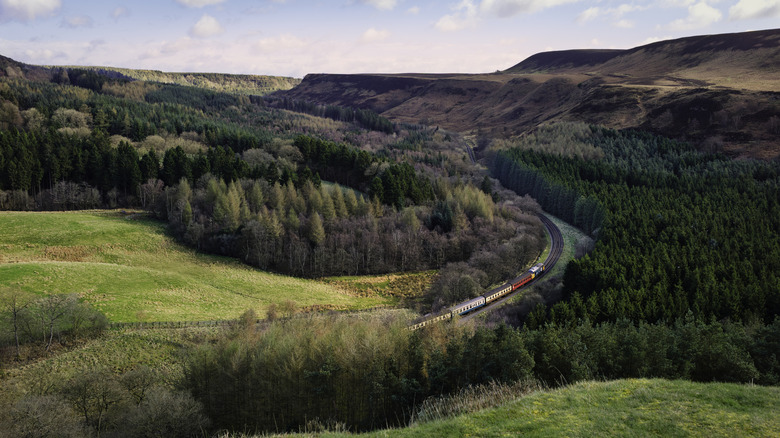
There is a reason Pickering is often called a gateway to the Moors: Its closeness to the North York Moors National Park makes it a popular base for those who want to explore the southern edge of one of the country's longest-living parks. Just a 10-minute drive (7 miles) from the town center lies one of Yorkshire's most scenic sights, the Hole of Horcum. This unique site is often described as a "natural amphitheater" because of its peculiar round, flat-bottomed shape. Geological spring-sapping, when descending water progressively erodes the limestone bed, created this 400-foot-deep and half-mile-wide crater. But according to local myths, the hole got its concave shape from Wade the Giant who, during a spat with his wife, picked up a mound of earth to throw at her, thus creating a bowl-shaped hole in the ground.
Venturing beyond the Hole of Horcum, you can follow a 5-mile hiking track across Levisham Moor. Time it right (between mid-August and early September), and you can see the moorland turning a picturesque shade of light purple, with the heather in full bloom. If you are circling back to Pickering afterward, you can follow an 8-mile walking route directly into town, through rustic paths, farmland, and a few forested areas.
Train travel aficionados can check out the heritage North Yorkshire Moors Railway, connecting Pickering to towns across the national park area, all the way down to the coast. The final stop of the 24-mile journey is Whitby, the eerie, beautiful cliffside coastal town that inspired Bram Stoker's Dracula.