
Next To Middlesbrough Is A Scenic Market Town With Victorian Streets, Quaint Shops, And National Park Access
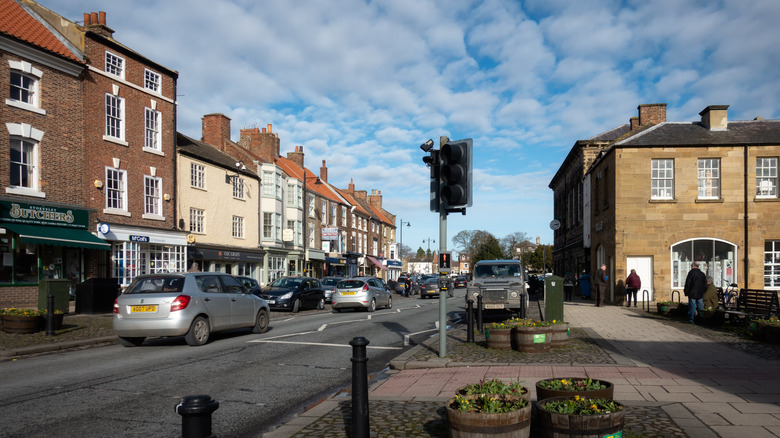
When it comes to cities in the North East of England, Middlesbrough is a bit of an anomaly. While it is officially part of North Yorkshire, its position straddling the Tees Valley makes it a quirky hybrid that's often contested between the two areas. One only needs to travel about 10 miles south of the city boundaries to be in "proper" Yorkshire, where the storied market town of Stokesley lies. While neighboring Middlesbrough's accent and culture are decidedly ambiguous, Stokesley has long identified with its former official district, Hambleton, and the North York Moors on its doorstep.
Stokesley is ideal for history and architecture aficionados who want a slice of the great outdoors within easy reach. Indeed, visitors can still walk Stokesley's charming Victorian streets, admire its well-preserved Georgian architecture, and step into small-town, independent shops lining its main thoroughfare, High Street. Stokesley is also a great base to explore North York Moors National Park, whose moorlands, quaint villages, and scenic trails are only a few miles away.
While the closest major town is Middlesbrough (a quick 13-mile drive away), Stokesley is also well connected to other important hubs across Yorkshire. It takes only an hour to drive to York, for example, and just half an hour to Northallerton, the county town. Travelers planning to fly in are within close proximity of Newcastle International Airport (NCL), about an hour away by car. Teesside International Airport (MME) is roughly 15 miles away, but has limited connections.
Walking the streets and shops of Stokesley
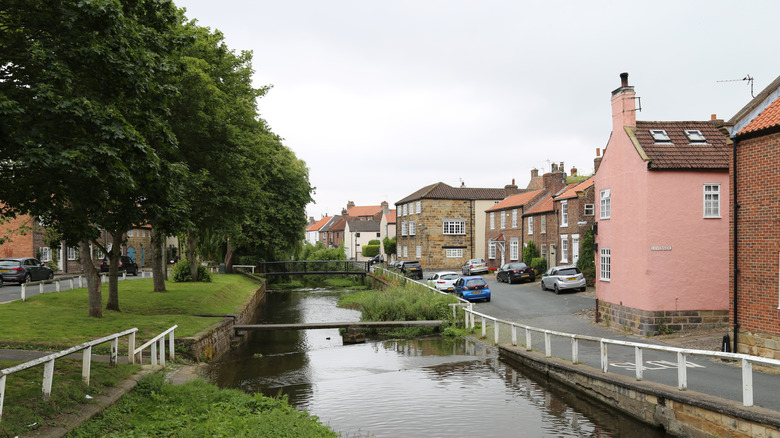
Walkable historic streets and quaint shops make Stokesley an idyllic Northern town. Those are qualities it shares with the better-known North Yorkshire city of York, considered by some to be the most haunted destination in Europe. York is known for its Shambles street, and Stokesley once had its own version, when the cobbled streets were the focus of meat vendors hanging their wares. Today, the local butchers sell their produce at the town's Farmers' Market (held on the first and third Saturday of each month), and travelers can still see traces of Stokesley's storied past in its Georgian monuments and Victorian streets. Take, for example, the Manor House, which was first built in the 18th century, then restored in the imposing Victorian style we see today at the turn of the 19th century. It was subsequently used as a hospital for wounded service members during World War I.
Another important place is Stokesley's Town Hall — not just an impressive, Grade II-listed mid-19th-century structure, but also a physical testimony of the town's industrial and trading importance during the Victorian era. You can spot similarly dated buildings across Stokesley's High Street, including the Old Rectory and the Barclays Bank building, and further afield at Stokesley's Workhouse.
Victorian features aside, the High Street remains a vibrant hub of commerce in Stokesley. Here, you will find many of its independent businesses, including the Yorkshire Store (which sells gifts and cards) and the traditional town greengrocer, D.A. Grainge. Other popular streets for shopping are Bridge Road and the small Three Tuns Wynd. Heading towards the River Leven on Bridge Road, you can find family-run florist The Flower Box, national second-hand charity shop Mind, and Pistachio Bakery & Deli, good for a quick bite and a coffee before continuing your exploration.
Exploring the North York Moors National Park
The town is surrounded by stunning Yorkshire nature, located on the western edge of the North York Moors National Park, with the Cleveland Hills rising nearby. Among the area's most distinctive landmarks are the Wainstones, a series of rocky outcrops popular with walkers. The spot is best known for its scenic viewpoints, as well as climbing and bouldering opportunities.
Planning your England trip for optimal weather conditions can make a big difference in this part of the country. Late fall can be very soggy, and the summer season is shorter than the wintry cold months. Visiting in July and August means you can make the most of long-distance walks such as the Easby Moor loop or the shorter town-to-town route from Stokesley to Great Ayton, and catch a glimpse of the famous purple heather in bloom, covering the moorland in mid-August.
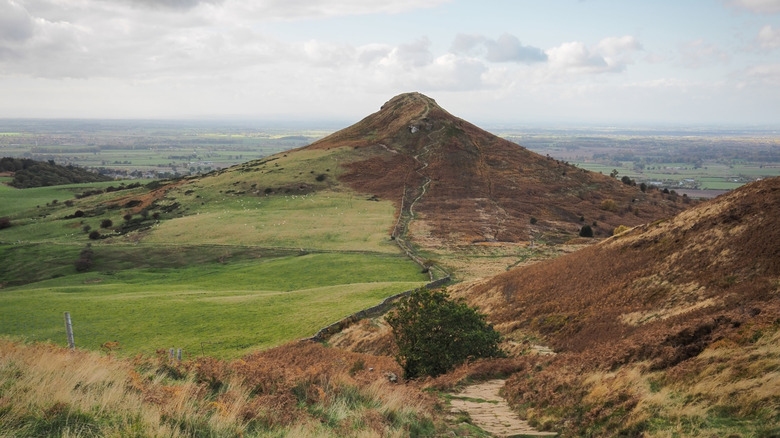
A popular day trip from Stokesley is the hike to Captain Cook's Monument. The near-60-foot-tall obelisk, made of local stone, is dedicated to the Yorkshire-born explorer who led major voyages across the Pacific Islands, including the namesake island nation home to the world's most beautiful shark-free lagoon. The monument is connected to another popular spot — Roseberry Topping — by a picturesque 7-mile hike that crosses quintessential Yorkshire countryside scenery. Along the way, you can see stretches of pristine moorland, oak trees, remnants of historic mining spots, and, finally, Roseberry Topping, the pyramid-shaped hill nicknamed the "Yorkshire Matterhorn". Amusingly, while the Matterhorn is one of Switzerland's tallest peaks, its Yorkshire sister is not even among the tallest hills in England.